The roots extending from Oakland’s namesake oak tree genus run deeper throughout the Bay Area city than its topsoil.
Depictions of the ancient trees adorn road signs, billboards and its official flag, enduring symbols that have united the city’s vibrant tapestry of peoples and cultures since its founding 174 years ago.
Like other oak varieties endemic to California, the coastal live oak (Quercus agrifolia) supports immense biodiversity, a “keystone” species relied upon by mammals, birds, insects, humans and the Earth itself, said Gabriela Garcia, an assistant professor at Northeastern University’s Department of Marine and Environmental Sciences (MES) whose research focuses on agroecosystems.
But some climate models predict the oaks’ natural habitat may shrink by 50% in the next 50 to 100 years, she said. Already, the vast oak forests that once spanned the area have shrunk due to bacterial blight and regional warming.
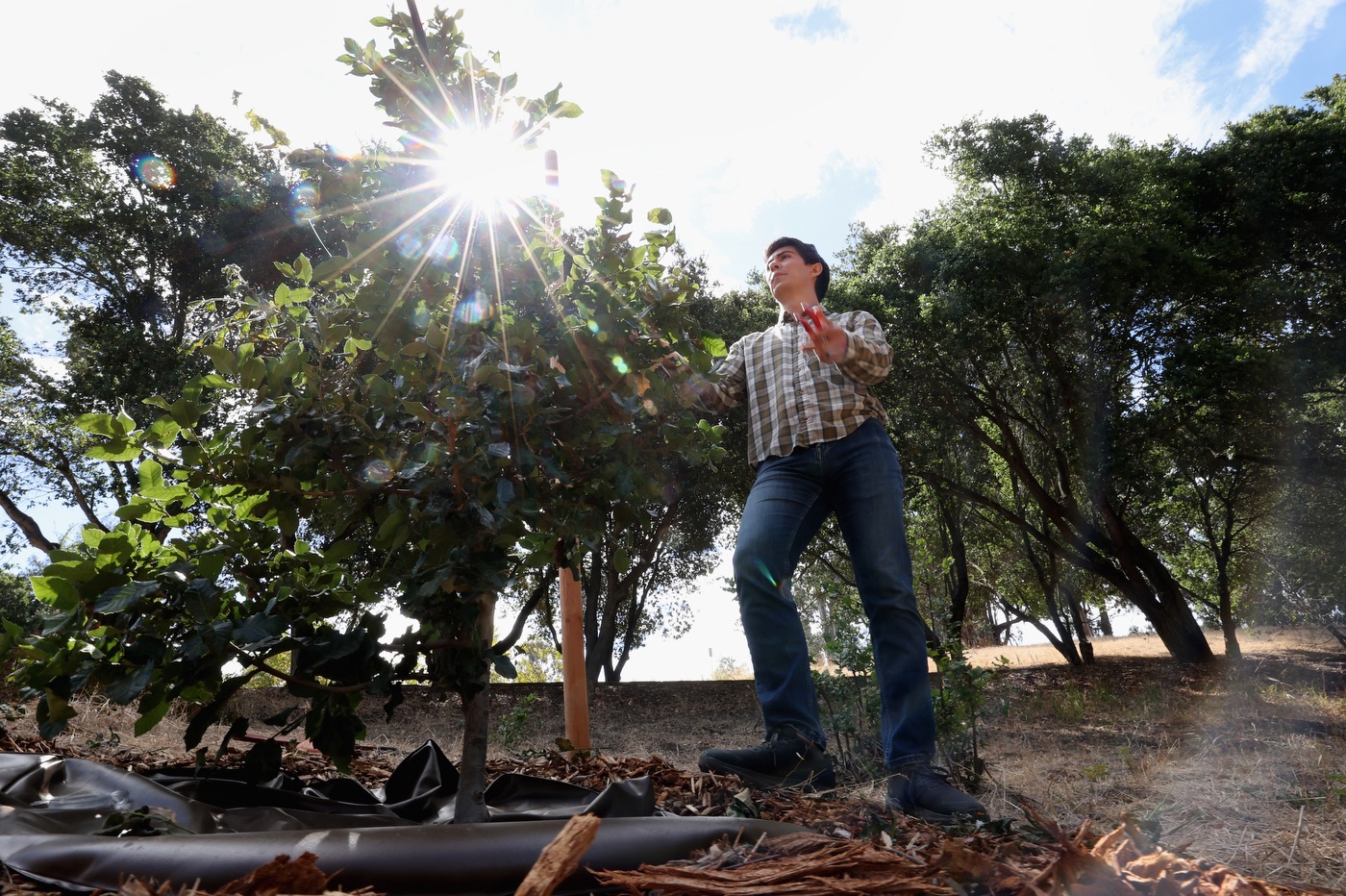
To establish a climate change-proof future for the trees that gave Oakland its name, campus sustainability manager Andrew Gonzales and a group of Northeastern students have kicked off a novel tree-transplant operation using oak saplings from Southern California.
Read more at Northeastern Global News
Photo by Lachlan Cunningham for Northeastern University