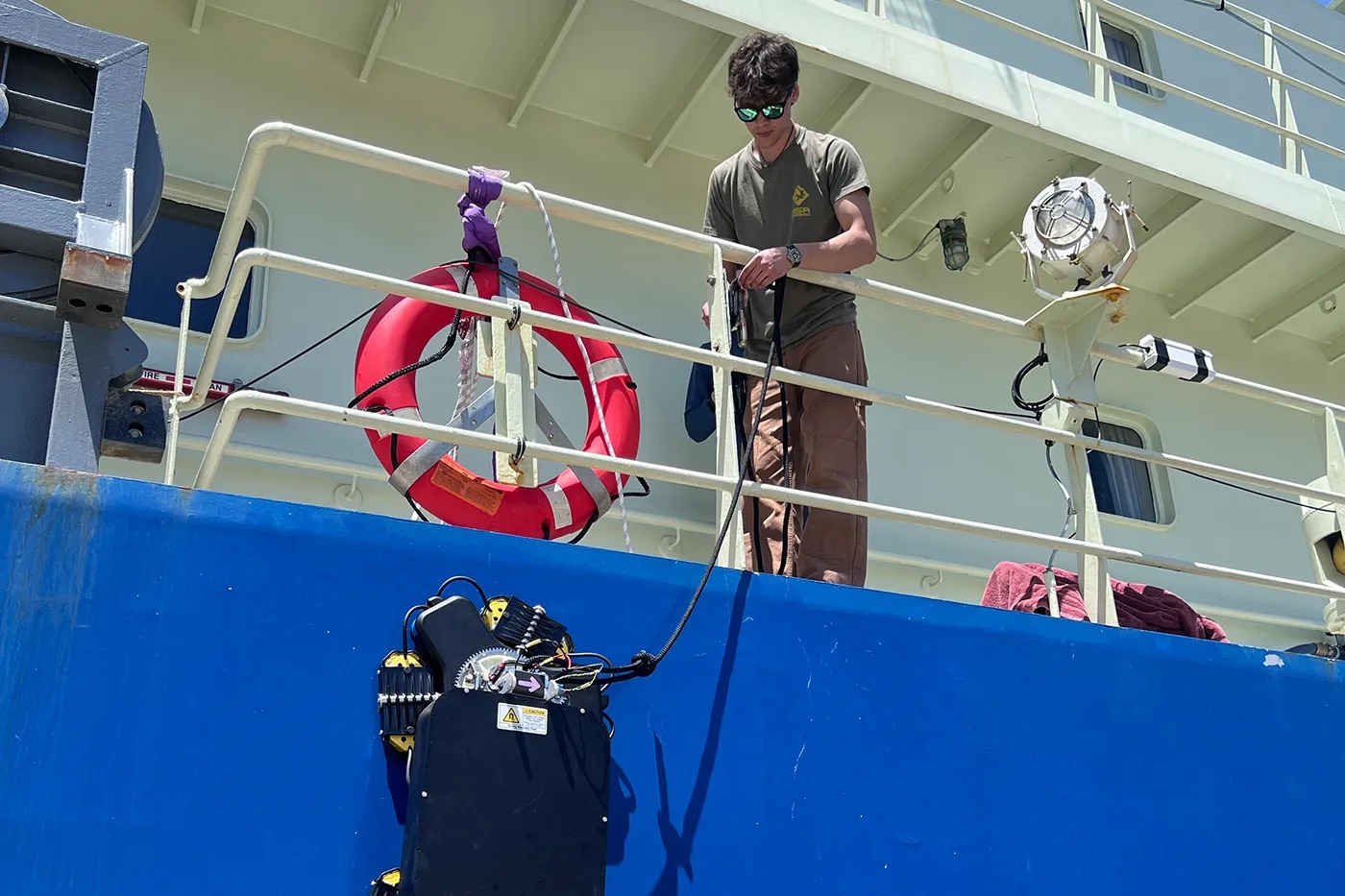
Timothy Wong didn’t suspect it at the time, but his dives off the coast of Rockport and the hours he spent immersed in studying the wheels and gears of the world of robotics were leading to one mission: Figuring out a way to get unwanted sea matter off some giant ships in need of some serious cleaning.
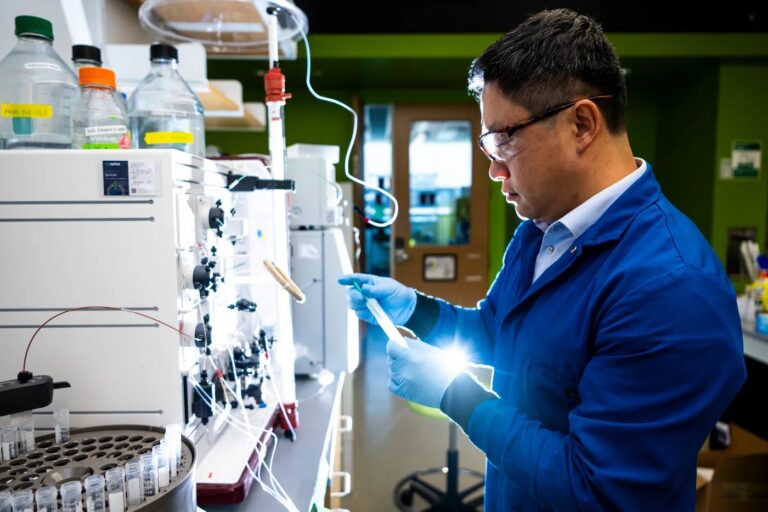
Wong, a third year mechanical engineering and marine science student at Northeastern University, worked as a mechanical and validation engineer at Fleet Robotics, a Boston company, while trying to come up with a modern solution. Starting in January 2026, his co-op lasted for 6 months and ended in June of the same year. His sidekick in the task turned out to be a Roomba-like robot that scrubs and scrapes green sludge from the hull.
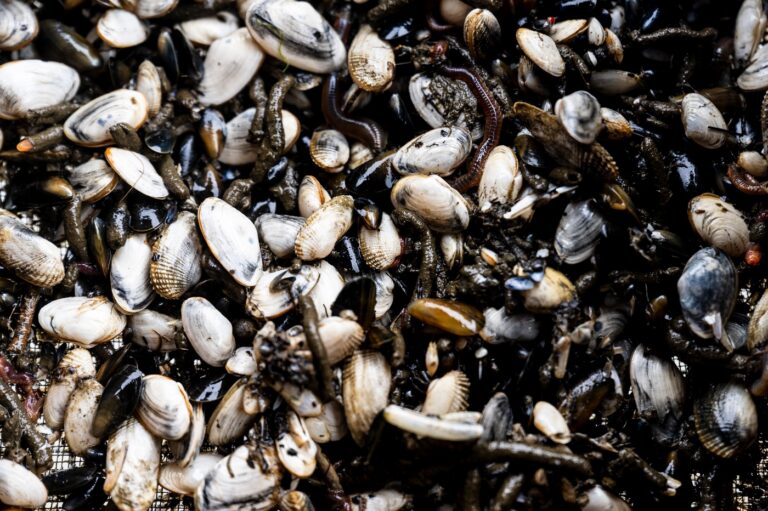
“It starts with algae, and then it becomes barnacles, mollusks, seaweed,” Wong said. “All of that increases the drag along the ship, which causes the ship to burn much more fuel in order to achieve the same speed.”
The extra weight results in up to an extra $36 billion in fuel and antifouling paint costs across the U.S. shipping industry each year to overcome the drag, according to Sofar, an ocean sensor network.
Read more at Northeastern Global News
Courtesy photo