Imagine a medicine that stops seizures at their source, switches off instructions that keep a cancerous tumor growing, prevents Alzheimer’s from stealing memories and wreaking havoc on the brain.
The basis for such treatment is already here. Known as oligonucleotides [pronounced ah-lee-go-noo-klee-oh-tides], these drugs are made from small bits of DNA or RNA — the blueprint cells use to make proteins.
While most drugs act on the finished products, oligonucleotides cut to the chase and intervene upstream, before the proteins have a chance to roll off the cellular assembly line. They can block production of harmful proteins or help cells make ones they need by tinkering with the instructions.
There’s one big catch, however.
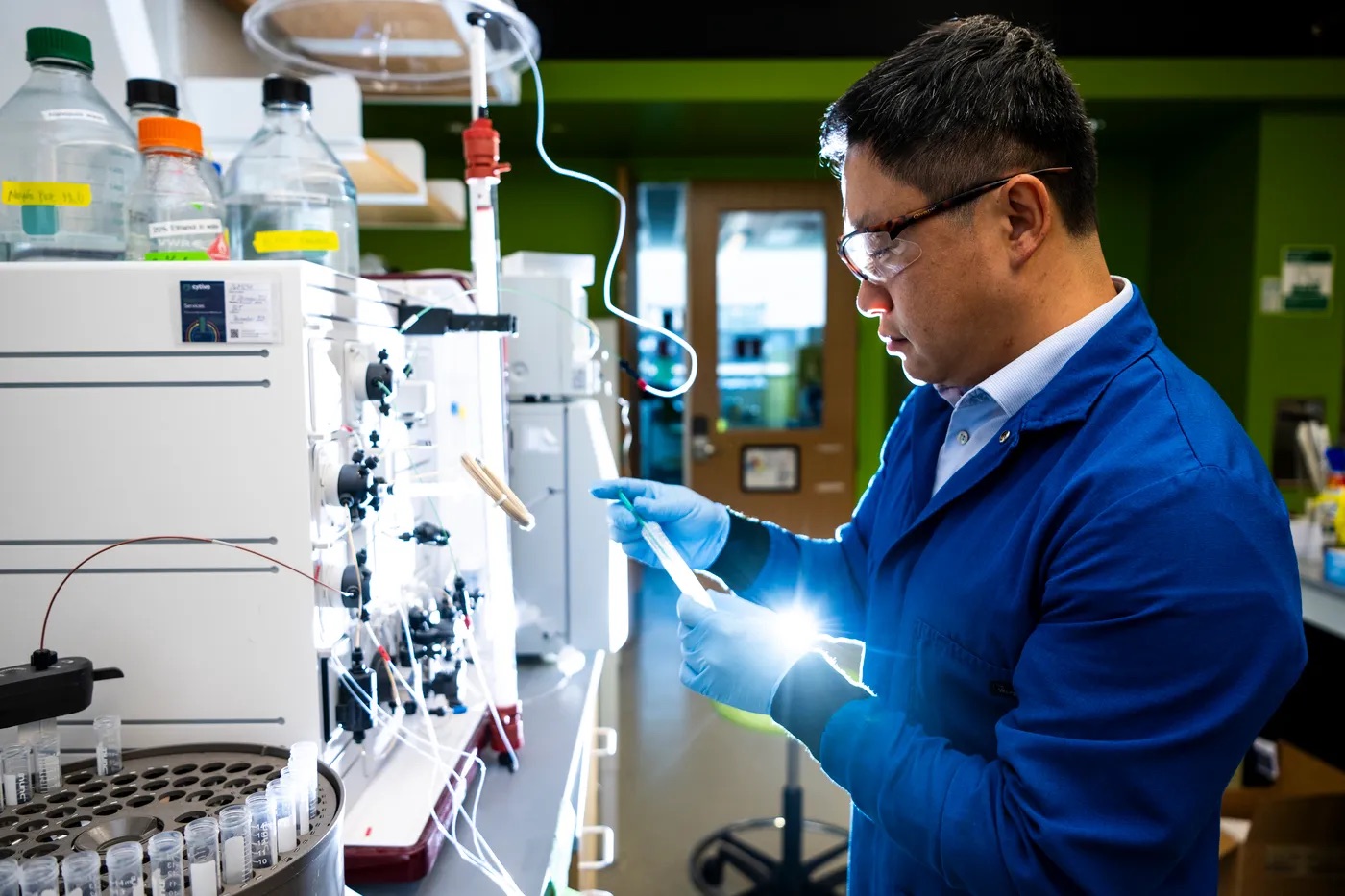
“Knowing what gene to target is only part of the problem,” said Northeastern chemistry and chemical biology professor Ke Zhang, who is developing ways to make oligonucleotides more effective. “The other part is getting the drug to the right place in the right cells.”
Read more at Northeastern Global News
Photo by Alyssa Stone/Northeastern University