COS News
Research

“The basic premise is that AI can help us do better physics, and something that is less expected is that physics can also help us understand AI better,” said Northeastern professor James Halverson.
AI and physics have more in common than you might think.
News
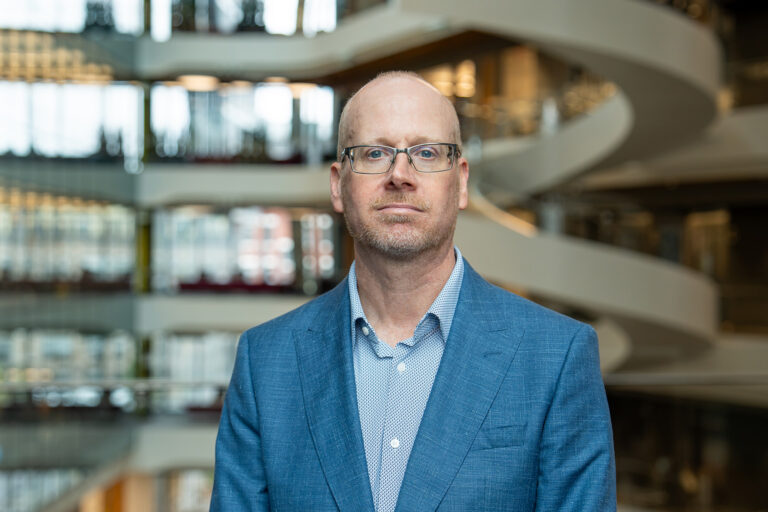
Mark Williams, Professor and Chair of the Department of Physics, will assume the role of Dean of the College of Science, effective July 1, 2026.
Mark C. Williams named Dean of the College of Science
Showing 210 results in Research
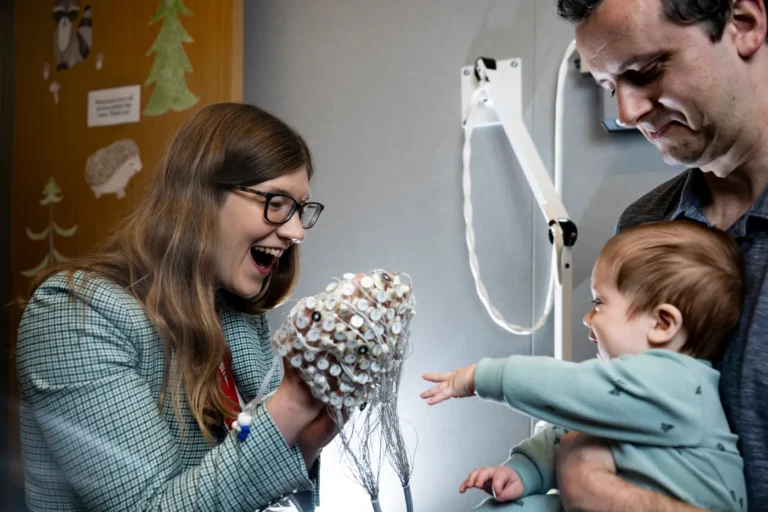
What can babies teach us about brain development?
Laurel Gabard-Durnam’s latest research used EEG to better understand how babies’ brains develop.

How local lobstermen could help save our coastal habitats
As fishery management practices struggle to keep up with warming waters, the insights of local lobstermen provide an invaluable understanding of changing dynamics, new research shows.

This research program is changing the game for college freshmen
Most college freshmen spend their first year adjusting to campus life, finding their footing academically, and maybe exploring a few extracurriculars. Research opportunities? Those typically come later, reserved for upperclassmen who’ve proven themselves. The College of Science’s Dean’s Research Scholars program is opening doors for freshmen, bringing them into meaningful research from the moment they...
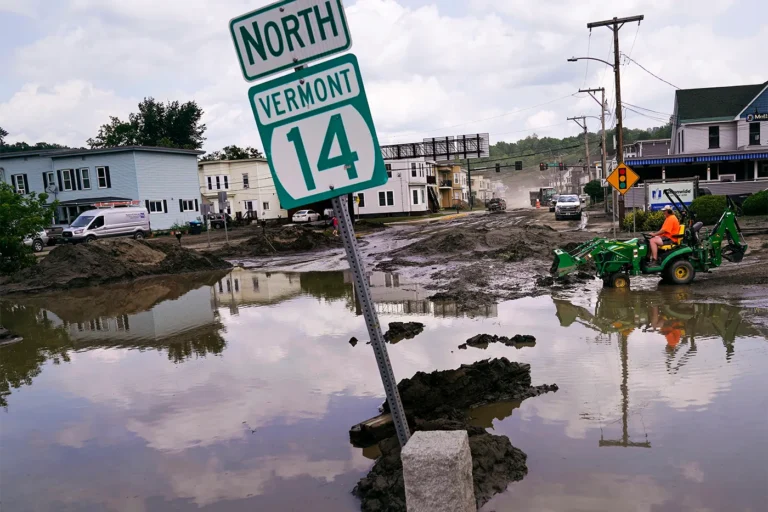
Breakthrough research uses machine learning to better predict New England floods
Researchers at Northeastern University used machine learning to aggregate nearly five decades of weather data to better understand the factors that lead to New England flooding.

AI could revolutionize drug discovery. But how can we regulate it?
In health care, AI is moving at warp speed, while regulations lag behind. Jared Auclair proposes a new regulatory framework that would keep AI innovation moving and get drugs to patients in need.

Researchers decode the chemistry behind a deadly genetic disorder
Professors Penny Beuning and Mary Jo Ondrechen used AI to predict which genetic mutations cause OTC deficiency, uncovering clues to guide future treatments.

Sociology, meet ecology: How the variability of coffee harvests can teach us about sustainable farming
New research from Gabriela Garcia and Laura Kuhl looks at farmers’ responses to variable crop yields to make better recommendations for resilient practices.
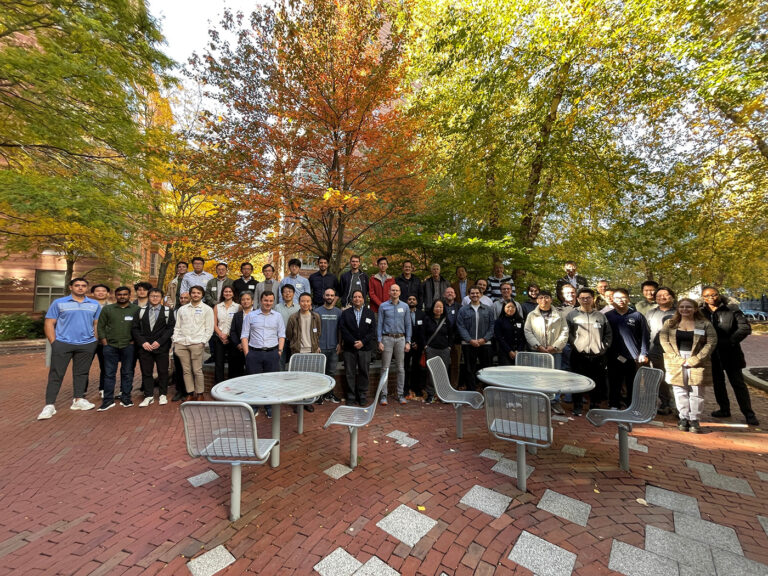
Cross-College Magnetics Center Hosts Second Workshop at Northeastern University
The second annual Cross-College Magnetics Center Workshop showcased cutting-edge research in magnetics while fostering crucial academic partnerships across continents.
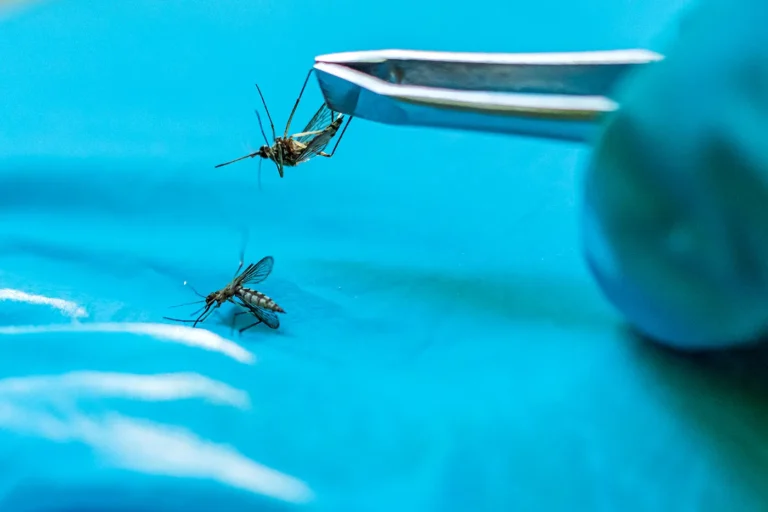
Want to eradicate malaria-bearing mosquitoes? Try fungus, this researcher says
Binod Pant, a Northeastern postdoc, has created a mathematical model that demonstrates how a fungal solution could control malarial mosquito populations.
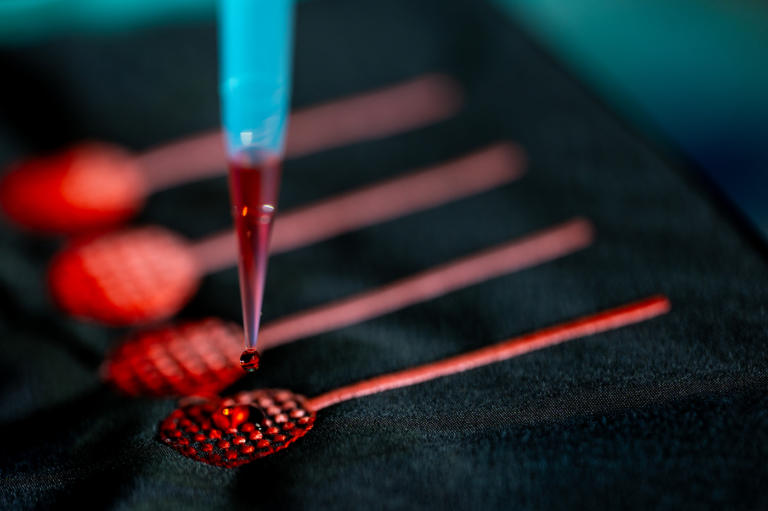
What if your Tamagotchi was alive and glowing? This toy prototype is full of bacteria
Northeastern students designed SquidKid, a toy where keeping bioluminescent bacteria alive and glowing is the name of the game.
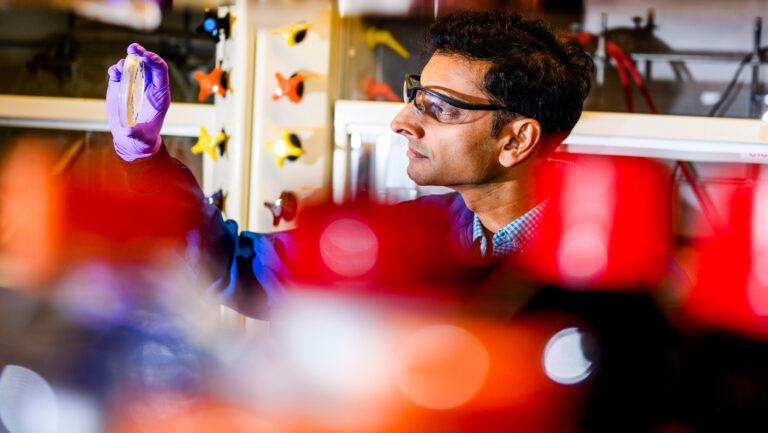
Want to build like biology? These researchers are bridging proteins between bacteria
Researchers Neel Joshi and Rong Chang have discovered a way to engineer E. coli cells to grow into new structures through direct, cell-to-cell contact.
Designing the Future of Antibiotics with Generative AI: A Conversation with Wengong Jin
Assistant Professor and Barnett Institute Faculty Fellow Wengong Jin shares insight into his work on using generative AI to design Novel Antibiotics.