COS News
News

A new report from a group of Northeastern researchers explores across disciplines how biotech can ensure safe, sustainable life beyond Earth.
The key to international space cooperation is developments in biotechnology, Northeastern researchers say
News

The NeuroPRISM lab, led by assistant psychology professor Stephanie Noble, makes tools that pave the way for reliable and reproducible neuroimaging of the brain.
Precise maps of the brain’s deepest corners are made possible through tools developed by these Northeastern researchers
Showing 160 results in Research
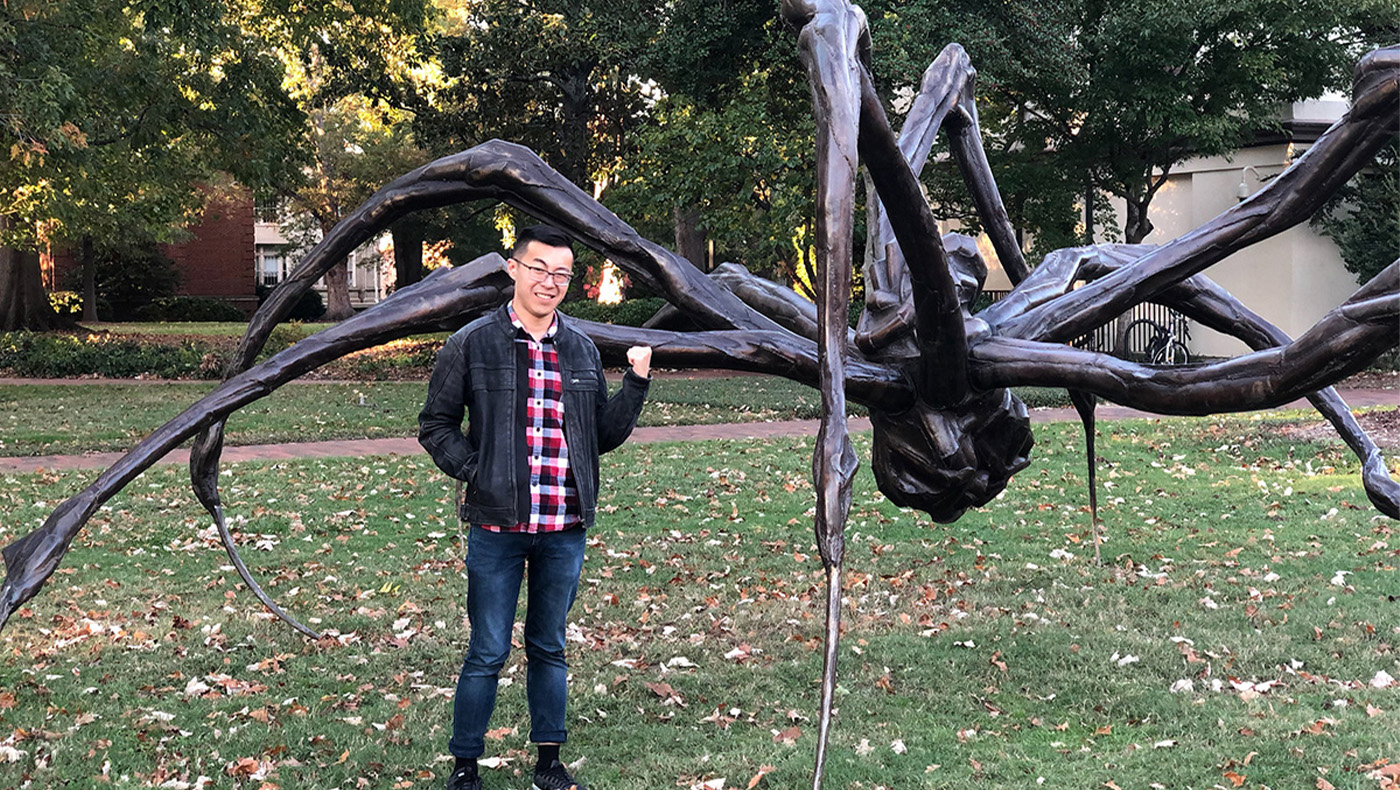
Unpacking fear: Kent Lee studies the ingredients that shape our emotional experiences
Kent Lee, PhD is a postdoctoral research associate working with Dr. Ajay Satpute in the Department of Psychology. He is currently researching how fear works in the mind.
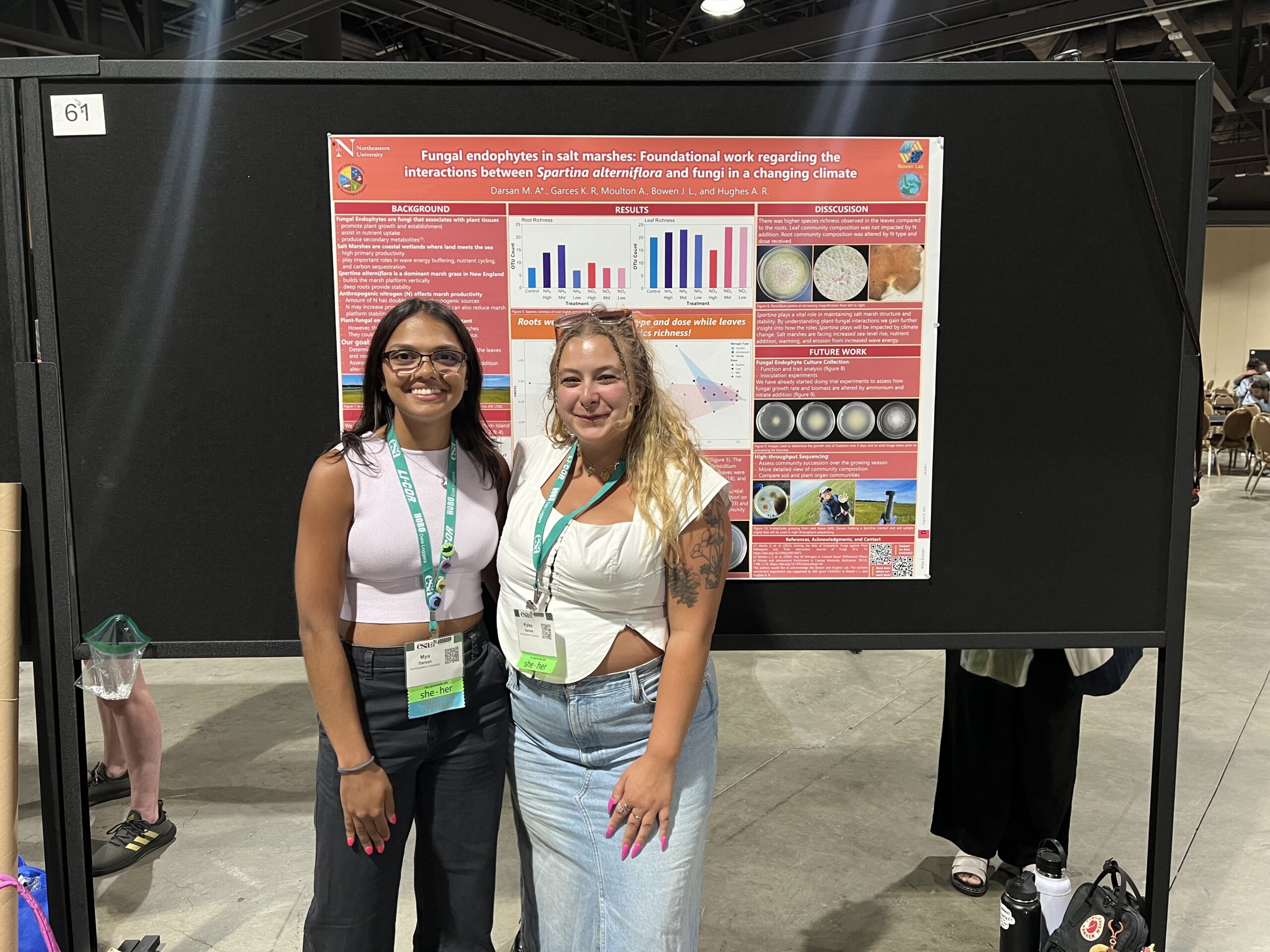
Empowering voices in ecology: Kylea Garces shares her experience at ESA’s Annual Meeting
Recently, Dr. Garces was awarded a Dean’s Postdoctoral Travel Award to attend and participate in the Ecological Society of America Annual Meeting. Read on as she shares her experience at the conference and how being actively involved in ESA has enhanced her educational and professional journey.

Afraid of spiders? Heights? Public speaking? They activate different parts of the brain, Northeastern research finds
A new paper from Northeastern University psychology professor Ajay Satpute’s lab upends previous understandings of how fear works in the mind.

Scientists recreate genome of 52,000-year-old freeze-dried woolly mammoth
Frozen in Siberia, this mammoth was remarkably preserved at the microscopic level, Northeastern researchers discovered. Its DNA had remained the same for thousands of years, frozen as “chromoglass.”
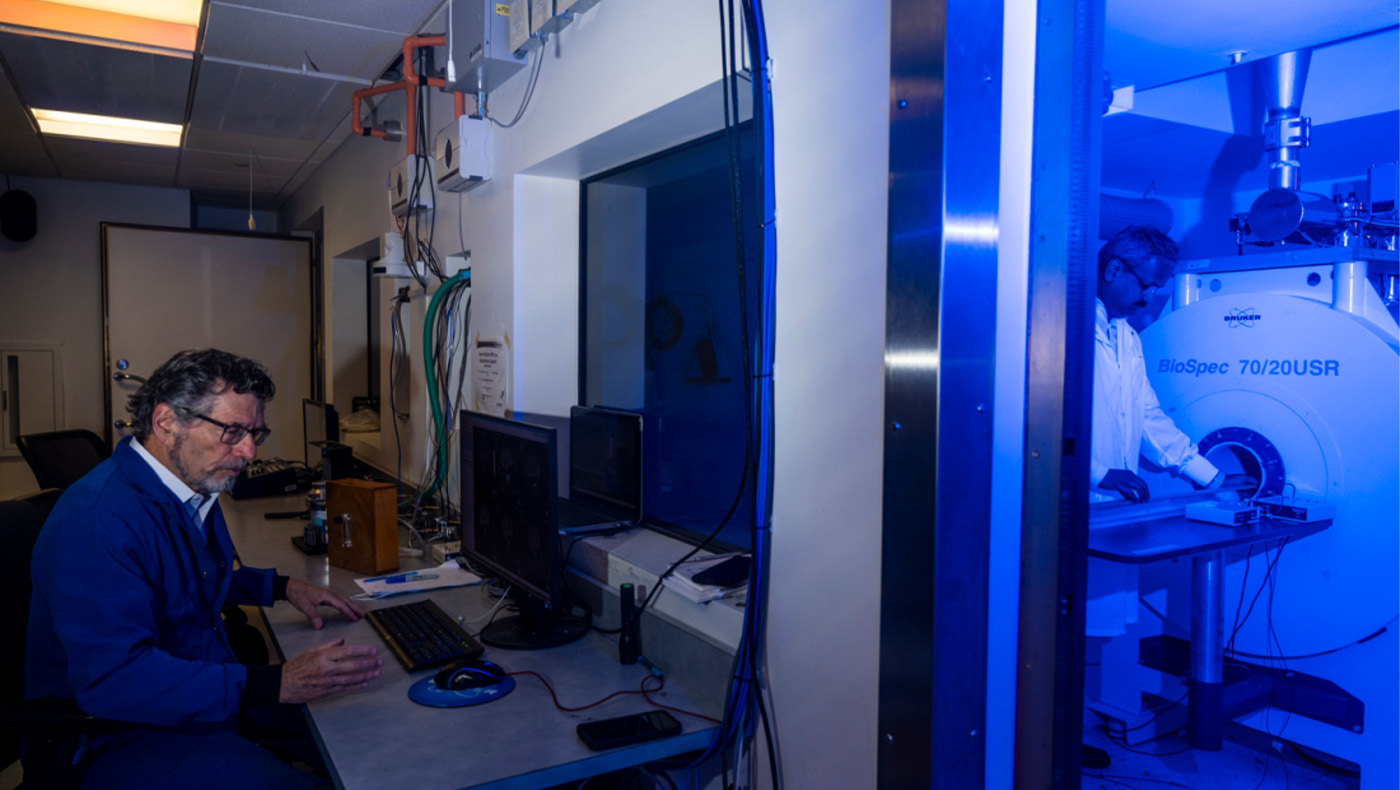
Northeastern’s neuroimaging lab empowers students with real-world brain research and innovative drug studies
Professor of psychology and pharmaceutical sciences Craig Ferris and principal research engineer Praveen Kulkarni work with the MRI machine.

To understand the next pandemic, we must understand our own collective behavior — these researchers want to be ready
Researchers from Northeastern University are improving their epidemic models by incorporating collective behavioral patterns.

New Northeastern research could revolutionize treatment for children’s growth plate fractures using stem cells
Andreia Ionescu, assistant professor of biology, is conducting research to understand how stem cells can be used to treat bone fractures.

Cognitive Foundations of Environmental Science Education
Northeastern scientists launch new project funded by the NSF STEM Education Directorate (EDU) Education Core Research Program.

Unexploded ordnances still litter the seafloor worldwide. Northeastern engineers are trying to sniff them out.
Loretta Fernandez and her colleagues have been working on creating passive samplers that would allow them to locate old munitions by detecting degraded compounds in the water.

New Northeastern lab plumbs the mysteries of the ticks and bacteria that cause Lyme
Constantin Takacs loves to study black-legged deer ticks and Borrelia burgdorferi, which is good news for everybody else.

How a Northeastern scientist is turning carbon dioxide into renewable ethanol
Assistant professor Magda Barecka is designing a chemical reactor that could produce renewable, carbon-neutral ethanol for use in fuels. Her research recently received support from the U.S. Department of Energy.
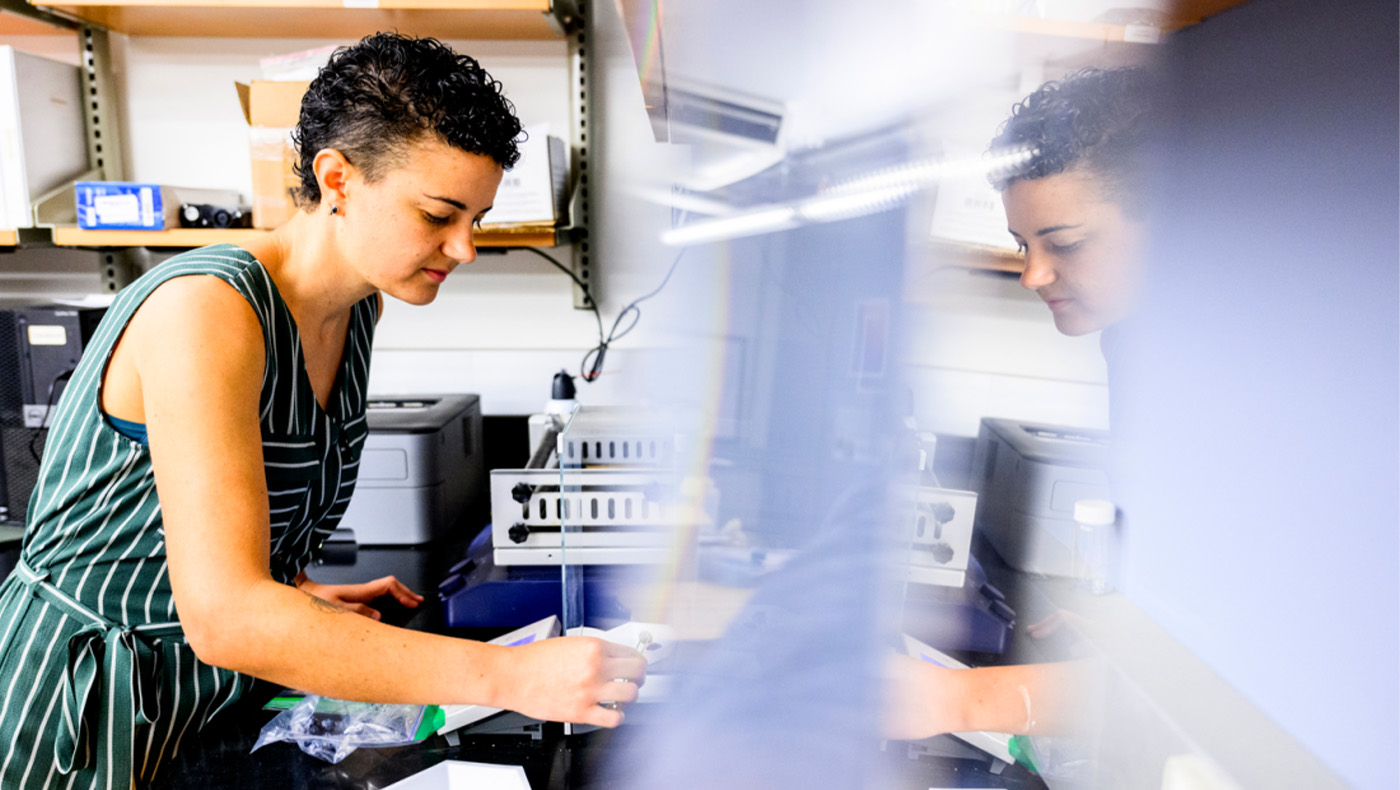
Northeastern research sheds light on low crop yields and their impact on small farms
In recently published research, Gabriela Garcia and her collaborators have developed a framework for how to understand alternate bearing.