Magda Barecka is envisioning a world without fossil fuels.
An assistant professor of chemical engineering and chemistry and chemical biology at Northeastern University, Barecka says that the aim of her research is to enable “our society to function, to have all the chemicals that we need, without using fossil fuels.”
Like alchemists, Barecka and her team transform one thing into another — but instead of lead into gold, they transform carbon dioxide into ethanol.
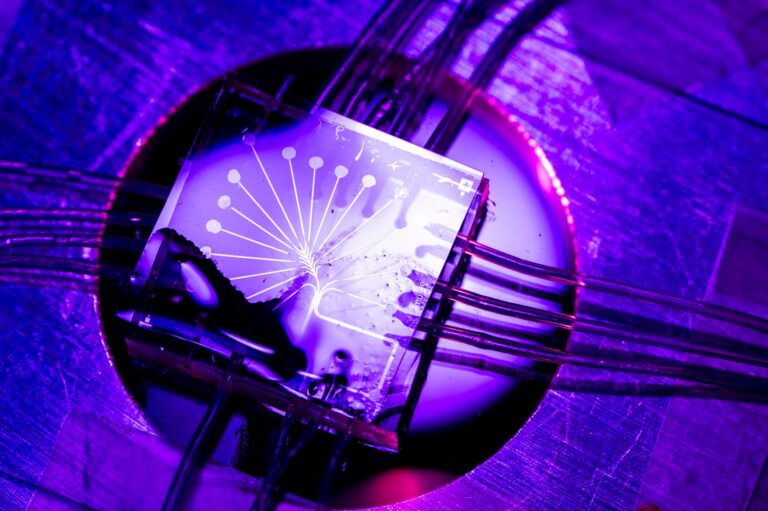
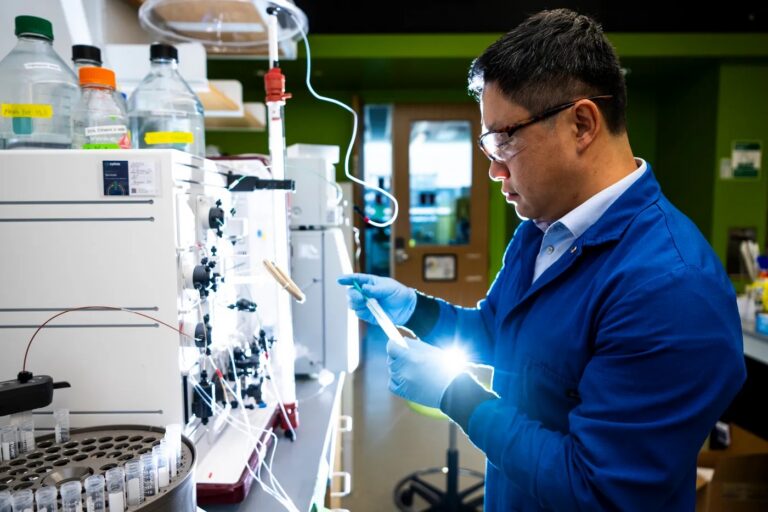
After extracting carbon dioxide from the atmosphere and introducing it to a proprietary liquid in the base of their electrochemical reactor, a series of electrified metal plates do the transformative work, producing liquid ethanol that can be synthesized into a variety of fuels.
Despite its ability to burn — and thus serve as a fuel — ethanol is an alcohol and not a fossil fuel.
When it’s eventually burned, the ethanol will release carbon dioxide back into the atmosphere — but because that CO2 was originally taken from the air, the result is a carbon-neutral cycle.
Barecka and her team have published extensively on these topics, including here and here.
Their chemical reactor does require electricity, however, which still often comes from fossil fuel-based power plants.
Read more from Northeastern Global News
Photo by Alyssa Stone/Northeastern University.