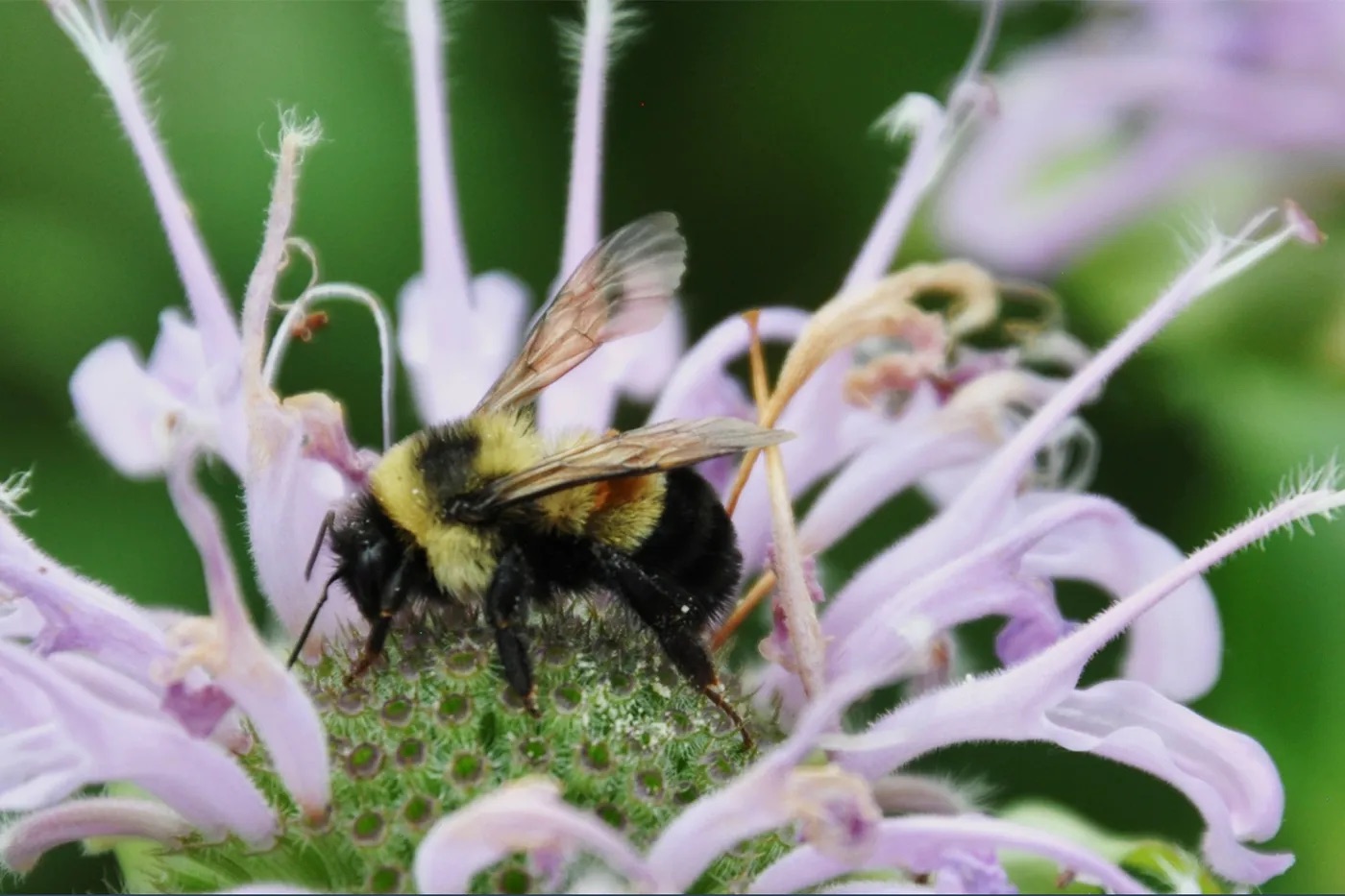
The “rusty patched” bumblebee, Bombus affinis to bug nerds, hasn’t been seen buzzing around most of its native New England since 1999. It was last spotted on the East Coast in 2009, just south of Bangor, Maine.
And that’s bad news for the bug world and for humans, as this and other wild bees, such as the rusty patched type, which are about as long as a penny and have an orange band around their abdomens. They are crucial pollinators, helping to grow food for both people and wildlife.
“That’s the doom and gloom of it,” said Damon Hall, a Northeastern University associate professor who teaches environmental sciences and public policy. “The rusty patched is a bellwether for the insect world…All bumblebees, sweat bees, orchard bees, are in trouble. All studies show wild bees are declining. If we save one, we can bring more back with it.”
So, Hall launched a new research project in January, with one question – can cities and towns help save the rusty patched bee?
Read more at Northeastern Global News
Photo by U.S. Fish & Wildlife Service