Grants

Society significantly benefits from scientific research, but it wouldn’t be possible without generous contributions from public and private sources.

This page is a testament to that support. With it, Northeastern’s College of Science has cultivated a dynamic landscape of research activity. Through a culture that emphasizes entrepreneurship, our exceptional faculty, staff, and student researchers are able to maximize the impact of their work.

The grants listed below are a preview of the science and scientists of tomorrow, who probe single cells, the outer limit of particle physics, and everything in between.

Showing all results

  • 09/01/2022

    Aaron Seitz

    Sponsor: National Institute of Mental Health
    Visual remediation for schizophrenia This R61/R33 study examines the relative effectiveness of two novel visual remediation approaches to schizophrenia that focus on the low-level mechanism of contrast sensitivity and the mid-level mechanism of contour integration. There is no overlap between the interventions used in this study and the ones in the proposed study. Specific Aim…Read More
  • 09/01/2022

    Aaron Seitz

    Sponsor: National Institute of Aging
    How LC Integrity in Older Adults Mediates Perceptual and Memory Processes This project aims to use behavioral and fMRI studies to understand how the Locus Coeruleus (LC) impacts perceptual and memory processes in older adults. Specific Aim (s): Aim 1: Characterize relationships between LC and perceptual processing. Aim 2: Characterize relationships between LC and visual…Read More
  • 08/23/2022

    Fabian Ruehle

    Sponsor: NSF
    String theory has evolved into one of the most complex theories devised by mankind to date. Its goal is to describe our Universe from the smallest to the largest scales. In my research proposal, I suggest to use latest advances in mathematics and artificial intelligence to uncover answers to fundamental questions hidden within this theory.Read More
  • 08/18/2022

    Pran Nath

    Sponsor: NSF
    This research will investigate the laws of physics at short length and time scales not yet understood using symmetry principles and mathematical and machine learning tools. Analyses of data expected from the Large Hadron Collider, in Geneva, Switzerland to detect possible evidence of strings and new physics will be undertaken.Read More
  • 08/17/2022

    Clemens Bauer Hoss

    Sponsor: NIH
    Auditory hallucinations are one of the five cardinal symptoms of schizophrenia and one of the most distressing. Almost a third of patients experiencing auditory hallucinations are not responsive to gold-standard pharmacological and psychotherapeutic treatment. We have pioneered a new non-invasive treatment candidate, computational neuroscience-based approach, also known as network-based real-time functional Magnetic Resonance Imaging (fMRI) Neurofeedback that is a…Read More
  • 08/02/2022

    Jennifer Bowen

    Sponsor: NSF
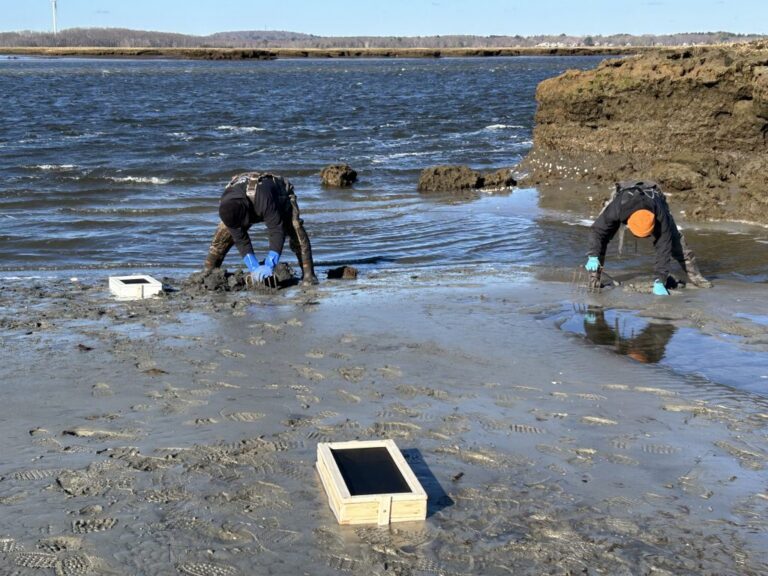
    Salt marshes provide an important line of defense against nutrient pollution by intercepting watershed nitrogen before it enters estuaries. This nitrogen can enhance the growth of marsh plants, however some forms of nitrogen can also be used by microbes, who use it to decompose organic matter in low-oxygen sediments. Understanding which of these two outcomes…Read More
  • 07/27/2022

    Max Bi

    Sponsor: HFSP
    To answer this question, Dapeng “Max” Bi (COS-Physics) has been awarded a collaborative HFSP grant with Friedhelm Serwane (LMU Munich, Germany) and Tamal Das (Tata Institute for Fundamental Research Hyderabad, India). Together, the team will develop a biomechanical understanding of the epidermis, which is critical for preventing and curing numerous skin defects, painful blistering, and…Read More
  • 07/26/2022

    Sara Constantino

    Sponsor: NSF
    Addressing collective action problems such as climate change requires individuals to engage in a host of coordinated behaviors to effect widespread systemic changes. Yet, while most people are concerned about climate change, they systematically underestimate others’ concern, which can inhibit action toward addressing collective challenges. Drawing on interdisciplinary research, this project uses mixed methods to…Read More
  • 07/24/2022

    Albert-László Barabási

    Sponsor: NSF
    Healthy debate is a cornerstone of scientific progress, but no one really knows when, how, and why these debates in science happen. In our funded research, we will use new computational techniques to automatically identify debates across the entire published scientific literature. We will study these debates to understand the role of disagreement in science…Read More
  • 07/22/2022

    Sam Munoz

    Sponsor: NSF
    The degradation and transport of plastics has led to its accumulation across a range of environments, but a key component of the plastic-carbon cycle — namely the transport and storage of microplastics through rivers and floodplains — remains poorly constrained. Understanding where and why plastics accumulate along rivers and floodplains is critical for mitigating and…Read More
  • 07/21/2022

    Aron Stubbins

    Sponsor: Running Tide
    To slow climate change we need to stop burning fossil fuels and to find ways to capture carbon dioxide from the atmosphere. When kelp and other macroalgae grow, they store carbon in their biomass, but they also continuously release organic carbon into ocean waters. The current project aims to understand whether this released organic carbon…Read More
  • 07/21/2022

    David DeSteno

    Sponsor: Templeton
    The John Templeton Foundation has awarded a $1 million grant to Professor David DeSteno to support his PRX Podcast “How God Works.” The podcast, which brings a scientific eye to examining how and why spiritual practices foster human flourishing, has appeared on Apple’s Top Ten List for science podcasts, and was recognized with honoree status…Read More

Explore research opportunities in the College of Science.