Grants

Society significantly benefits from scientific research, but it wouldn’t be possible without generous contributions from public and private sources.

This page is a testament to that support. With it, Northeastern’s College of Science has cultivated a dynamic landscape of research activity. Through a culture that emphasizes entrepreneurship, our exceptional faculty, staff, and student researchers are able to maximize the impact of their work.

The grants listed below are a preview of the science and scientists of tomorrow, who probe single cells, the outer limit of particle physics, and everything in between.

Showing all results

  • 2023

    Sue Whitfield-Gabrieli

    Sponsor: NIH
    Targeting adolescent depression symptoms using network-based real-time fMRI neurofeedback and mindfulness meditation Adolescents experience alarmingly high rates of major depressive disorder (MDD), and these episodes are highly recurrent and increase suicide risk. Recently, the U.S. Surgeon General and leading pediatric health organizations declared a national state of emergency for adolescent mental health, underscoring that the…Read More
  • 2023

    Rhea Eskew

    Sponsor: NSF
    Time-locked psychophysics: speeded responses to visual stimuli The project will use variations on a classic method called response time (RT) measurement, which has human participants respond as quickly as possible to the presentation of carefully-controlled visual patterns.  One goal is to demonstrate that the fastest RTs are triggered by the very early responses in the…Read More
  • 2023

    Sam Munoz

    Sponsor: NSF
    CAREER: Sedimentary signatures of large riverine floods to constrain risk and build resiliency The traditional paradigm in river and floodplain management relies almost exclusively on stream gage measurements as the key dataset informing flood hazard assessments, while largely neglecting the geomorphic dynamics and resulting sedimentary records preserved in floodplains. This project builds on prior work…Read More
  • 2023

    Loretta Fernandez

    Sponsor: NOAA
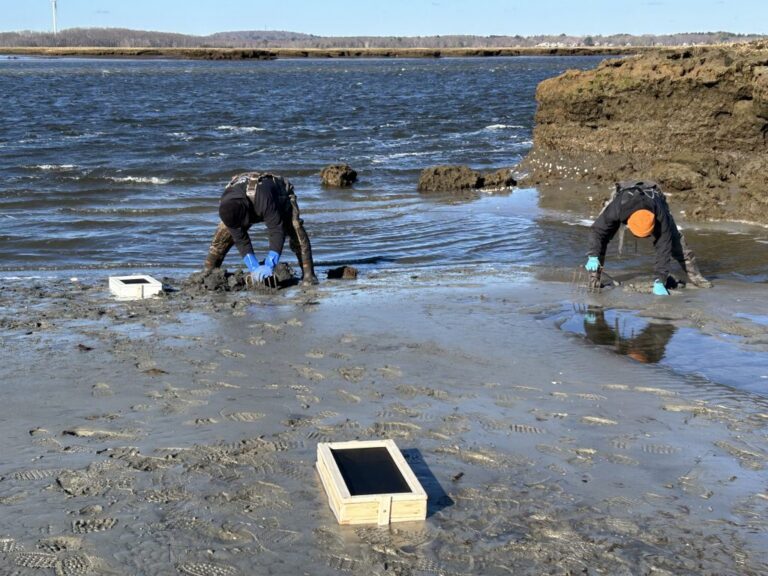
    Determining how aquaculture grow-out methods can reduce the negative effects of parasites and micropollutants on farmed oysters   We will be collaborating with local oyster farmers to investigate how growing methods (on the bottom vs. Floating) and water quality affect the prevalence and intensity of common oyster parasites. The knowledge developed through this work will…Read More
  • 2023

    Sijia Dong and Hannah Sayre

    Sponsor: DOE
    Bioinspired Light-Escalated Chemistry (BioLEC)  The mission of the BioLEC Energy Frontier Research Center (EFRC) is to combine light harvesting and advances in solar photochemistry to enable more powerful editing, building, and transforming of abundant materials to produce energy-rich feedstock chemicals. As part of the BioLEC EFRC, we will develop new supercharged light-powered catalysts and reactions…Read More
  • 2023

    Bryan Spring

    Sponsor: NIH
    Disease-homing light delivery by engineering bioluminescent immune cells for whole body precision photomedicine  Photomedicine avoids traditional side effects of systemic chemotherapy, yet effective outcomes are dependent on direct irradiation from an external light source that limits the scope and the types of cancers that may be treated. This proposal develops a precision photomedicine platform that…Read More
  • 2023

    Eddie Geisinger

    Sponsor: NIH
    Repurposing Gram-positive Antibiotics for Gram-Negative Bacteria using Antibiotic Adjuvants  The multidrug-resistant (MDR) sepsis pathogen Acinetobacter baumanni presents an enormous ongoing challenge to public health. Current treatment options for infections with these bacteria are extremely limited. Our research examines a class of small molecules called antibiotic adjuvants that greatly boost the activity of several existing antibiotics…Read More
  • 2023

    Carolyn Lee-Parsons

    Sponsor: NSF
    PlantSynBio: A Novel CRISPR SynBio Tool for Investigating and Reprogramming the Regulation of Alkaloid Biosynthesis in Catharanthus roseus  Plants produce a white array of valuable, biologically active natural products we use as medicines. This grant will enable engineering for enhanced drug production from the medical plant, C. roseus.Read More
  • 2023

    Rebecca Sherbo

    Sponsor: Catalyst Grant, Schmidt Science Fellows
    Identifying factors that promote soft coral resilience in climate change-induced This work, in collaboration with a biophysicist, will explore the resilience of soft corals to rising ocean temperatures by understanding two main adaptations: the coral microbiota, and the morphology and growth patterns.Read More
  • 2023

    Rebecca Shansky

    Sponsor: NIH
    Sex-dependent pain processing circuitry in classical Pavlovian fear conditioning Traumatic experiences create powerful memories by linking information about the trauma itself with environmental cues associated with the event. Our lab has found evidence that males and females may form these memories using different brain regions, and this grant will allow us to probe this question more…Read More
  • 2023

    Justin Reis

    Sponsor: NOAA
    Polymorph mineralogy & fraction of calcium carbonate (CaCO3) sediments across the western North Atlantic shelf (Gulf of Maine to Chesapeake Bay) Prof. Justin Ries was funded to collect and analyze sediments from the western Atlantic shelf (Maine to Maryland) as part NOAA’s third East Coast Ocean Acidification (ECOA-3) cruise aboard the NOAAS Ronald H. Brown…Read More
  • 2022

    Laurel Gabard-Durnam

    Sponsor: Gates Foundation
    The goals of this award are first to design and validate a scalable, affordable hardware-software package that reliably measures brain function via EEG in babies over the first two years of life. Second, in multi-country studies using this EEG system, we will establish which measures of early brain function track healthy developmental changes associated with…Read More

Explore research opportunities in the College of Science.