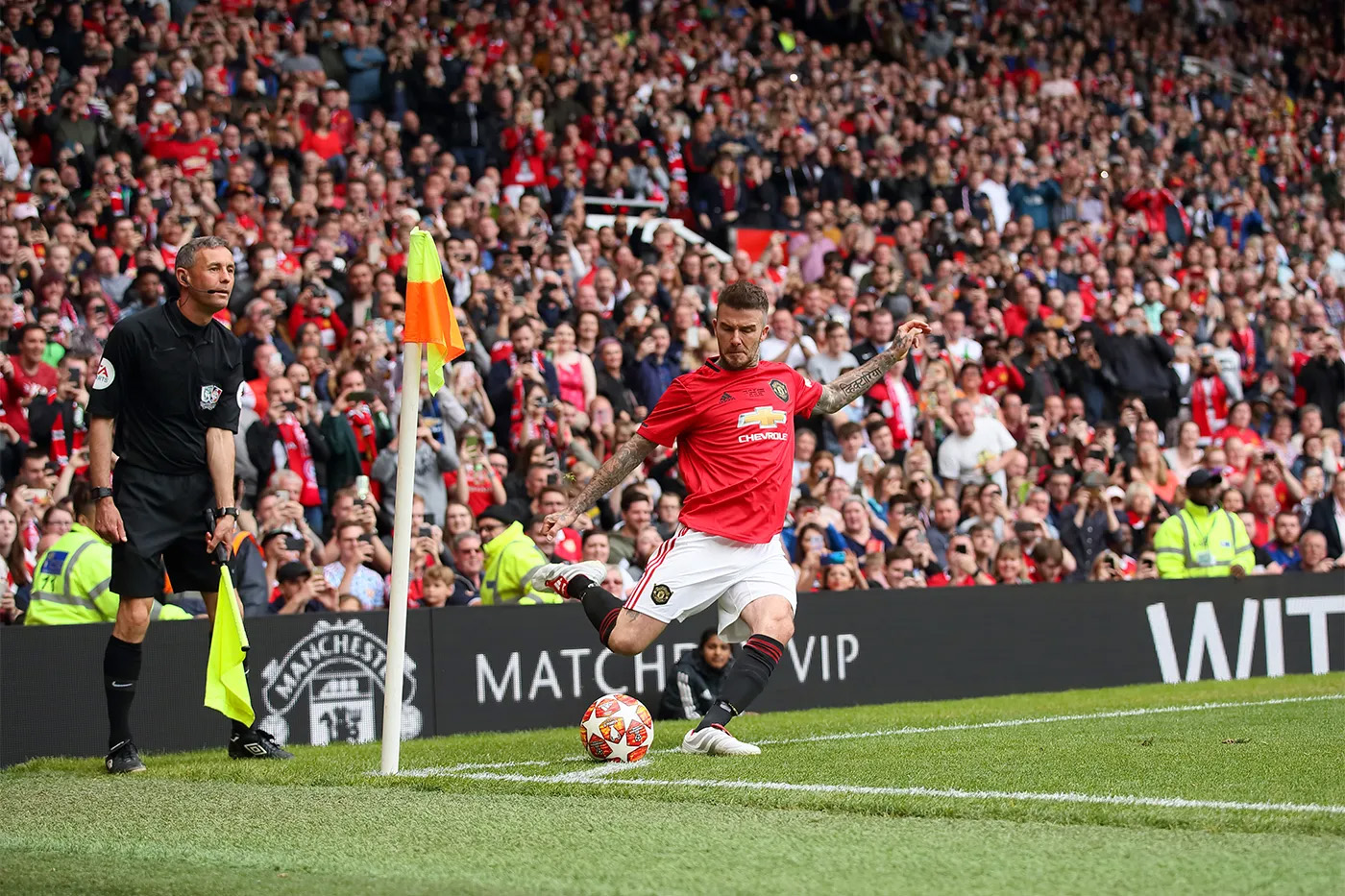
It contributed to soccer legend David Beckham’s record number of goals on direct free kicks, and entered popular culture by inspiring a movie which, in turn, inspired a West End musical.
So, how do you bend it like Beckham? At least from a physics point of view?
Northeastern University physicist Arun Bansil said many forces are at play in “bending” a soccer ball — including gravity, which draws masses with energy toward each other, and drag, which slows down the forward motion of the ball.
Bansil said the “absolute key” to bending, however, is the Magnus force, or effect, which is the generation of a sidewise force triggered by a ball spinning through the air.
“As the ball rotates, one side moves with the oncoming airflow while the other moves against it,” said Bansil, university distinguished professor of physics at Northeastern. “This accelerates the air on one side and decelerates it on the other.”
Read more at Northeastern Global News
Photo by Matthew Ashton – AMA/Getty Images