COS News
Research
“The basic premise is that AI can help us do better physics, and something that is less expected is that physics can also help us understand AI better,” said Northeastern professor James Halverson.
AI and physics have more in common than you might think.
News
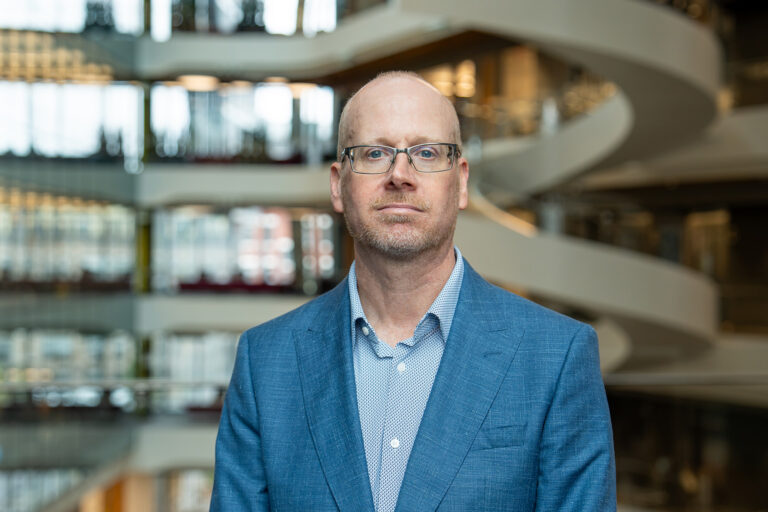
Mark Williams, Professor and Chair of the Department of Physics, will assume the role of Dean of the College of Science, effective July 1, 2026.
Mark C. Williams named Dean of the College of Science
Showing 251 results in Physics
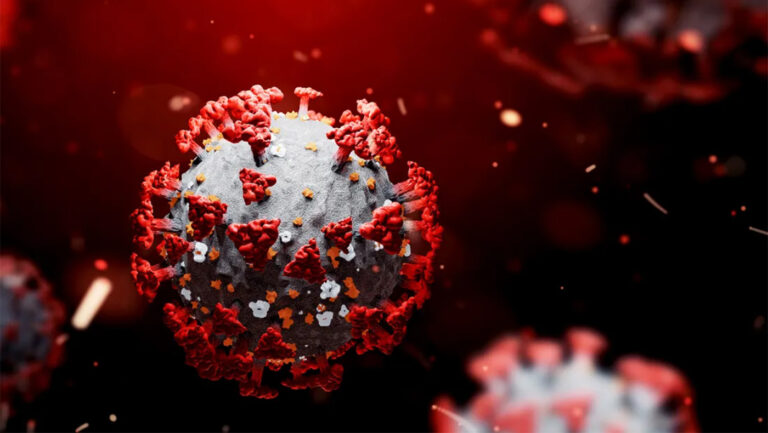
New insight into antibody shows how it could offer sweeping protection against evolving SARS-CoV-2 virus
The results suggest that the neutralizing antibody could hold the key to manufacturing a vaccine that protects against a rapidly evolving virus.
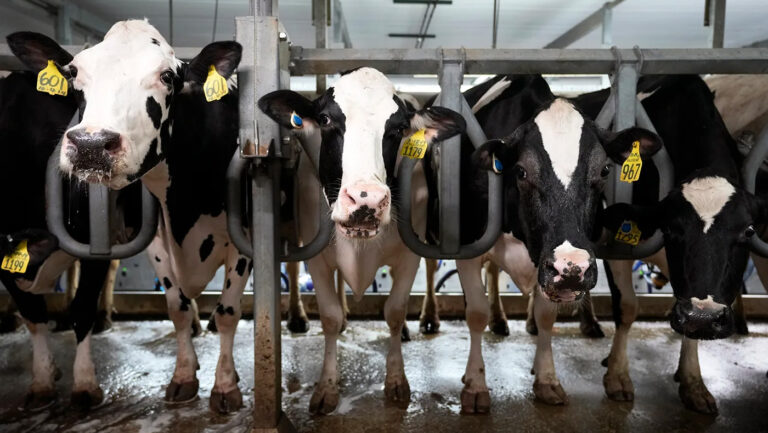
How Northeastern researchers are helping predict the outbreak of bird flu on US dairy farms
Bird flu has been detected in 169 livestock herds on dairy farms in 13 states. Northeastern researchers are creating a “risk map” of which farms might be next.

Galaxy clusters could be used as natural dark matter colliders to understand nature of invisible particles
Observing groups of galaxies, where dark matter naturally collides, could help scientists pinpoint what kind of particle makes up dark matter, a Northeastern University paper finds.
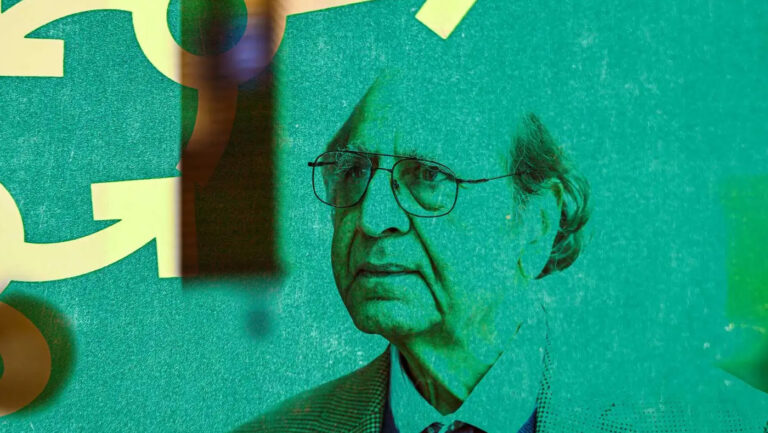
Pran Nath, Northeastern’s longest-tenured professor, pursues the beautiful mysteries of physics
After 58 years, the world-renowned researcher continues to explore the secrets of the universe. His explorations are a mystery to most of us, conducted with a stream-of-consciousness array of mathematical symbols reinforced by terminology that sounds like English taken to the third power.

Northeastern summit on innovative public health technology is an important first step to fixing systemic flaws
When the COVID-19 pandemic hit, the nation’s public health infrastructure was underprepared, to say the least. Public health officials relied on fax machines to deliver test results, hand wrote people’s vaccination status on small pieces of cardboard and discovered that stockpiles of masks and gowns to protect health care workers were insufficient. “We really have...

This Northeastern physicist is revolutionizing astronomy with unprecedented dark matter mapping through space observatory in Chile
A new astronomical observatory nearing completion atop a desert mountain in northern Chile will reveal the workings of the universe as never before. It might even revolutionize our understanding of the mysterious forces shaping the cosmos, such as dark energy, says Northeastern assistant physics professor Jonathan Blazek. With a telescope as wide as a tennis...

Does traditional Chinese medicine work? Network science can help evaluate effectiveness, Northeastern researchers say
In a striking example of old meets new, Northeastern University researchers say network science promises to be a powerful tool in evaluating the effectiveness of traditional Chinese medicine herbal remedies used for more than 2,000 years. Traditional Chinese medicine, or TCM, has proved a challenge for researchers seeking to pinpoint the specific mechanisms by which...
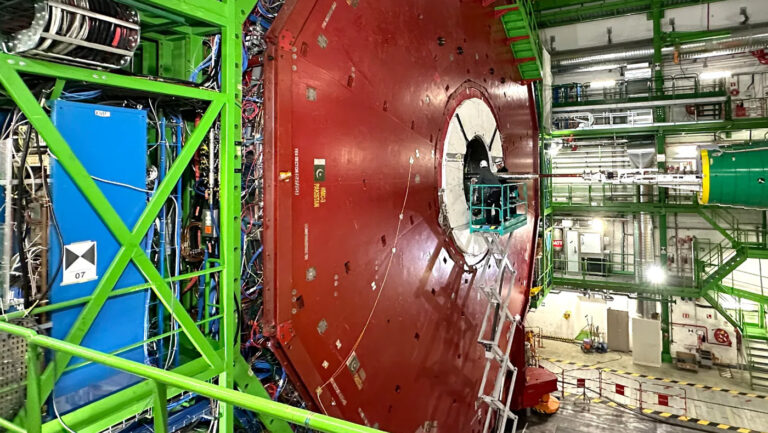
Meet the Northeastern co-op helping to upgrade the world’s largest particle accelerator at the European Organization for Nuclear Research
For Christian Bernier, it started with videos he saw as a kid on popular YouTube channels like Minute Physics. Bernier has always been interested in science, so he found topics around the fundamentals and building blocks of the world to be particularly fascinating. He quickly developed an “insatiable desire to know more about the universe,...

Desert locusts’ jaws sharpen themselves, Northeastern materials scientist discovers
Sharks lose teeth all their lives, replacing them in a kind of endless rotating Rolodex, while humans, of course, get only our two sets. Beavers’ teeth, notoriously, grow all their lives and have to be worn down to prevent injury. New research has now placed another animal into the self-sharpening set, Schistocerca gregaria, the desert...
Using a Novel Balloon-Borne Technology to Probe Deeper into our Dark Universe
NASA has awarded Northeastern and partners a prestigious grant to launch a particle detector into earth’s upper atmosphere. How can we better understand vital questions about the unseeable dark matter that seems to constitute much of the vast universe around us? And how can we capture the faintest yet most information-rich signals from distant astrophysical...
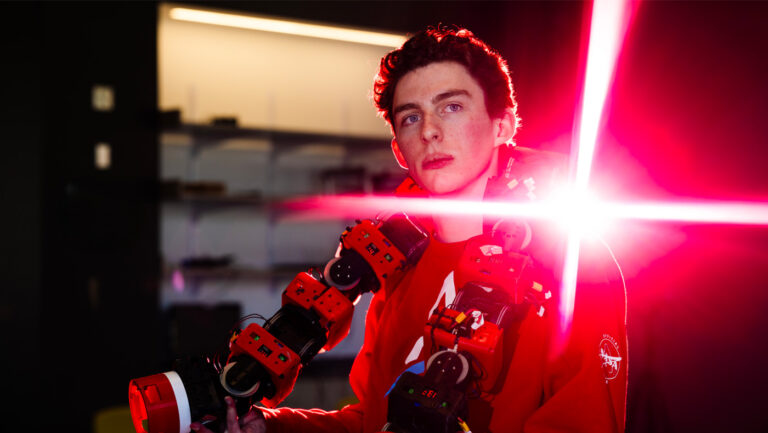
Can robots be used to extract ice on the moon? This NASA research fellow from Northeastern wants to find out
Henry Noyes’ wiring work can be seen all over COBRA, Northeastern University’s award-winning serpentine robot designed to tumble down the deep craters on the moon. As the electrical lead of the Crater Observing Bio-inspired Rolling Articulator project, Noyes designed the machine’s power system, allowing each of its individual modules to function in harmony. Noyes, who...

Northeastern network science professor Albert-László Barabási elected to National Academy of Sciences
Albert-László Barabási was sitting in Central Café in Budapest, Hungary, when he got the call that he had been elected to the National Academy of Sciences (NAS) for his work in network science. Network science’s recognition has felt like a long time coming, he says. In 2005, the National Research Council — “the operating and...