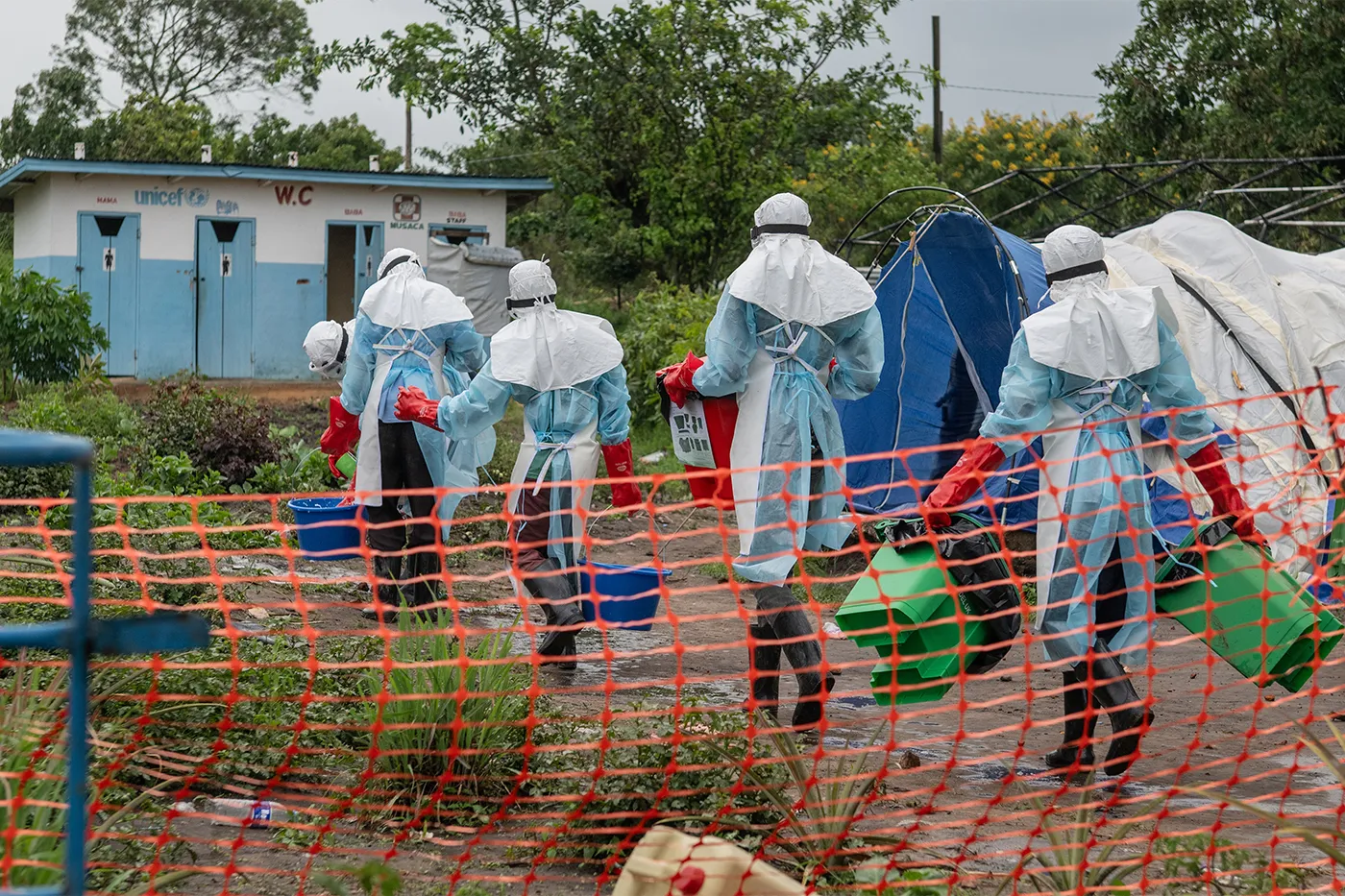
The Ebola outbreak raging across Central Africa is an all-hands-on-deck situation, so it’s no surprise that Northeastern researchers — some of whom were also part of the response during previous major Ebola outbreaks on the continent — have been called on to help. This time around, the experts are aiding the effort in a range of ways, including by providing intelligence, using AI to analyze data, and developing risk models.
“We don’t do work on the ground — what we call intervention — but we provide the intelligence to the people responding to the emergency,” said Alessandro Vespignani, director of the Network Science Institute (NetSI) and Sternberg family distinguished professor in physics at Northeastern University. “One of the first lines of defence is intelligence.”
As of Saturday, May 30, 349 suspected deaths were attributed to the outbreak and there were 272 confirmed cases, according to data collected by the World Health Organization (WHO), which coordinates the world’s response to health emergencies.
Read more at Northeastern Global News
Photo by AP Photo/Moses Sawasawa