A couple of Northeastern University grads are twisting — literally — an invasive wetland grass into a coastal restoration hero.
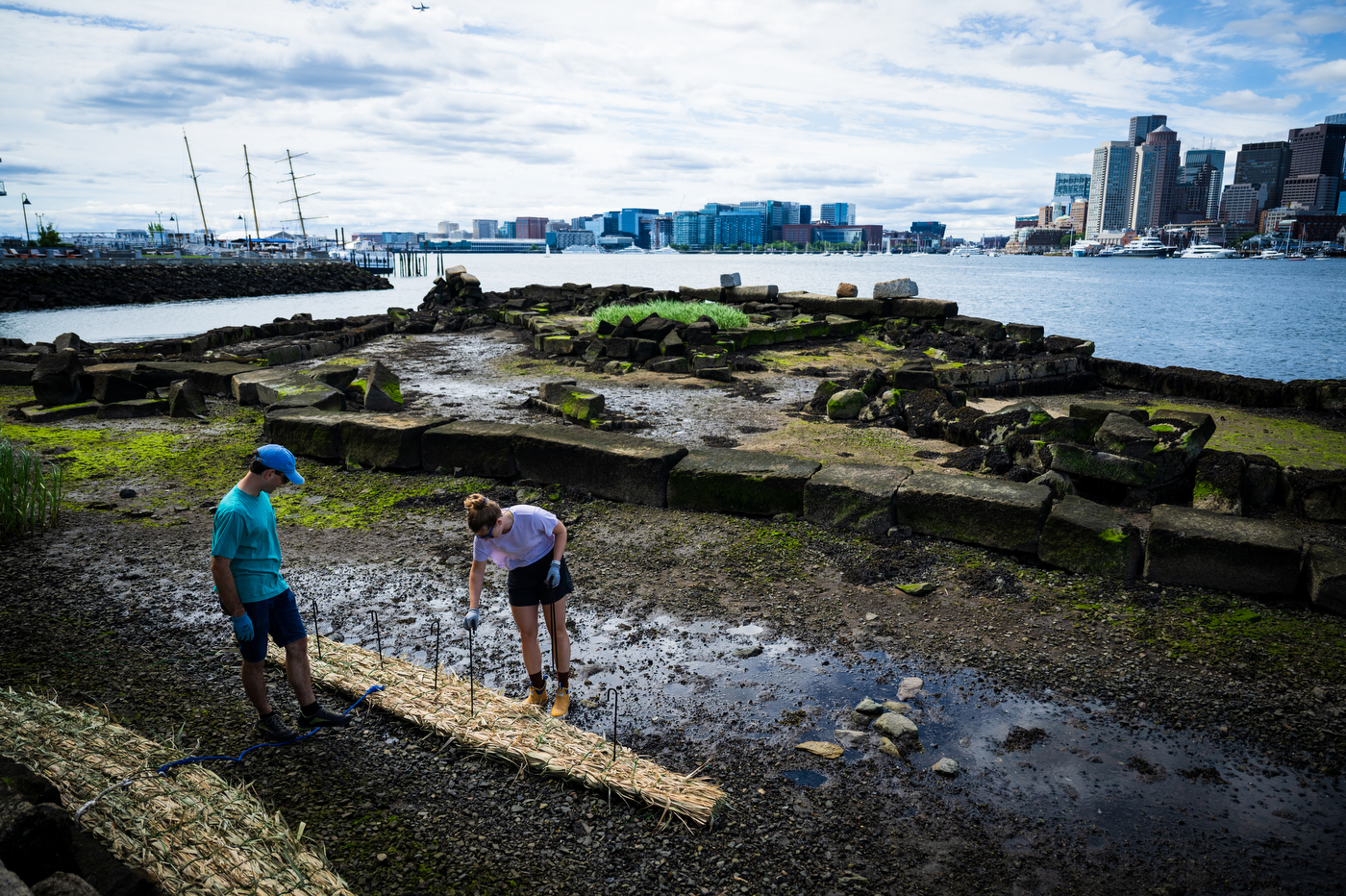
Kayla Sklar and Anja Clark spend part of their day cutting down tall, plumed phragmites and bundling them into rods and other shapes to serve as bedding material on which they plant native spartina grasses.
Once rooted, the spartina helps protect the shoreline from erosion and wave action and serves as a habitat for native flora and fauna.
The endeavor is part of a coastal restoration project known as the Emerald Tutu, which uses culled invasive biomass as the substrate for native restoration and shoreline stabilization.
“It’s just a lot of problem-solving, working outside,” says Sklar, who graduated from Northeastern in 2022 with a degree in environmental science with a marine concentration.
“After I graduated, I learned about this project,” says Sklar, a nature-based infrastructure ecological engineer.
“I thought what they were doing with the coastal protection aspects of ecological restoration was really cool, and I started working for them, making these prototypes,” she says.
The phragmites bundles can be as long as 10 feet and are anchored to the shoreline with stakes and sometimes heavy rocks. The tidal flow of saltwater soaks them like sponges, which — the theory goes — makes them an excellent platform or bed on which to grow native spartina grasses.
About two dozen of these prototype plant beds are located along shorelines, including sites in East Boston.
Read more at Northeastern Global News
Photo by Alyssa Stone/Northeastern University