As complicated as computational theory may seem, some of its most fundamental elements mimic the same phenomena you’d find in nature.
Look at neural networks, which were designed by computer scientists in the late 1950s. They function similarly to the neural pathways of the human brain and have been foundational to many artificial intelligence-based technologies out in the world today.
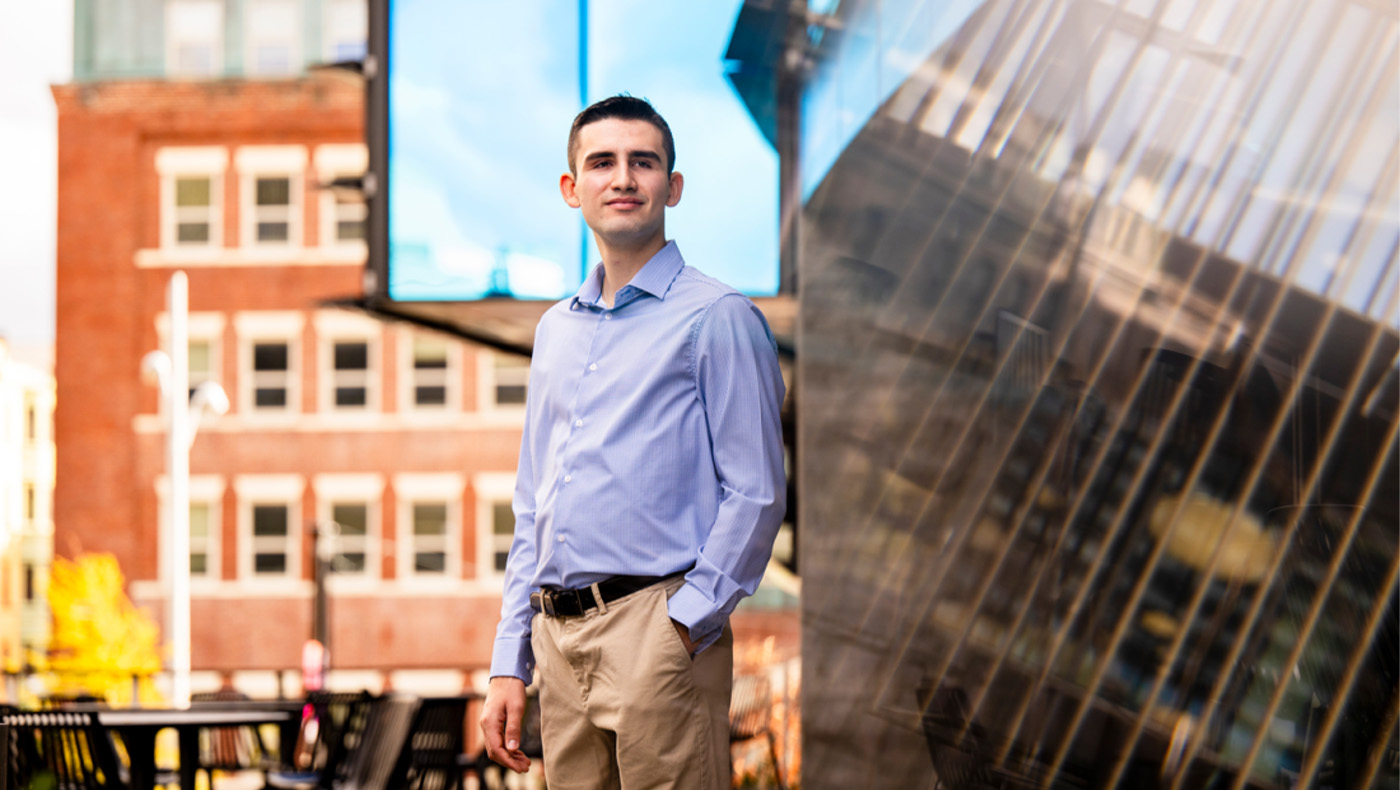
“Nature is pretty good at solving problems,” says Mauricio Tedeschi, a fourth-year computer science and physics student at Northeastern University. “You can see this in a lot of biological structures — the human brain is one of the most powerful machines in the universe. Emulating the human brain’s function seems like an obvious way to make much better technology.”
During his co-op at Forschungszentrum Jülich, Tedeschi applied those principles as he helped the German interdisciplinary research center develop and test algorithms for dedicated “brain-inspired hardware” for high-performance computing.
Read more from Northeastern Global News
Photo by Alyssa Stone/Northeastern University