
Developmental Neuroscience
Developmental neuroscience investigates how the nervous system forms, matures, and changes from embryonic stages through adulthood. Our world-class faculty are studying neural growth, circuit formation, synapse development, and brain plasticity. Their work illuminates the origins of neurological and psychiatric disorders, informing interventions for developmental conditions and advancing our understanding of learning, behavior, and brain maturation.
Members
-

Dr. Bex uses cross-disciplinary approaches to study basic and clinical vision science, extending visual perception models to real-world conditions while developing diagnostic and rehabilitation methods for blinding eye diseases like macular degeneration, glaucoma, and amblyopia.
-

Dr. Brenhouse’s research focuses on the dynamic interaction between the brain, the body, and the environment throughout early life and adolescent development.
-

Dr. Davidow’s research bridges psychology, neuroscience, and computer science to investigate how different types of learning change across development in children, adolescents, and adults, influencing memory, decision-making, and goals.
-

Dr. Gabard-Durnam studies how environments and neuroplasticity interact to shape brain and behavior development, aiming to understand the mechanisms driving healthy, resilient, or maladaptive outcomes.
-

Dr. Melloni’s expertise lies in basic and clinical research on the behavioral neurobiology of aggression.
-

Dr. Qi studies the neurobiological organization of language in the brain, how it develops and is disrupted in neurodevelopmental disorders, and how this knowledge can enhance language learning and intervention.
-

Dr. Reid investigates how human physiology adapts to social and nutritional contexts across the lifespan, focusing on stress, the immune system, and nutrient metabolism.
-

Dr. Rodman bridges developmental cognitive neuroscience and clinical science to examine how teens’ social experiences interact with brain development to increase adolescent mental health risk, aiming to improve adolescent wellbeing.
Related Institutes and Centers
-
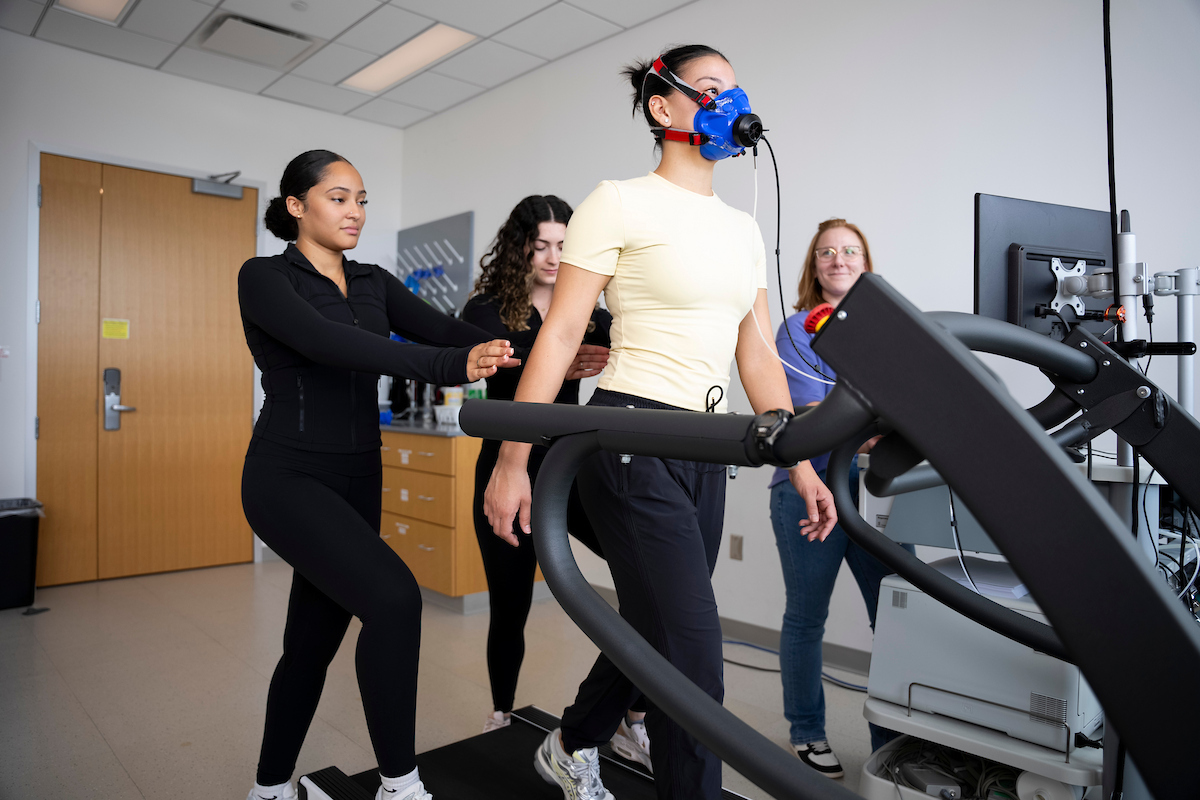
The Institute for Cognitive and Brain Health investigates how lifestyle choices and health behaviors–such as physical activity and diet–and their physiological effects, including fitness and adiposity, influence brain and cognition.
-

The Brain Game Center for Mental Fitness and Well-being designs interactive experiences for diverse populations to transform how we think about mental fitness and well-being.
-

The Center for Translational NeuroImaging advances brain research using advanced MRI to study neurodegenerative diseases, examine how substances affect brain chemistry and behavior, and investigate repeated head injuries including concussions and CTE.
Interested in working with us?
In the news
-
Research

Why we remain attached to the music of our youth
Juliet Davidow, assistant psychology professor, argues that the social rewards when listening and experiencing music in our younger days helps ‘encode’ it onto our memories. -
Research
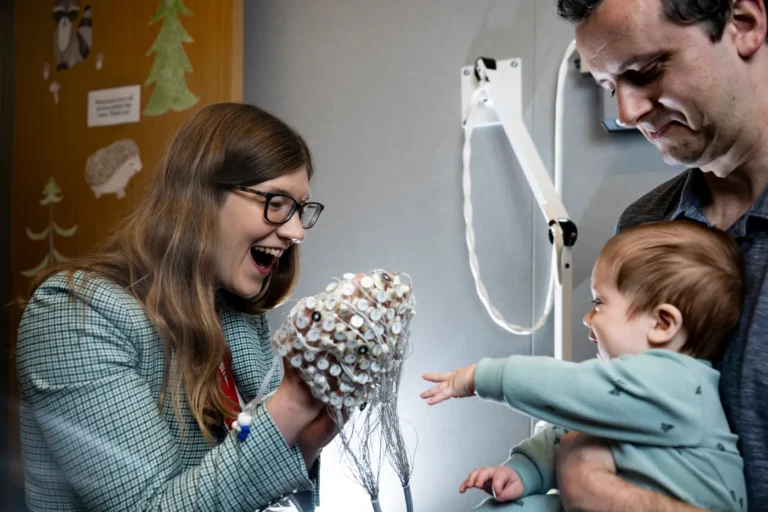
What can babies teach us about brain development?
Laurel Gabard-Durnam’s latest research used EEG to better understand how babies’ brains develop. -
Research

Our preference for certain foods may be impacted by early life stress, research shows
Researcher Brie Reid finds a correlation between acute stress in infancy and an increased preference for inflammatory foods in subjects’ late teens and 20s. -

These goggles scan your brain to detect neurological and vision function loss
It combines a smartphone in a virtual reality headset with a brain sensor and plays podcasts.