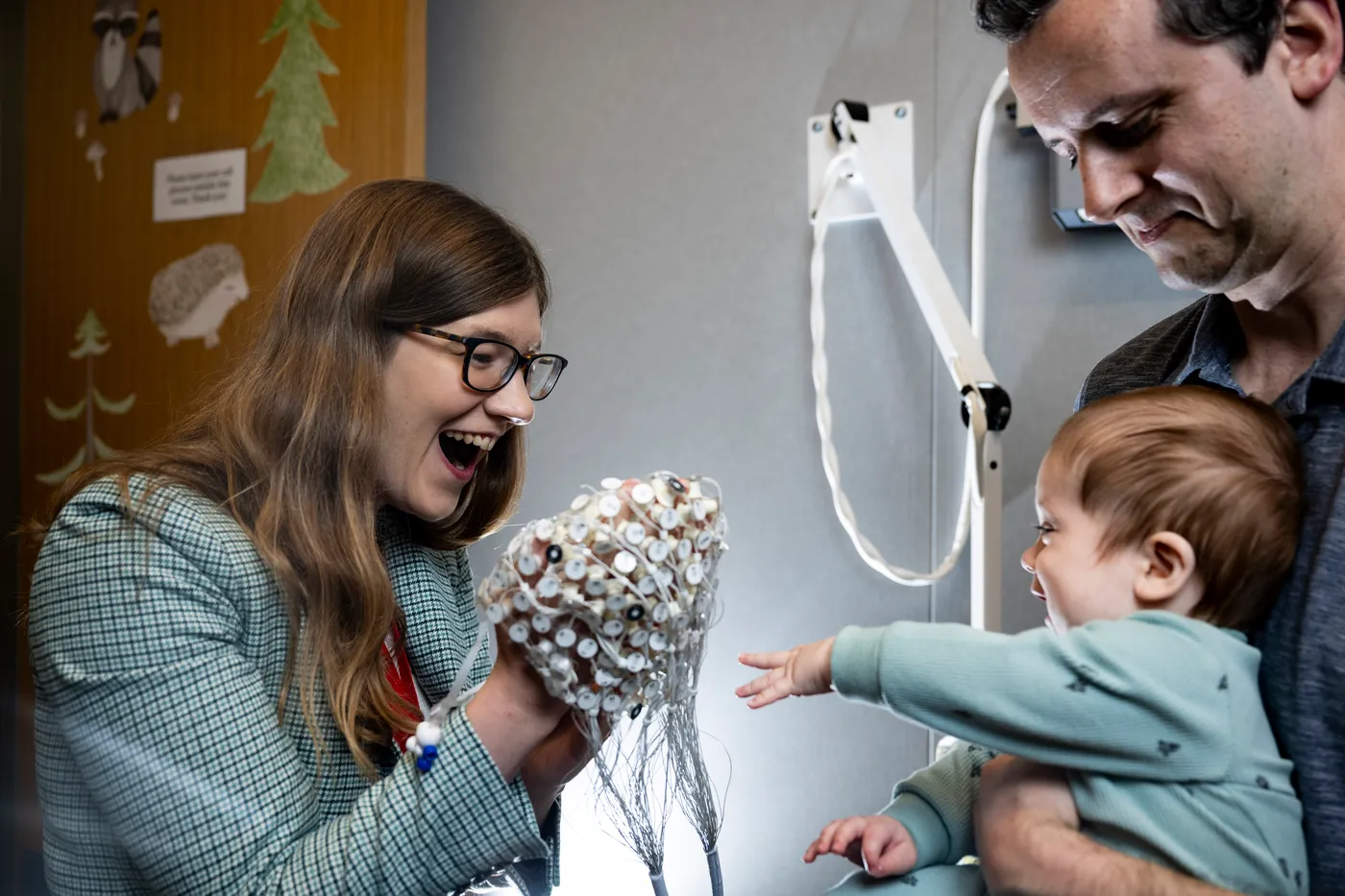
A lot of brain development happens early in life, but researchers don’t have a strong understanding of how a baby’s brain develops while they’re awake.
New research from Northeastern University sheds light on how babies develop brain network patterns during their first two years of life as they are exposed to new stimuli for the first time using an electroencephalogram, or EEG, which is a test that records the brain’s electrical activity.
“It’s such a rapid window of change for the brain to come out into the world,” said Laurel Gabard-Durnam, an assistant psychology professor and director of the Plasticity in Neurodevelopment (PINE) Lab at Northeastern University. “It’s a really exciting window to understand how these things first form and start to work together to coordinate behavior.”
These patterns, called functional networks, are a set of regions across the brain that are coordinated in their activity in order to achieve some sort of function, said Gabard-Durnam, also a member of Northeastern’s Institute for Cognitive and Brain Health.
Read more at Northeastern Global News
Photo by Alyssa Stone/Northeastern University