COS News
Research
“The basic premise is that AI can help us do better physics, and something that is less expected is that physics can also help us understand AI better,” said Northeastern professor James Halverson.
AI and physics have more in common than you might think.
News
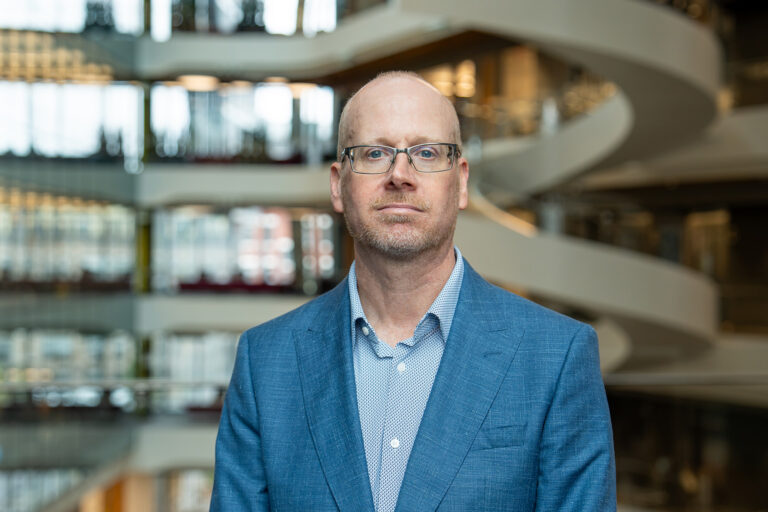
Mark Williams, Professor and Chair of the Department of Physics, will assume the role of Dean of the College of Science, effective July 1, 2026.
Mark C. Williams named Dean of the College of Science
Showing 237 results in Marine and Environmental Sciences

Experience Magazine: He spent months underwater. Now he wants to save the ocean.
Mark Patterson, marine scientist, aquanaut, and inventor of underwater robots, walked into San Diego Comic-Con dressed as a giant coral polyp. He was decked out entirely in orange, with ten fake tentacles dangling from his neck. Green and purple splotches on his shirt front represented microplastics pollution, lodged in his polyp-gut. This was 2015, and...
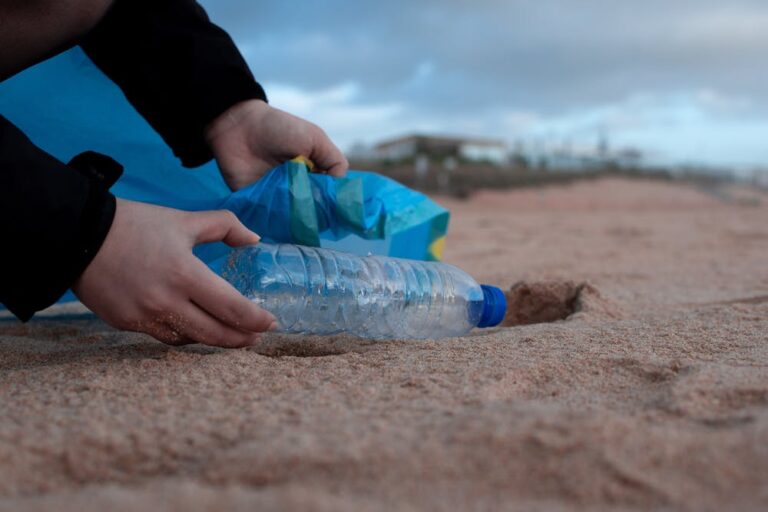
College of Science Connects: The Plastics Problem
Hear from Professor Aron Stubbins and students to discuss the interactions between humans and the environment. Explore the global cycle of plastics, the processes that breakdown plastics in the environment, and the ecological and human health implications of plastics and their by-products. Discover new innovations that may be instrumental in finding solutions to...
Q & A with Troy Langknecht, MS in Environmental Science and Policy
Q & A with Troy Langknecht, Environmental Science and Policy student.
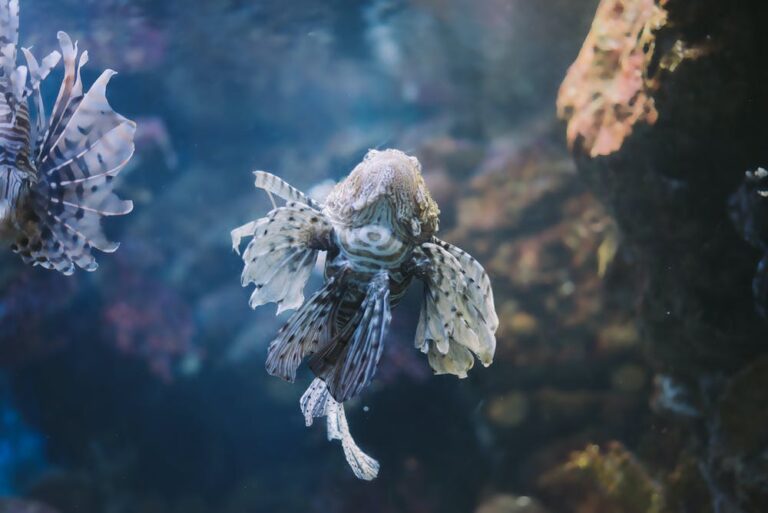
These co-ops are taking part in creating the next model organism, one cephalopod at a time.
It’s not every day you get the chance to work with cephalopods. That, however, is not the case for Northeastern students Sarah Beecy and Sonia van Stekelenborg. Beecy, a third-year marine biology student, and van Stekelenborg, a third-year environmental science student, are currently on their first co-op as marine cephalopod aquarists at Marine Biological Laboratory (MBL) in Woods Hole, Massachusetts. The MBL is a...
On co-op at The Food Project, she hopes to make a difference in the environmental justice field.
Sophia Samaha shares her experience as a College of Science student on co-op.
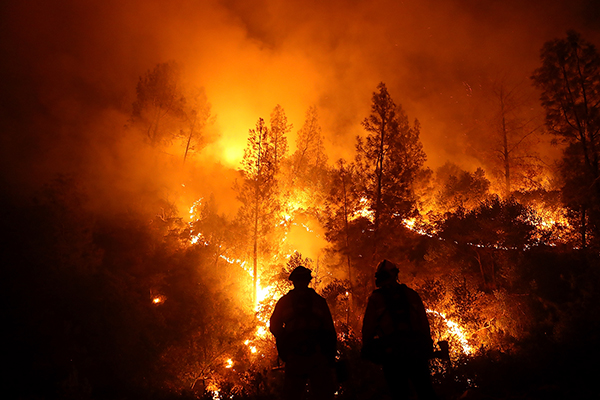
Is wildfire soot leaving a mark on the world’s oceans?
When clouds of smoke and ash billow out over the ocean, stretching away from the wildfires that are their source, they might not just affect the air quality. Rather, the wildfire soot could leave a chemical mark on the waters below. That’s the idea behind new research by Aron Stubbins, associate professor of marine and...
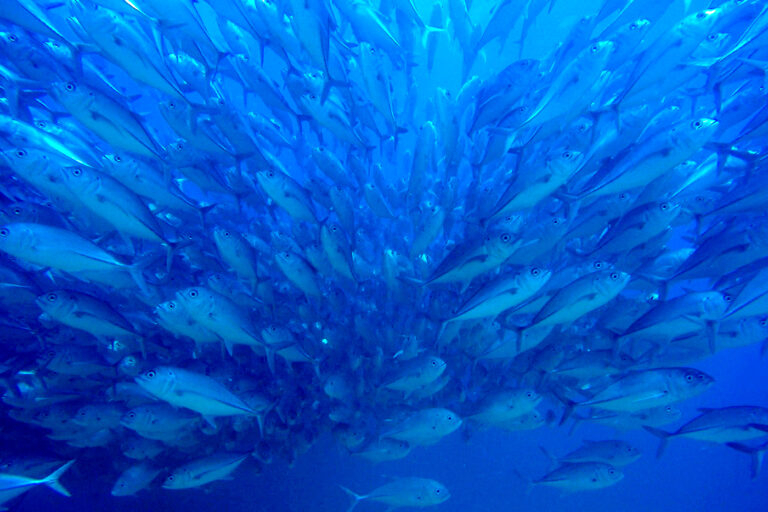
To safeguard key coastal ecosystems, this scientist starts by talking to the local anglers
Marine and Environmental Sciences Professor, Steven Scyphers, works with anglers to take comprehensive look yet at greater amberjack populations.
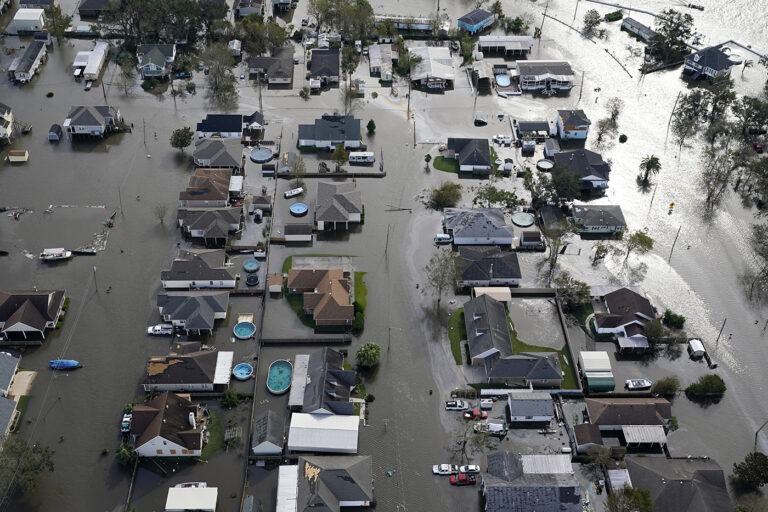
How data from Hurricane Ida can help bolster levees, power infrastructure.
Qin Jim Chen, professor of civil and environmental engineering, collects data from Hurricane Ida to save lives and help prevent flooding.
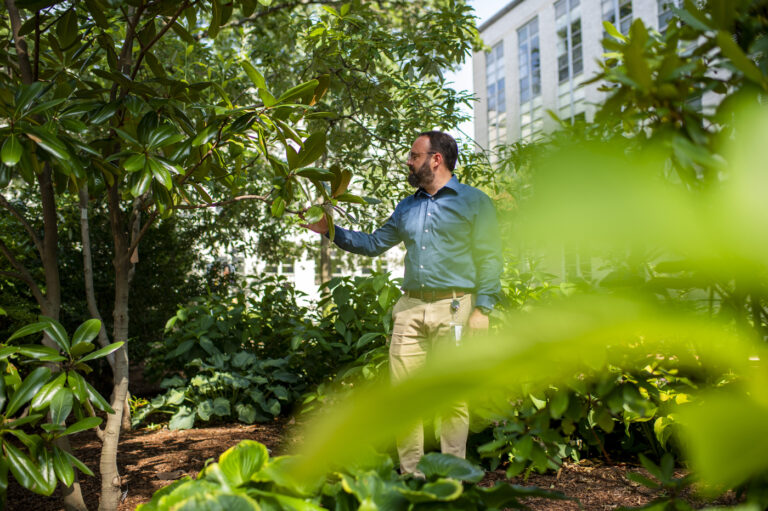
He cultivates the campus’s ‘urban forest’ with an eye on the future.
It is a sticky, tropical day in August, making the Boston campus feel like an open-air blast furnace. Good thing Northeastern has nearly 1,500 trees to absorb some of the heat, or it could feel a lot worse, says Stephen Schneider, the university’s new chief arborist. “One of the more beneficial aspects of this urban...
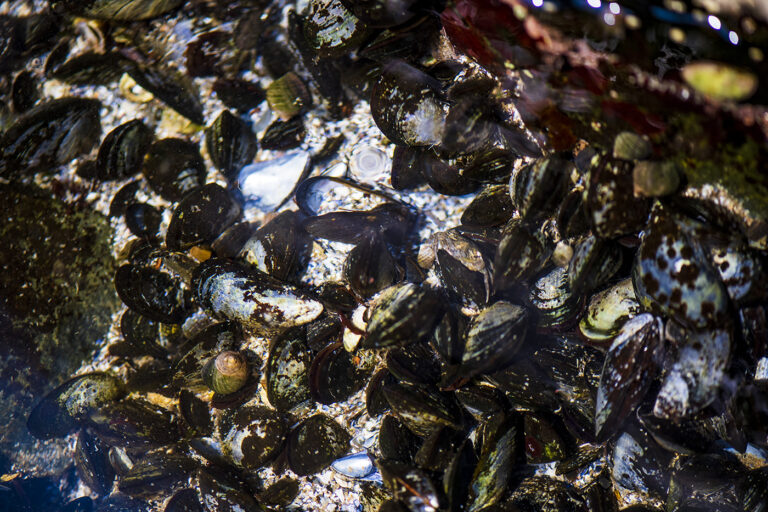
If we don’t halt climate change, the world’s oceans may never be the same.
The vast majority of the world’s oceans may never be the same if humanity doesn’t curb our carbon emissions. As much as 95% of the climates in the surface ocean that exist today could completely disappear within 80 years, according to new research led by Katie Lotterhos, associate professor of marine and environmental sciences at...
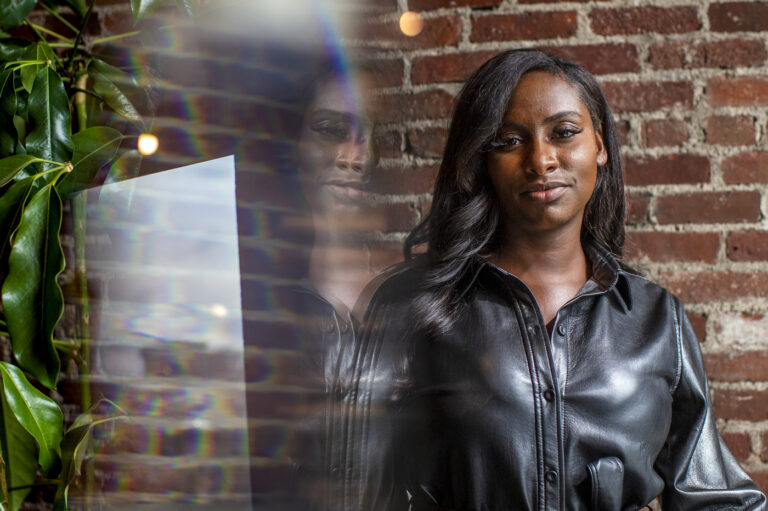
How the natural pigments in marine life inspired a beauty products startup
Camille Martin, PhD and assistant professor of Chemistry, Leila Deravi, developed Seaspire Skincare, a beauty product line drawn from marine ecosystems.
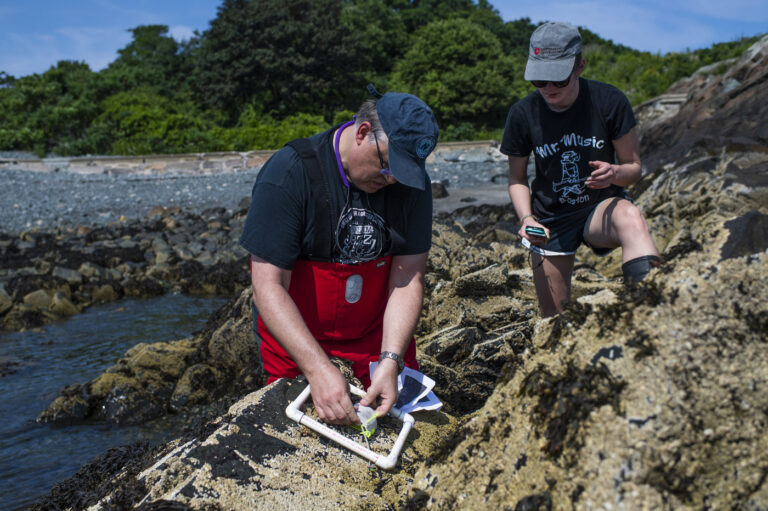
When a heatwave comes, this scientist takes a shellfish’s perspective
Brian Helmuth, marine science and public policy professor at Northeastern, and his team built "robomussels" and other temperature loggers in an effort to find refugia for the mussels dying as a result of record-setting heatwaves.