New England’s a complicated place, especially when it comes to flooding. Researchers at the Coastal Sustainability Institute are finding new ways to reduce uncertainty in this system.
Samuel Muñoz, associate professor of marine and environmental sciences at Northeastern University, says that the region’s complex network of small, interconnecting rivers, a diverse topography and Atlantic atmospheric movements all make it extremely difficult to model mathematically.
New research from Muñoz and Ph.D. student Lindsay Lawrence uses machine learning to build “self-organizing maps” to reveal how atmospheric and land conditions interact, identifying four patterns that lead to flooding in New England. This breakthrough in weather modeling promises to help predict floods before they happen, especially in a warming climate.
Read more at Northeastern Global News
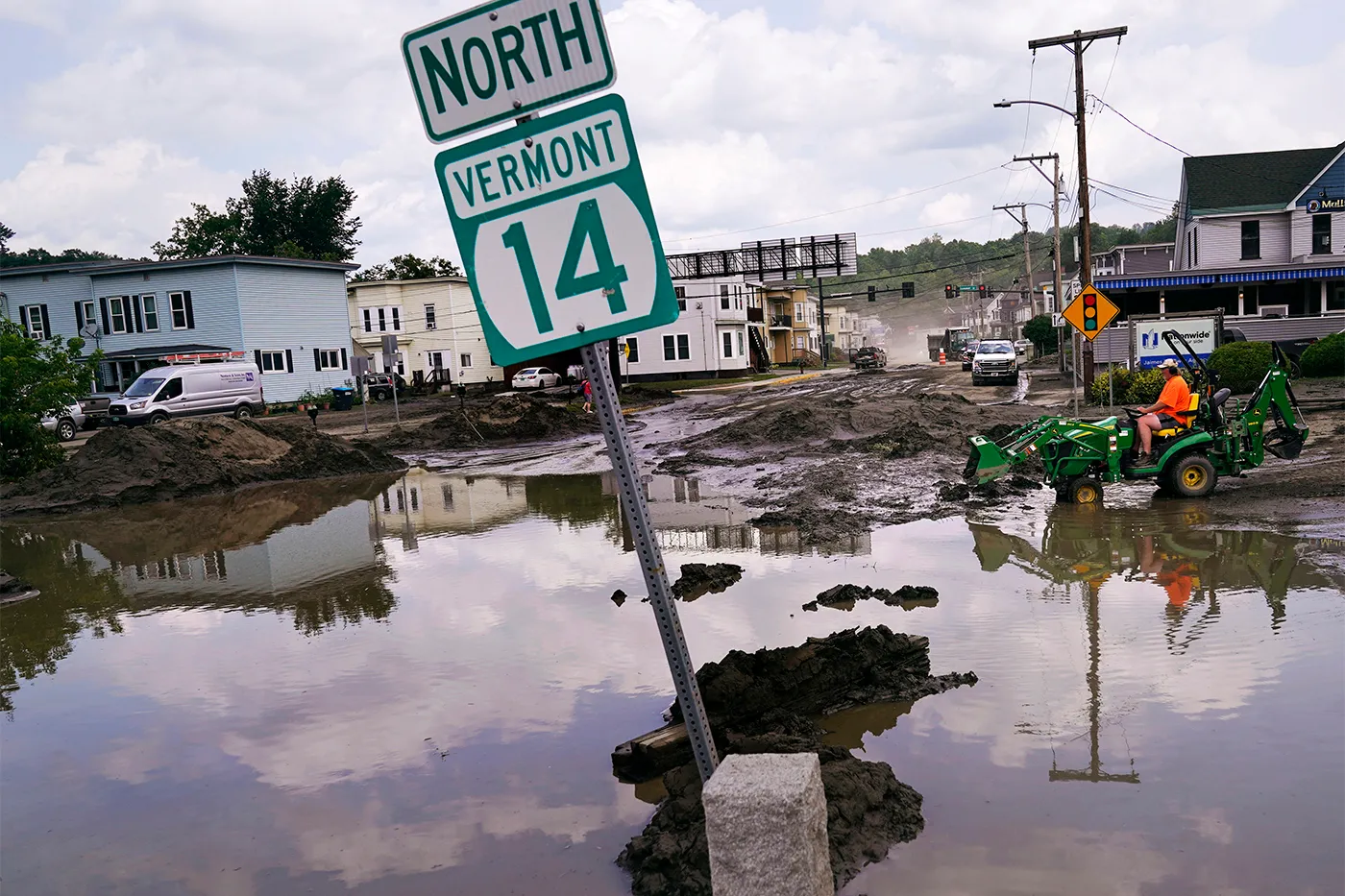
AP Photo/Charles Krupa, File