Most people probably associate algal blooms with red tides in Florida that can lead to skin irritation, burning eyes and rashes in exposed individuals.
But, increasingly, Alaska’s Bering Strait also is home to toxic algal blooms—blooms that threaten the shellfish industry and cause paralytic shellfish poisoning that imperils the lives of seals, birds, fish, foraging pets and even humans.
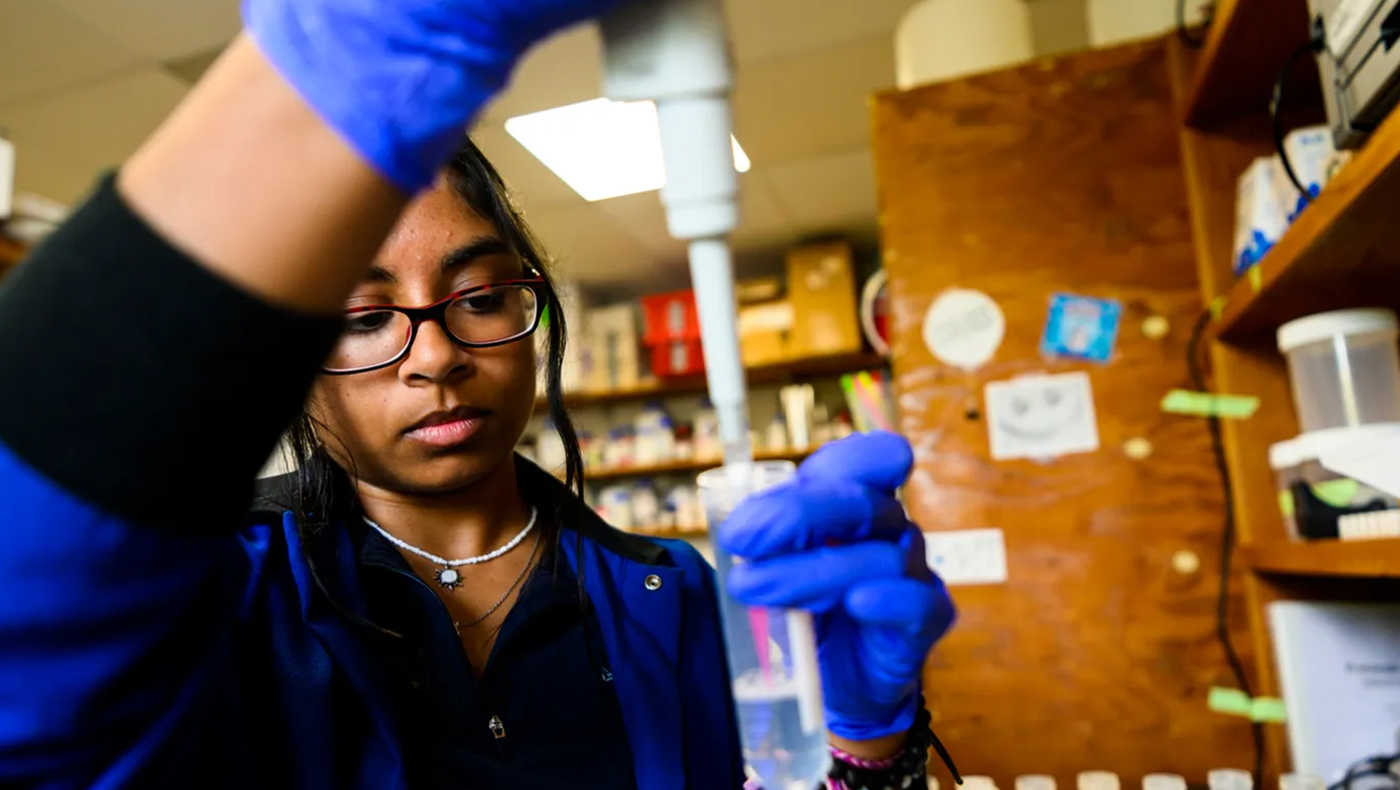
Northeastern University co-op student Anushka Rajagopalan is part of a team of researchers in Don Anderson’s lab at the Woods Hole Oceanographic Institution in Massachusetts who are studying the conditions behind the creation of Alaska’s harmful algae blooms, with an eye to contributing to mitigation efforts.
In particular, Rajagopalan is focused on Alexandrium catenella, a single-celled marine plankton that produces the neurotoxins that cause paralytic shellfish poisoning.
Read more from Northeastern Global News
Photo by Alyssa Stone/Northeastern University