Algebra
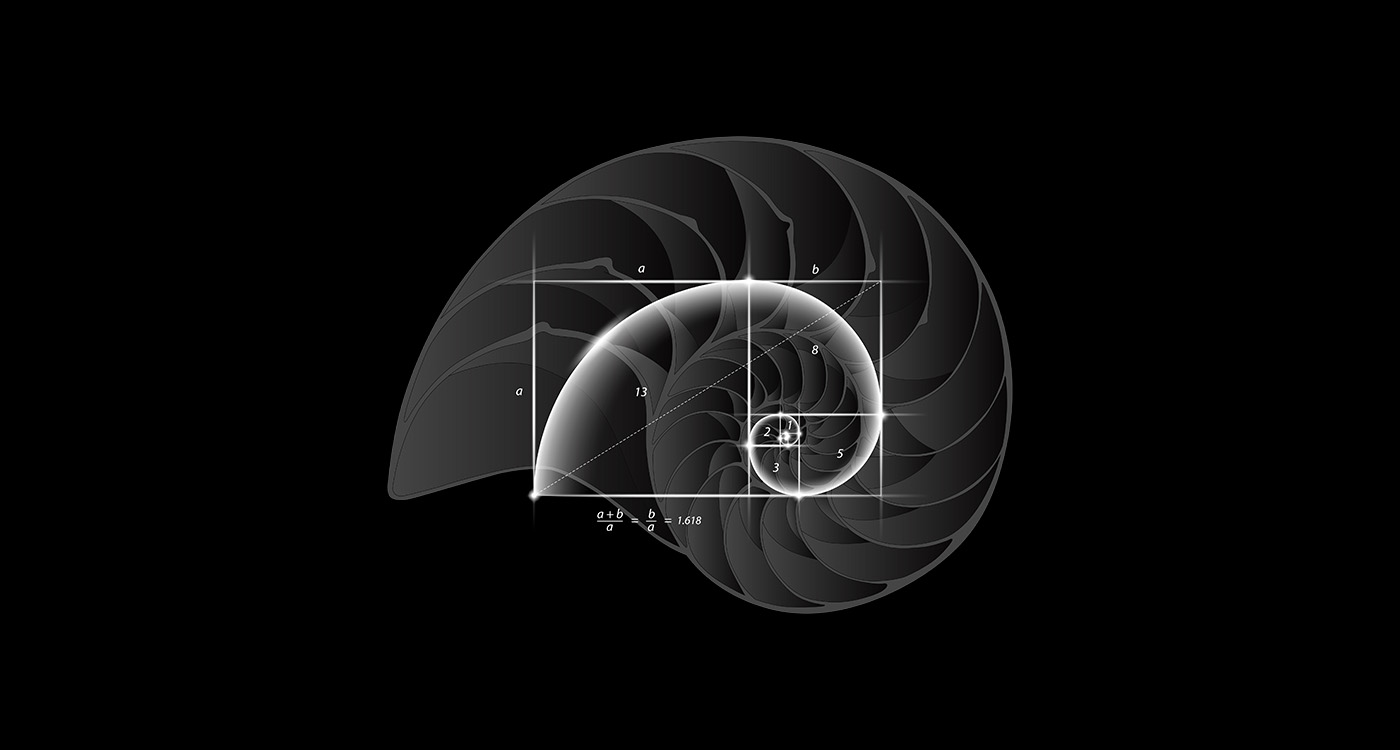
Modern algebra has its roots in the mathematics of the ancient world, arising out of the basic problems of solving polynomial equations and the study of algebraic structures and operations. Following an explosive development in the twentieth century, it is now a vibrant, multi-faceted and wide-ranging branch of mathematics, having ties with nearly every other area of mathematics and the sciences.
Our faculty bring deep expertise to the study of algebraic structures such as groups, rings, fields, and modules, advancing foundational theory and its connections to number theory, representation theory, and beyond.
Members
-
Invariant theory, representation theory of quivers, tensors, applied algebra
-

Algebraic number theory, algebraic combinatorics
-
Algebraic geometry, string geometry, and mathematical physics
-

Geometric and combinatorial representation theory, knot theory
-

Categorification, low-dimensional topology, representation theory
-

Algebra of Jordan block forms, commuting nilpotent matrices
-
Discrete and combinatorial geometry, combinatorics, group theory
-

Representation theory, cluster theory
-
Quantum groups, singularities, algebraic geometry
-

Representation theory, cluster algebras, tensor categories, Poisson geometry
Related Seminars
-
509 Lake Hall | Mondays, 12:15-1:15 p.m. ET
Organizers: Chris Beasley, Harm Derksen, Iva Halacheva, Anthony Iarrobino, Elias Mochan, Oana Veliche -
Organizers: Matan Harel, Matt Hogancamp, Jonathan Weitsman
-
509 Lake Hall | Fridays (alternating), 1:30-2:30 p.m. ET
Organizers: Alia Yusaini Arturo Ortiz San Miguel