Prof. Courtney Marisa Mazur, PhD, Massachusetts General Hospital presents: Molecular control of dendrite formation and osteocyte differentiation
Prof. Li Li, PhD, Cornell University presents: Carotenoid Metabolism: From Pigment Regulation to Plant Development
https://cals.cornell.edu/people/li-li
https://blogs.cornell.edu/lilab/people/
Prof. Jue "Jade" Wang, PhD, University of Wisconsin–Madison presents: GTP at the Center: How Metabolism and Stress Responses Shape Bacterial Growth and Persistence
https://wanglab.bact.wisc.edu/
https://bact.wisc.edu/directory/jade-wang/
Prof. Igor Jouline, PhD, The Ohio State University presents: PAS and Cache: molecular sensors conserved from bacteria to humans
https://biology.joulinelab.org/
Prof. Emeka Okeke, PhD, Northeastern University presents: Untangling the NETs: From the stressed brain to the inflamed gut
https://cos.northeastern.edu/people/emeka-okeke/
What inspired you to pursue your current field of study/research?
My interest in nanomedicine began when I started working at the Nanomedicine Innovation Center at Northeastern University. Through this experience, I was introduced to the field of nanomedicine and its wide range of applications in healthcare and research. Working in the lab exposed me to innovative technologies and interdisciplinary approaches that combined biology, chemistry, and nanoscience to address real-world medical challenges. The experience made me realize how impactful and rapidly evolving the field is, and it inspired me to explore it further through both research and coursework. This growing interest motivated me to take courses in the Nanomedicine program and eventually pursue a Graduate Certificate in Nanomedicine alongside my master’s degree.
Have you participated in any co-op or study abroad programs? How was that experience?
My co-op experience had a significant impact on my academic and career direction. When I began my master’s program, I was certain that my path would be to graduate and work in a biotech company, which is a common trajectory in the program.
Prior to my co-op, I had spent a year working in an academic lab, where I developed a strong interest in research and particularly enjoyed the independence it offered. I entered my co-op expecting that an industry setting would be more structured and aligned with my long-term goals.
However, during the experience, I realized that the role I was primarily focused on end stage CMC work which did not provide the level of research involvement or intellectual independence I was looking for.
Although this was initially challenging, it became a very valuable learning experience. It helped me understand what I do not want in a long-term career, which is just as important as identifying what I do want. It also gave me the opportunity to explore an industry environment in a time bound setting without the commitment of a full-time role.
As a result, I gained greater clarity about my future direction and now plan to pursue a PhD after completing my master’s degree. I don’t think I would have reached this level of clarity without the perspective I gained through my co-op experience.
What kind of extracurricular activities are you involved in?
I have been actively involved in several extracurricular and leadership activities throughout my graduate studies. I served as an Academic Affairs Senator in the Graduate Student Government, where I worked closely with fellow graduate students to understand their concerns, improve academic experience, and help organize events that support students’ professional and personal development.
I am also part of the Peer Pathway Program, where I initially joined as a mentee and later became a mentor. This program played an important role in helping me adjust to a new city and navigate graduate school. As a mentor, I aimed to provide the same guidance and support I received, while also building meaningful connections with other students.
In addition, I completed the GLI course offered by the Center for Student Involvement, which helped me develop a broader understanding of leadership. It strengthened my ability to work in team settings and gave me practical insights that I can apply in both academic and professional environments.
What has been the highlight of your experience in COS so far?
One of the highlights of my experience in the College of Science has been my involvement in nanomedicine through both coursework and research. The Nanomedicine course taught by Dr. Ahmed Atef was especially impactful because of the independence it gave students to design their own study plans and experimental approaches. This was a very different and enriching experience compared to traditional structured lab courses.
In the course, we worked on the design of multifunctional nanoparticles for in vivo drug delivery and imaging, while also evaluating methods and instrumentation for nanoparticle synthesis and characterization. As part of our project, we synthesized lipid nanoparticles loaded with a chemotherapeutic drug and designed and executed in vitro protocols for their analysis. This experience helped me strengthen my problem-solving skills, scientific independence, and confidence in experimental design.
Alongside the course, I also had the opportunity to work as a research assistant at the Nanomedicine Research Center, which made the overall experience even more meaningful. Through this role, I gained hands-on experience with both in vivo and in vitro work for ongoing studies in the lab. Being involved in both coursework and active research allowed me to better understand the real-world applications of nanomedicine and helped me further develop my technical and analytical skills.
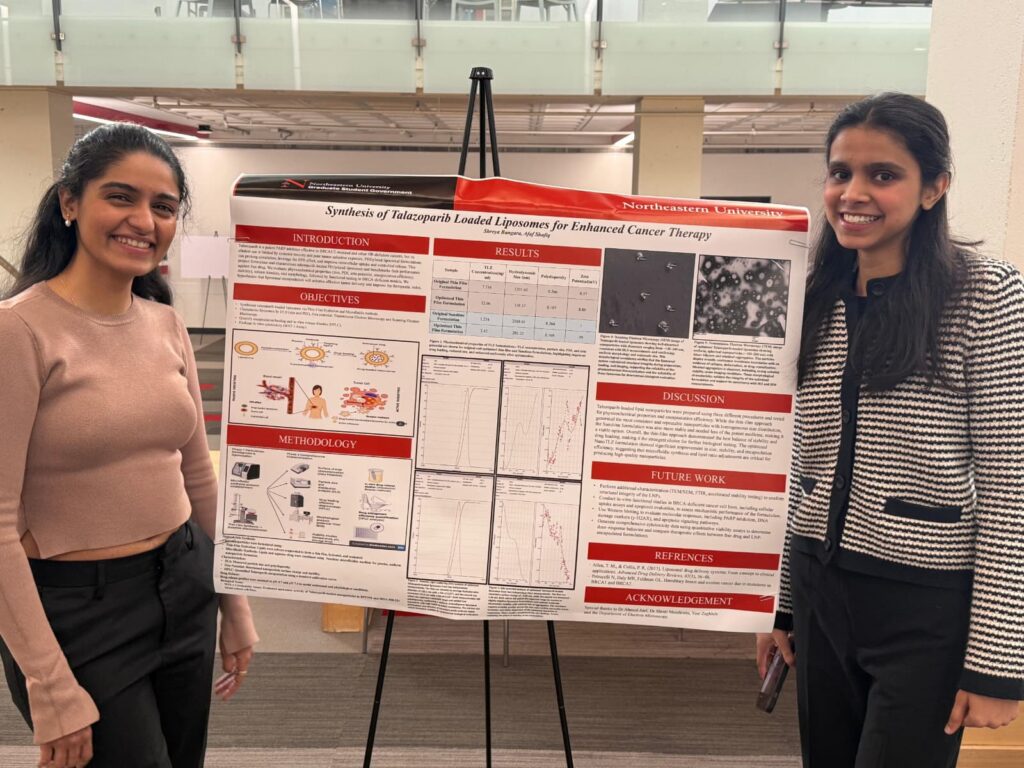
The findings from our work were later presented at the IMPACT Symposium, where our team won second place. This experience strengthened my scientific communication and presentation skills while giving me confidence in presenting research to a broader audience. Overall, these experiences have played a major role in shaping my academic journey and preparing me for future opportunities in research and biotechnology.
Have you had any professors or mentors who really made an impact on you?
Yes, Dr. Ahmed Atef from the Nanomedicine program has had a meaningful impact on my academic and research journey. Working with him at the Nanomedicine Innovation Center was an incredibly valuable learning experience, and his mentorship helped shape the way I approach research, experimental design, and problem solving. He also had a great impact on preparing me for my co-op interviews by providing guidance, encouragement, and advice that helped me feel more confident professionally. His mentorship and support have given me skills and perspectives that I know will continue to help me in the future.
Where do you see your field of study/research taking you?
I plan on pursuing a PhD as my next step. Through my academic and research experiences, I’ve developed a strong interest in deepening my understanding of biotechnology and nanomedicine, particularly in areas that bridge fundamental research with translational applications. My co-op and lab experiences helped me realize that I am most motivated in research-driven environments where I can contribute to problem-solving in a more independent and exploratory way.
In the long term, I see myself continuing in research, ideally in an academic or industry R&D setting, where I can contribute to the development of innovative therapeutic and drug delivery technologies. My goal is to build a career where I can stay closely connected to scientific discovery while also working on solutions that have real-world biomedical impact.
What kind of impact do you hope to make after you leave Northeastern?
I hope to contribute to meaningful research that in the long term can help improve patient outcomes and advance healthcare. Being part of scientific work that eventually translates into real-world applications for patients is something that strongly motivates me.
As a first-generation student choosing a career in science, I also deeply understand the importance of mentorship. Since mentorship played a significant role in helping me navigate my academic journey, I would like to give back in the same way. I hope to support and guide students who are going through similar paths, helping them feel more confident and less uncertain as they build their own careers.
What advice would you give students interested in pursuing a degree in science?
I would advise students interested in pursuing a degree in science to develop patience, especially if they are research oriented. There will be days when you work extremely hard but do not immediately see results, and that can feel discouraging. The same mindset is also important when searching for co-ops. It requires patience and consistency, even when there are rejections or periods of uncertainty, because you never know when the right opportunity will come along.
Staying persistent and continuing to put in effort whether in research or applications makes a big difference in the long run. Ultimately, science and career development both take time, and maintaining hope while staying consistent is key, because the right opportunity often comes when you least expect it.
What inspired you to pursue your current field of study/research?
My undergraduate degree in pharmacy and drug delivery systems inspired me to pursue this field and gave me the eagerness to dive deeper into the discipline. During my studies, I gained foundational experience with small molecules, including active pharmaceutical ingredients (APIs) and various chemical compounds. However, this exposure sparked a curiosity to expand beyond traditional small-molecule pharmaceuticals and explore the biotechnological aspects of research.
What ultimately drew me to this current path was the potential of nucleic acid therapeutics. The prospect of developing nucleic acids as treatments like RNAs enclosed in lipid nanoparticles (LNP) fascinated me and motivated me to make the transition into this field. I wanted to combine my pharmacy background with a deeper understanding of biotechnology to contribute meaningfully to this emerging and transformative area of medicine.
Have you participated in any co-op or study abroad programs? How was that experience?
Yes, I participated in Northeastern University’s co-op program, which was an invaluable opportunity. The program provided me with the chance to gain real industry experience and learn directly from experienced professionals in the field, something you simply cannot replicate in a classroom setting.
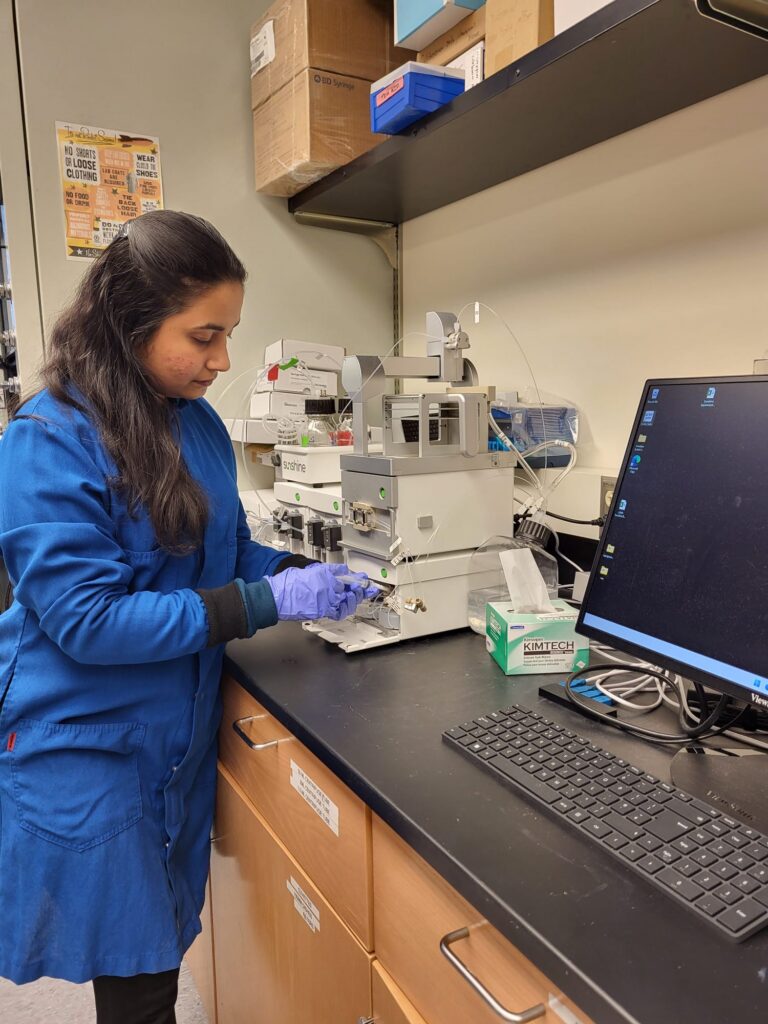
What really prepared me for the co-op, both academically and professionally, was the nanotechnology capstone course I took during my academic journey. That course equipped me with a solid skillset and hands-on experience that made me a competitive candidate. Through that capstone and related coursework, I developed proficiency in several analytical and characterization techniques that proved crucial: HPLC, DLS and Zeta potential, Cellular uptake studies and Imaging techniques including MRI, Confocal Microscopy, SEM and TEM.
These technical skills were instrumental in my co-op interviews. They demonstrated that I had practical laboratory experience and could contribute meaningfully from day one. The combination of theoretical knowledge from my capstone and the technical competencies I had developed made the transition into industry much smoother and helped me stand out as a candidate.
What kind of extracurricular activities are you involved in?
I had the opportunity to present my research work twice at Northeastern University’s RISE poster presentation. RISE is a prominent platform at the university where students showcase their research to faculty, industry professionals, and the broader academic community. Presenting twice on that stage was incredibly valuable. It provided me with a high-visibility platform to communicate my research findings clearly and concisely to a diverse audience skill that’s essential in both academia and industry. Each presentation taught me something new about how to effectively distill complex scientific concepts into accessible explanations.
Beyond the obvious confidence boost, this experience helped me develop critical communication and presentation skills that I know I’ll rely on throughout my career. Standing in front of experienced researchers and professionals, defending my work and responding to technical questions, reinforced the importance of being able to articulate not just what I did, but why it matters. It also gave me valuable networking opportunities and feedback from experts in my field, which has shaped how I approach my research and professional development.
Have you had any professors or mentors who really made an impact on you?
Throughout my academic journey, particularly from January 2025 to April 2026, I would highlight Dr. Ahmed Atef as someone who made a significant impact on my development. While he was technically my professor for the capstone course, he meant as much more than he was a true mentor. The capstone course he taught was instrumental in shaping my academic and professional trajectory.
Beyond just delivering course content, Dr. Ahmed provided consistent guidance, thoughtful feedback, and encouragement that helped me navigate complex challenges and deepen my understanding of the field. His mentorship extended beyond the classroom he invested time in my growth, challenged me to think critically, and helped me develop the skills and confidence I needed to succeed in both my co-op and my broader career pursuits. I’m genuinely grateful for his support and the relationship we’ve built.
Having mentors like Dr. Ahmed who are invested in their students’ success and willing to go beyond their formal role makes a tremendous difference in shaping not just your technical knowledge, but your professional identity and approach to problem-solving.
Where do you see your field of study/research taking you?
I aspire to work as a scientist in formulation or analytical development at a pharmaceutical or biotech company. My goal is to develop and optimize drug delivery systems, particularly nucleic acid therapeutics, while contributing to meaningful therapeutic advances.
What kind of impact do you hope to make after you leave Northeastern?
After graduating from Northeastern, I aim to make impact in two areas. First, I plan to publish research and review articles based on my capstone work on nucleic acid delivery systems and Nano formulation development, contributing to the advancement of the field.
Second, I’m committed to mentoring new students and early-career researchers, sharing knowledge and guidance as others did for me.
What advice would you give students interested in pursuing a degree in science?
I would give two key pieces of advice to students pursuing a degree in science. First, prioritize hands-on laboratory experience early in your academic journey. Working directly with lab instruments builds practical confidence that theoretical knowledge alone cannot provide. This experience differentiates you in interviews and makes you immediately productive in industry roles.
Second, for those interested in R&D careers, I strongly recommend pursuing a nanotechnology or nanomedicine capstone course. It’s a comprehensive package that integrates both formulation and analytical development, giving you exposure to the full drug development pipeline. This type of capstone course has proven invaluable for my own career trajectory.
Christopher Okonkwo received his PhD in Animal Sciences with a specialization in Biotechnology from The Ohio State University. Based at the Roux Institute, Dr. Okonkwo is a foundational faculty member in the Biotechnology MS program.
Dr. Okonkwo’s research is focused on bioprocess development and rewiring of metabolic pathways in organisms for enhanced conversion of agricultural and forestry residues into bioproducts and biochemicals, and bioremediation of municipal and industrial waste.
Michael Wilczek received his PhD in Microbiology from the University of Maine, where he studied how a human-specific virus infects the central nervous system and causes fatal disease using bioinformatics and cell-based assays.
At Northeastern’s Roux Institute, he has expanded into comparative virology, applying data analytics to public genomic datasets to examine viral diversity, integrating his findings directly into his teaching in the Biotechnology MS program. He also leads an augmented reality initiative bringing biology to life for STEM learners.