Fungal disease that poses threat to sick people in health care settings likely to continue to spread, Northeastern biotechnology expert says
The alarming rise in cases of a fungal disease in health-care facilities will continue to pose a threat until an effective drug treatment can be developed, a Northeastern biotechnology expert says.
“If (Candida auris) is resistant to antifungal medications, it’s just going to continue to become more dominant,” says Jared Auclair, director of bionnovation in the Office of the Provost at Northeastern University.
Candida auris, also known as C. auris, is one of the newer fungal diseases known to health officials in the U.S., where it was first reported in 2016.
Read more from Northeastern Global News
Photo by Nicolas Armer/ AP
Maxim Wolf is an associate teaching professor and director of the MS in Bioinformatics, a professional science master’s program at Northeastern University. Dr. Wolf received his undergraduate degrees at the University of Maryland, College Park in physics, chemistry, and cell biology and molecular genetics. He went on to complete his PhD at MIT in computational and systems biology. His scientific interests are in the field of evolutionary biology and the impact of mutational and selection pressures on genomes across time.
Dr. Wolf also has a deep interest in teaching and learning theory and practice. He came to Northeastern after completing a teaching fellowship at Harvard Medical School specializing in teaching and curriculum development in Bioinformatics.
If Jared Auclair has his way, his lab at Northeastern University will help ensure that the U.S. is never again caught off guard by an emerging pathogen like COVID-19.
Auclair, technical supervisor of the university’s Life Sciences Testing Center, and his team are working with the Boston biotech company Ginkgo Bioworks to develop a system to test samples collected at airports and other places of entry to the country for monkeypox.
The process is serving as a test case for a partnership that could result in Northeastern University playing an important role in national biosurveillance and biosecurity programs, Auclair says.
“We’re thinking about a national infrastructure of response to future pathogens. We’re really thinking of what is entering the country and how we can monitor it,” he says.
“One of the most important parts of surveillance is response time,” Auclair says.
“If we see a report of a pathogen starting to come through the country like we saw with COVID in Seattle or monkeypox overseas, how quickly can we respond?”
In the case of monkeypox, the answer is two weeks.
Read more on News@Northeastern.
Photo by Matthew Modoono/Northeastern University.
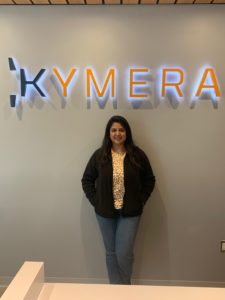 Graduation 2022 is right around the corner at Northeastern University! We’re sharing two Instagram takeovers featuring an undergraduate and graduate student, celebrating our soon-to-be graduates. This week, Rujuta Kshirsagar, a recent graduate of our Master of Science in Bioinformatics program, shares her experience with our community. Follow along for an inside look at her time in the College of Science!
Q: Why did you decide to enroll at Northeastern University and pursue a degree in bioinformatics?
After completing my bachelor’s and master’s degrees in biotechnology, I worked in the industry for four years. I always wanted to do something that would positively impact the patient community so I decided to move to the clinical side of biology.
During my experience as a biologist, I was amazed by the use of informatics to decipher vast and complex biological data. This realization made me see the tremendous potential bioinformatics has in clinical research. I then decided to pursue a formal degree in bioinformatics.
While researching MS in bioinformatics programs at various universities, my main focus was securing practical exposure within the formal education. Northeastern has an exceptional curriculum framework and is a perfect blend of academics, research, and experiential opportunities. Moreover, I knew pursuing a degree from a university with a focus on global and cultural diversity would only enhance my learning experience and better prepare me for future roles.
Q: Are there any particular faculty or resources that helped you succeed in this program?
The faculty and staff at the College of Science are excellent. They provided all the necessary guidance throughout the coursework and assignments, often going above and beyond to help when needed.
As an international student, I found the co-op course especially beneficial, preparing me for my co-op experience and future full-time role. Alex Susienka taught this class, making sure he was available for help in any area we needed assistance with, including resume writing, mock interviews, etc.
Professor Sophine Clachar and Professor Martin Schedlbauer taught data analytics courses, and these courses prepped me for R programming language, which I applied at my co-op and am currently using during my full-time job.
Q: What do you believe is the biggest strength of the bioinformatics program?
I think it’s the way the program is structured. The coursework exposes us to most of the bioinformatics concepts used in the industry. As a result, I gained various skills and knowledge, including R programming, data analysis, machine learning, statistics using R, networking, presenting and public speaking, critical thinking, and biotech ethics.
Q: Tell us about your co-op experience.
I experienced co-op at Ikena Oncology. My role consisted of working with scientists and helping analyze large complex datasets and derive meaningful conclusions. I also built analysis workflows for RNA-Seq and transcriptomic data.
As an international student, this experience also guided my understanding of the U.S. work culture. In addition, it allowed me to interact and connect with people from various backgrounds, strengthening my cultural agility.
Q: During your time at Northeastern, what were you involved with on campus?
During my time on campus, I was a residential security office proctor and a teaching assistant for two semesters for a Khoury College of Computer Sciences data analytics course.
Q: You graduated in December; what have you been doing since then?
I started working full-time with Kymera Therapeutics as Associate Scientist, Computational Biology, in February 2022. My role consists of building computational pipelines for biological data analysis.
Q: What was your favorite aspect of being a student at the College of Science and Northeastern?
It’s the campus diversity. My time here allowed me to work and interact with people from all over the world!
Lindsey Alexanian shares their Northeastern experience in the Master of Science in Bioinformatics program, one of our professional master’s program offerings.
Q: Why did you decide to enroll at Northeastern University to pursue this degree?
I experienced my undergraduate degree at Northeastern, and I wanted to stay if possible. I knew that I enjoyed programming and data science, and I wanted to study this as it pertained to biology, so I chose bioinformatics.
Q: What has been your favorite part?
I’ve enjoyed being a teaching assistant (TA). I love programming, and I’ve found that finding other people’s coding mistakes has made me better. I’ve also thoroughly enjoyed my machine learning class; the material was so fascinating that I decided I wanted to pursue a PhD to perform research involving machine learning.
Q: Are there any particular faculty or resources that have helped you succeed in this program?
My new advisor Tricia has been excellent! I also thought the lectures given by Professor Chesley Leslin and Professor Amin Assareh have been highly informative and interesting. I’ve also had the privilege of working with some very helpful TAs (especially Zanetta and Ashwini!)
Q: What are your post-graduation plans?
I plan to pursue a PhD in computer science and do research involving the use of machine learning in preventative health studies.
Q: What advice do you have for students in similar fields?
The best advice is to pursue what part of the field interests you the most. The people I know who enjoy the program the most are the ones who choose the concentration (or set of electives) that best caters to their skills and interests. Also, attend office hours! As a TA, I can confirm that the students who attend office hours and ask questions tend to be the most successful in their courses.
Learn more about our graduate programs and student experiences here.
Have you thought about pursuing a Master’s degree? Did you know that Northeastern has programs that allow you to start a Master’s degree while still pursuing your undergraduate degree? Our PlusOne programs allow you to count up to 16 eligible undergraduate credits toward a Master’s degree. This amounts to a 50% discount on graduate tuition. Come find out how to take advantage of this great opportunity on Monday, April 25th from 5:00-6:00pm EDT. We will be highlighting Master’s programs in Biotechnology, Bioinformatics, Applied Math, and Environmental Science & Policy.
Join us for a panel with:
Dr. Kevin Broadbelt, Director and Professor, Biotechnology and Bioinformatics Program
Dr. He Wang, Director and Professor, Applied Math Program
Alex Susienka, Co-op Coordinator, COS Graduate Pro
Have you thought about pursuing a Master’s degree? Did you know that Northeastern has programs that allow you to start a Master’s degree while still pursuing your undergraduate degree? Our PlusOne programs allow you to count up to 16 eligible undergraduate credits toward a Master’s degree. This comes out to a 50% savings on graduate tuition. Come find out how to take advantage of this great opportunity on Wednesday, April 20th from noon to 1:00 pm EDT. We will be highlighting Master’s programs in Biotechnology, Bioinformatics, Applied Math, and Environmental Science & Policy.
Join us for a panel with:
Dr. Benjamin Dittbrenner, Director and Professor, Environmental Science & Policy Program
Christa Dhimo, MBA, Professor of the Practice and Enterprise Concentration Lead, Biotechnology
Ai Ra shares their Northeastern experience in the Master of Science in Bioinformatics program, one of our professional master’s program offerings.
Q: Why did you decide to enroll at Northeastern University and pursue this degree?
As I was finishing my Master of Music degree and the COVID-19 pandemic began, I was looking for a way to further my education and career in STEM. I found the field of bioinformatics by chance, but it felt like something I’ve needed to do my entire life. I’ve always been curious about genetics, cancer, rare diseases, and gene-based therapies, so discovering this field was fascinating.
The program at Northeastern was among others I applied to, but the one I wanted to attend the most because of the co-op program. No other degree I saw had built-in career experience before graduating.
Q: What has been your experience in this program so far?
Shifting from music back to STEM has been an enormous challenge and was made even more challenging by the bulk of my degree being online. This semester has been primarily on-ground, and I am thankful for that.
Q: What has been your favorite part?
My favorite part has probably been working as a teaching assistant for the professional development for co-op class. Doing this has allowed me to further my professional skills while interacting with and helping my colleagues.
Q: Are there any particular faculty or resources that have helped you succeed in this program?
Stefan Kaluziak and Alex Susienka have been integral to my experience here at the College of Science.
Kaluziak has served as a tremendous mentor, providing advice on what skills I can cultivate to further my career, delivering job search guidance, and sharing general life advice for being a bioinformatician.
Susienka has made himself an unlimited resource of ways to practice and improve professionalism, providing support at every good and bad moment while I’ve been here, and allowing me to grow into a young professional.
Q: What do you believe to be the biggest strength of the Bioinformatics program?
The biggest strength of this program is the co-op opportunities. This kind of career experience leads to potential employment in ways other programs cannot compete.
Q: Tell us about your co-op experiences. How have these informed you on what you plan to do in the future?
I experienced co-op at a big pharma company called Abbvie. There were both ups and downs to this experience, the least enjoyable being that it was primarily remote due to the state of the pandemic at the time. Despite this, my co-op at Abbvie allowed me to work on programming with real-life experimental data, learn new skills, and interact with professionals with different levels of expertise from me.
In addition, this co-op revealed to me the things that I want from my future employment and things I would like to avoid. I also acquired a new mentor at Abbvie who became very invested in my career growth and integral to obtaining a full-time position before graduation.
Q: What skills from the Bioinformatics program have helped during co-op or will in your career?
Of course, the most valuable skills I have gained from the program have been my programming skills. Before enrollment, I had nearly no programming experience.
Q: What are your post-graduation plans?
I have been very fortunate to have secured a full-time position at NYU Langone Health, acting as the Bioinformatics Analyst for their Translational Immunology Center. I thank Northeastern for this opportunity, but especially my College of Science mentors Kaluziak, Susienka, and Jesus Paez-Cortez of Vertex Pharmaceuticals.
Q: What advice do you have for students in similar fields?
My advice is to practice, know your worth, and connect with everyone you meet as much as possible. When I say practice, I mean practice your coding skills. Almost everyone in this program is new to programming, and the only way to improve is to practice. Being down on yourself and writing yourself off as “not good at programming” will only harm you. Instead, focus on what you are good at and try to improve every time you put your hands on the keyboard.
Knowing your worth means understanding that – you are in high demand as a graduate of Northeastern’s Bioinformatics program. Do not settle for any job offer that is not exactly what you want. Finally, it would help if you connected with others. Since I connected with my teachers and mentors, I could secure a job before graduation and believe I deserve it!
Learn more about our graduate programs and student experiences here.
As the world scrambles to make sense of the new omicron variant of the coronavirus, Northeastern is ready to spot it if it enters our community.
Northeastern’s COVID-19 testing laboratory can already detect the omicron variant through existing protocols. And that could save the university community precious time in identifying and responding to any threat the variant might pose.
We take a more targeted approach, which gives us a head start,” says Jared Auclair, who runs Northeastern’s COVID-19 testing facility, the Life Sciences Testing Center in Burlington, Mass. “We have a test in line that really helps us identify these variants. We, as a university, did the right thing and continue to do the right thing to be able to track these things, so the population should feel confident that they are still safe
Read more on News@Northeastern.
Photo by Matthew Modoono/Northeastern University.