COS News
Research
“The basic premise is that AI can help us do better physics, and something that is less expected is that physics can also help us understand AI better,” said Northeastern professor James Halverson.
AI and physics have more in common than you might think.
News
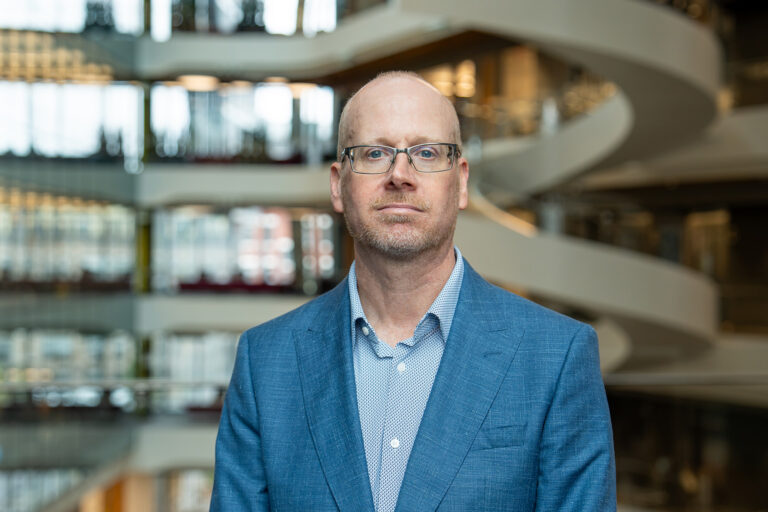
Mark Williams, Professor and Chair of the Department of Physics, will assume the role of Dean of the College of Science, effective July 1, 2026.
Mark C. Williams named Dean of the College of Science

He predicted the widespread Covid-19 pandemic early on. Now he’s being knighted by the Italian government.
Alessandro Vespignani is knighted by the Italian government for his contributions to advancing cooperation between Italy and the United States during the pandemic.

Using this billion-dollar laser, physicists hope to probe the quantum world for new discoveries
Say you’re an aspiring physicist, probing the quantum world to gain insight into the fundamental nature of reality. There are two ways to go about your scientific odyssey, but both involve very expensive machinery. One way is to smash a bunch of atoms together, revealing their subatomic guts; another is to toss them under a...
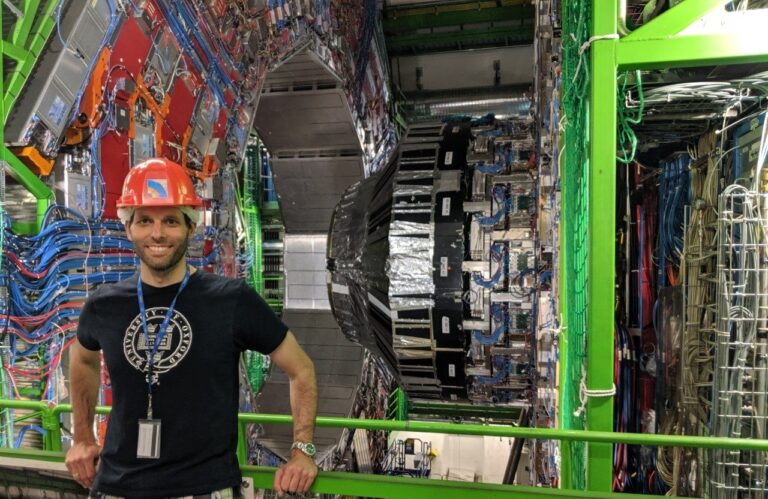
Meet our new College of Science faculty: Fabian Ruehle
Introducing new College of Science faculty, Fabian Ruehle.
‘Holy grail discovery’ in solid-state physics could usher in new technologies
There are many mysteries still to unravel in the world of quantum mechanics, but scientists at Northeastern believe they’ve made a “holy grail” discovery that could help pave the way for the next generation of electronic devices. Their findings, published recently in Nature, center mostly on the discovery of a so-called topological axion insulator, a...
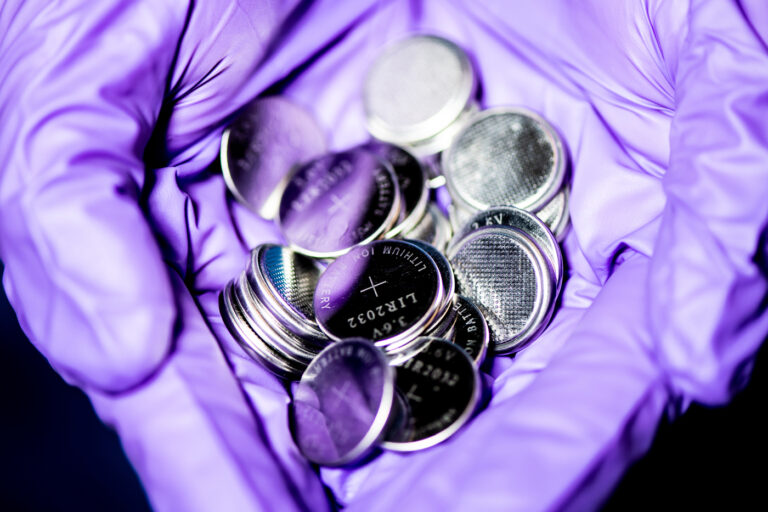
What goes on inside the battery of your iPhone?
Research conducted by Arun Bansil, university distinguished professor of physics, and other institutions, seeks to "see" how atomic and subatomic particles inside lithium-ion batteries behave.

Solving Quantum Riddles: Dr. Sijia Dong is Using Machine-Learning to Overcome Challenges in Quantum Chemical Computation
Complex chemistry, Machine learning, and quantum mechanics are fields that take strong computers and a lot of time to understand. Dr. Sijia Dong is simplifying that process by uniting the three.

Could humans visit Venus? Here’s a plan to do just that.
There’s a hellscape right here in our own solar system, and a team of Northeastern students wants to send human explorers to check it out. Photo by NASA/JPL
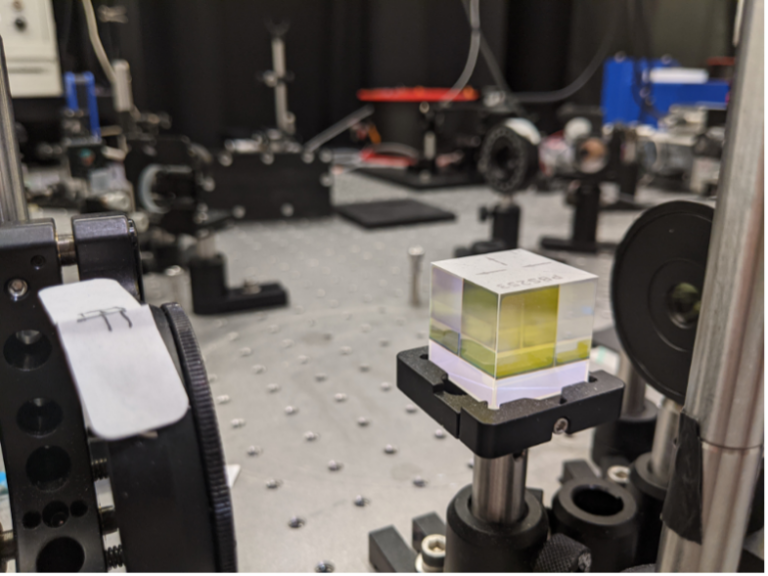
Scialog’s Newest Bioimaging Fellow: Dr. Bryan Spring
This article highlights Northeastern’s Bryan Spring who has recently been selected as a Scialog fellow for research in bioimaging. This prestigious award is meant to foster collaboration and innovation within the bioimaging community.
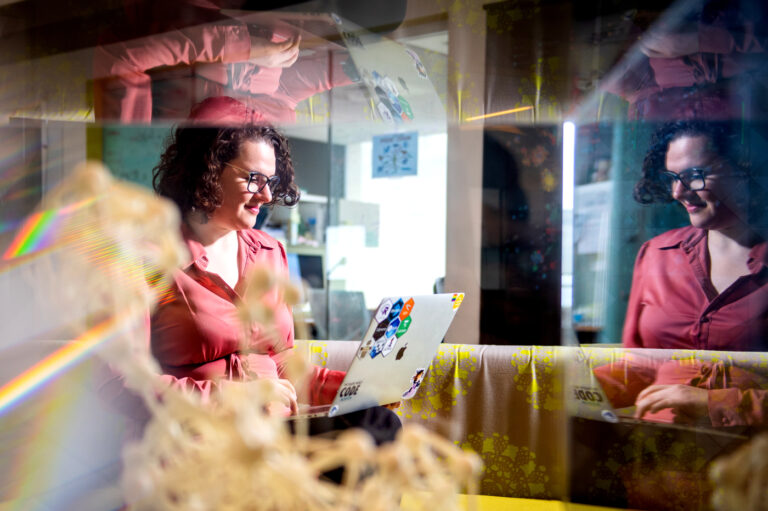
Existing drugs may hold the key to curing COVID-19
Developing new disease treatments can take years. That's why Northeastern researcher Deisy Morselli Gysi and her colleagues looked at existing drugs to treat COVID-19. And now they have four strong contenders. Photo by Matthew Modoono/Northeastern University
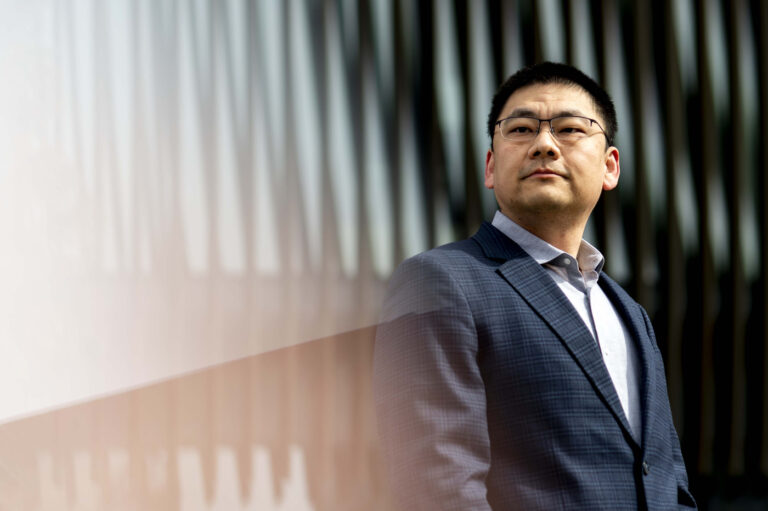
His parents wanted a better life for Max Bi: Their gamble paid off.
Max Bi was 14 years old when his parents moved from Beijing to New York to create more opportunities for their only child. “It was for me to get a better education,” says Bi, an assistant professor of physics at Northeastern. “The competition is fierce in China, and I wasn’t a top student in middle...
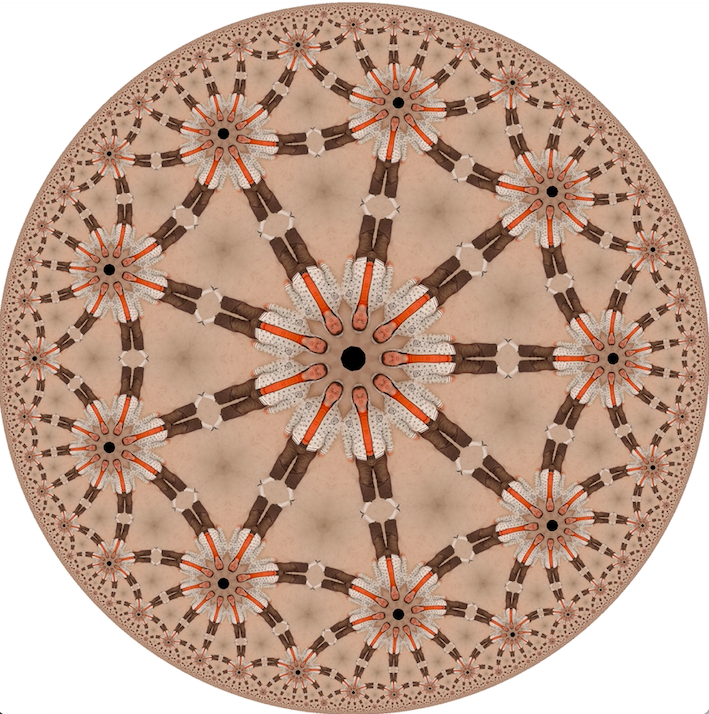
Understanding Networks: The power to predict pandemics, information spread, and quantum gravity
Dr. Krioukov’s lab recently published two papers in the field of network science. These papers show that (1) the geometry of networks can be elucidated by understanding the network’s latent properties and (2) For networks living in latent space, finding their geometry is possible using a previously known standard called Ollivier Curvature.
These researchers are predicting COVID-19 trends weeks before standard surveillance
Imagine trying to avoid a car crash. Every split second you spend deliberating what to do, you waste precious time needed to alter your course. Any delay between your brain’s perception of danger and your foot’s contact with the brake could mean the difference between life or death. Members of Northeastern’s Laboratory for the Modeling...