COS News
Research

“The basic premise is that AI can help us do better physics, and something that is less expected is that physics can also help us understand AI better,” said Northeastern professor James Halverson.
AI and physics have more in common than you might think.
News
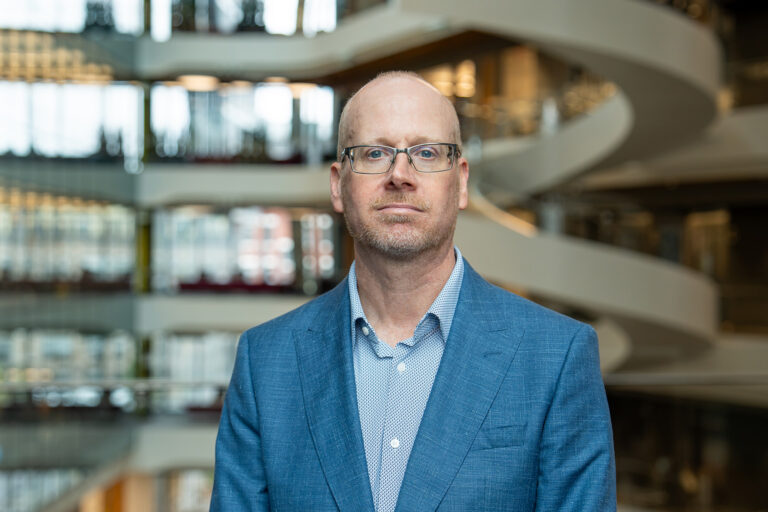
Mark Williams, Professor and Chair of the Department of Physics, will assume the role of Dean of the College of Science, effective July 1, 2026.
Mark C. Williams named Dean of the College of Science
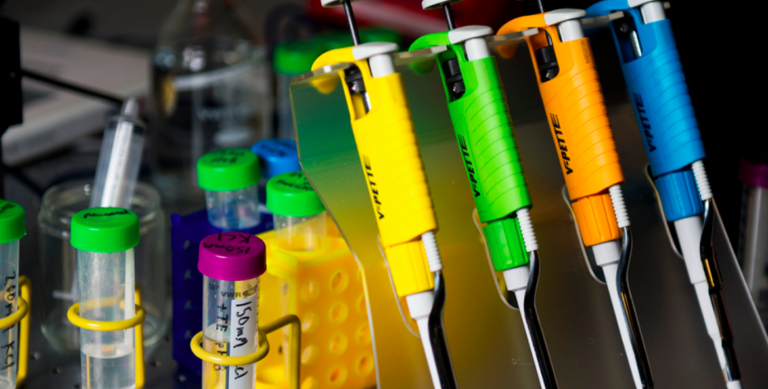
College of Science Connects: Research at the Frontier – Experimental Biological Physics
Hazel Sive, Dean of the College of Science, talks to Meni Wanunu, Associate Professor of Physics, on his expertise in experimental biological physics researching biosystems at the nanoscale. Dr. Wanunu’s lab is developing novel techniques that probe how small molecular changes affect the global properties of macromolecules and biomolecules.
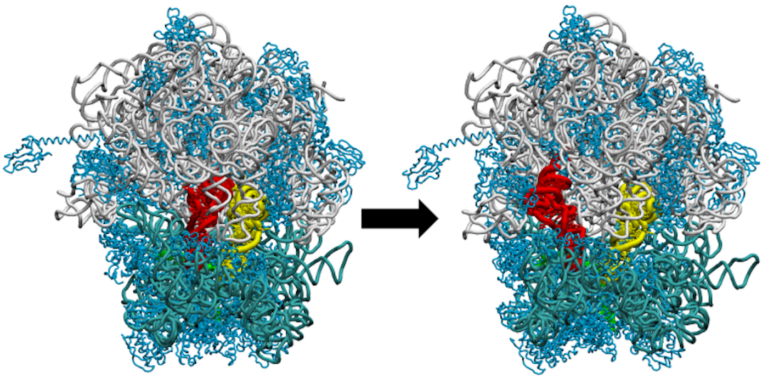
The Ribosome: Is it the Key to the Next Generation of Antibiotic Therapies?
This article highlights the research done by the Whitford lab that was recently published in the journal Nature. Using high-performance computer modeling, the research group identified a target location on the ribosome that elucidates a potential for antibiotic therapies.
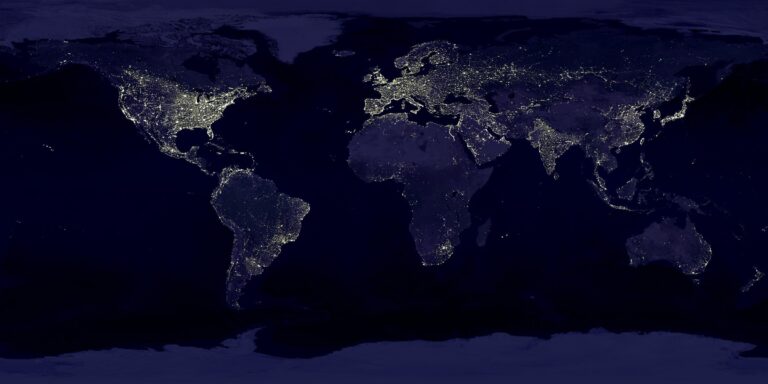
Diseases spread differently, region by region. This Mathematical model shows how.
Considering how many factors contribute to the worldwide spread of airborne infectious diseases, forecasting pandemics can be a daunting task. In an attempt to reflect that complex reality, Northeastern’s Laboratory for the Modeling of Biological and Sociotechnical Systems (MOBS Lab) has developed a new, data-driven model that factors in patterns of interpersonal behavior down to the state or province...
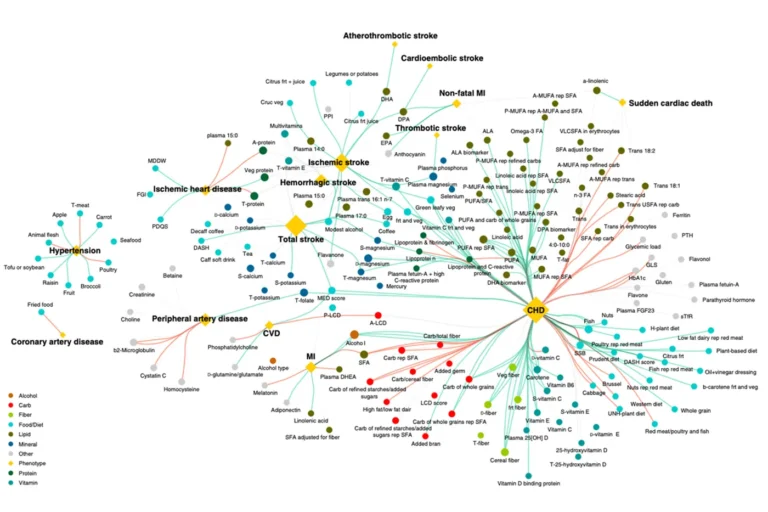
Make a heart-healthy resolution this year
If you’re making resolutions for 2021, why not make one that’s good for your heart? A new study by researchers from Northeastern University, Harvard University, and Brigham and Women’s Hospital shows that certain foods—including wine, yogurt, carrots, peanuts, breakfast cereal, grapes, and raisins—are associated with a lower risk of developing coronary heart disease. The researchers also found...
Faculty Research Talks: Exploring the Smallest Scales with the World’s Biggest Science Experiments with Toyoko Orimoto
Learn how Professor Orimoto is breaking down the Standard Model in particle physics to understand how our universe is built.
Flu season is coming and COVID-19 is still here. Can disease forecasts tell them apart?
Flu season can be difficult for regular people, and those like Alessandro Vespignani who try to predict it. Adding in COVID could make it a nightmare.
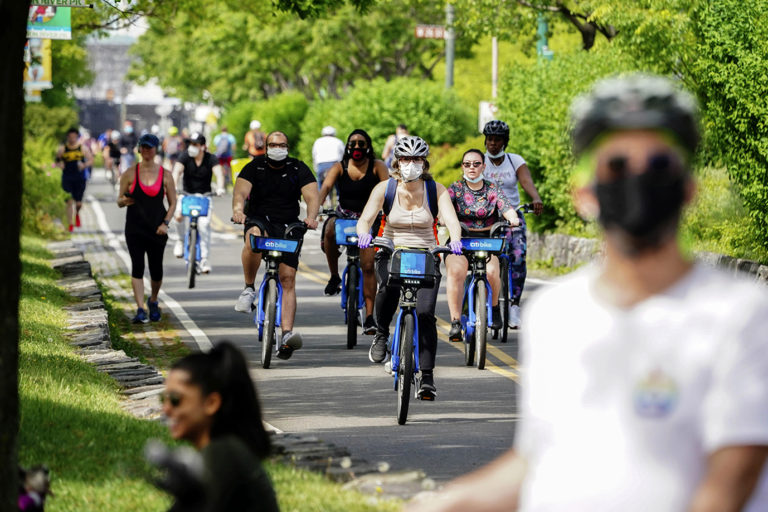
People in the U.S. started moving around more before stay-at-home measures were lifted
Even before the vast majority of states were loosening the measures intended to keep people physically distant and slow the spread of the coronavirus, people were starting to travel further and see each other more, according to research from Northeastern’s Network Science Institute.
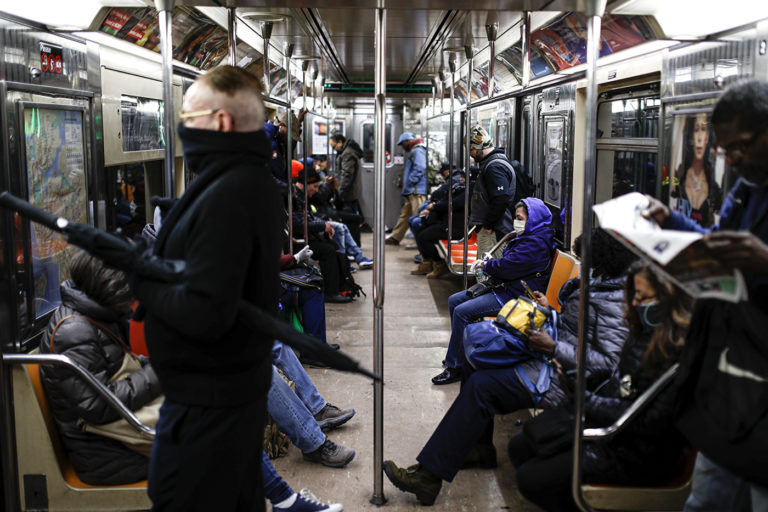
The coronavirus was in the US in January. We need to understand how we missed it.
SARS-CoV-2, the coronavirus that causes COVID-19, was circulating in major U.S. cities as early as January, says Alessandro Vespignani, director of Northeastern’s Network Science Institute. And if we want to keep our communities safe going forward, we need to understand how we missed a virus that was right under our noses.

Network scientists identify 40 new drugs to test against COVID-19
Researchers at Northeastern mapped the way proteins within human cells behave after the cells are hijacked by the virus to identify drugs that might be able to fight it. The team is now working with other experimental researchers to begin testing those drugs.
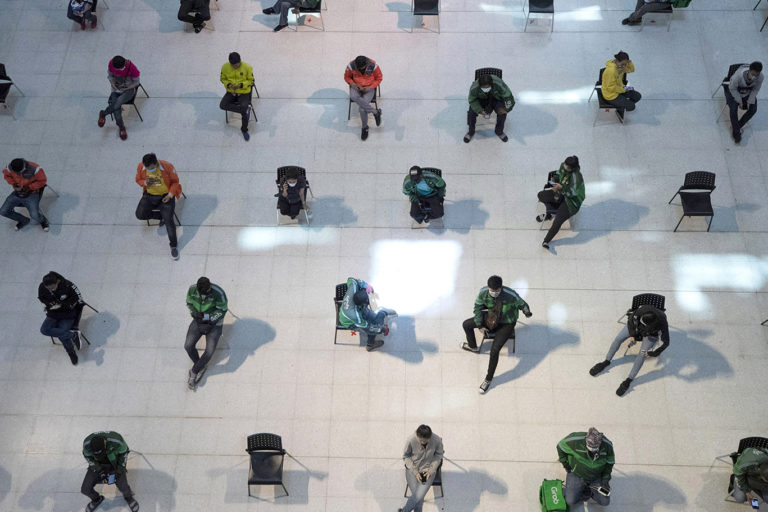
‘Social distancing’ is only the first step toward stopping the COVID-19 pandemic
After days of closures and requests—or orders—to stay home, many people caught in the heart of the COVID-19 pandemic are wondering if these efforts will be enough. Network scientist Alessandro Vespignani says the answer depends on the ways that local, regional, and federal governments use the time.
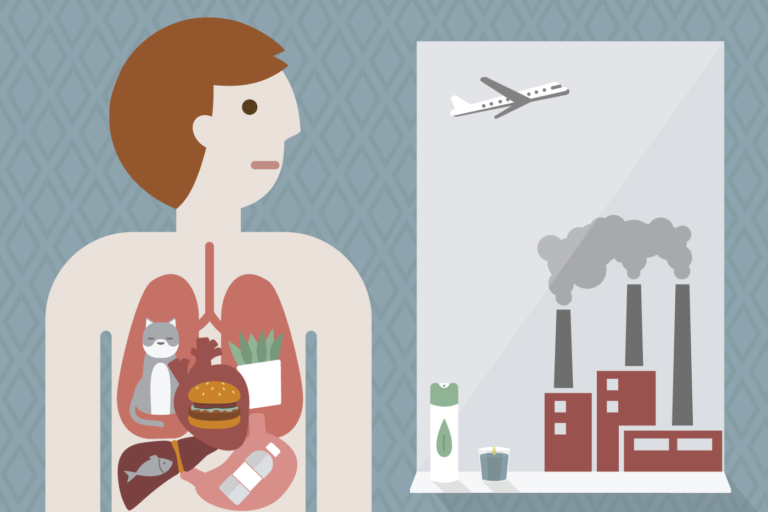
It’s not just your genes that are killing you. Everything else is, too.
Environmental factors drive the majority of our risk for non-communicable diseases, says Albert-László Barabási, Robert Gray Dodge Professor of Network Science at Northeastern. We need to be studying them.
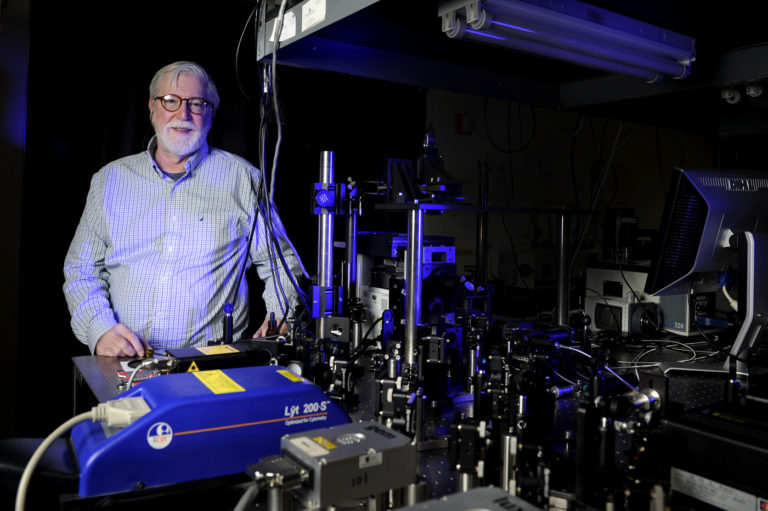
Research sheds new light on proton behavior, draws praise from science community
Instead of protons “hopping” over barriers from point A to B, new research by professor Paul Champion and his team reveals for the first time that protons actually tunnel through these barriers. This discovery upends a centuries-old belief about how protons behave.