Northeastern researchers have identified 40 new potential drugs that could treat COVID-19.
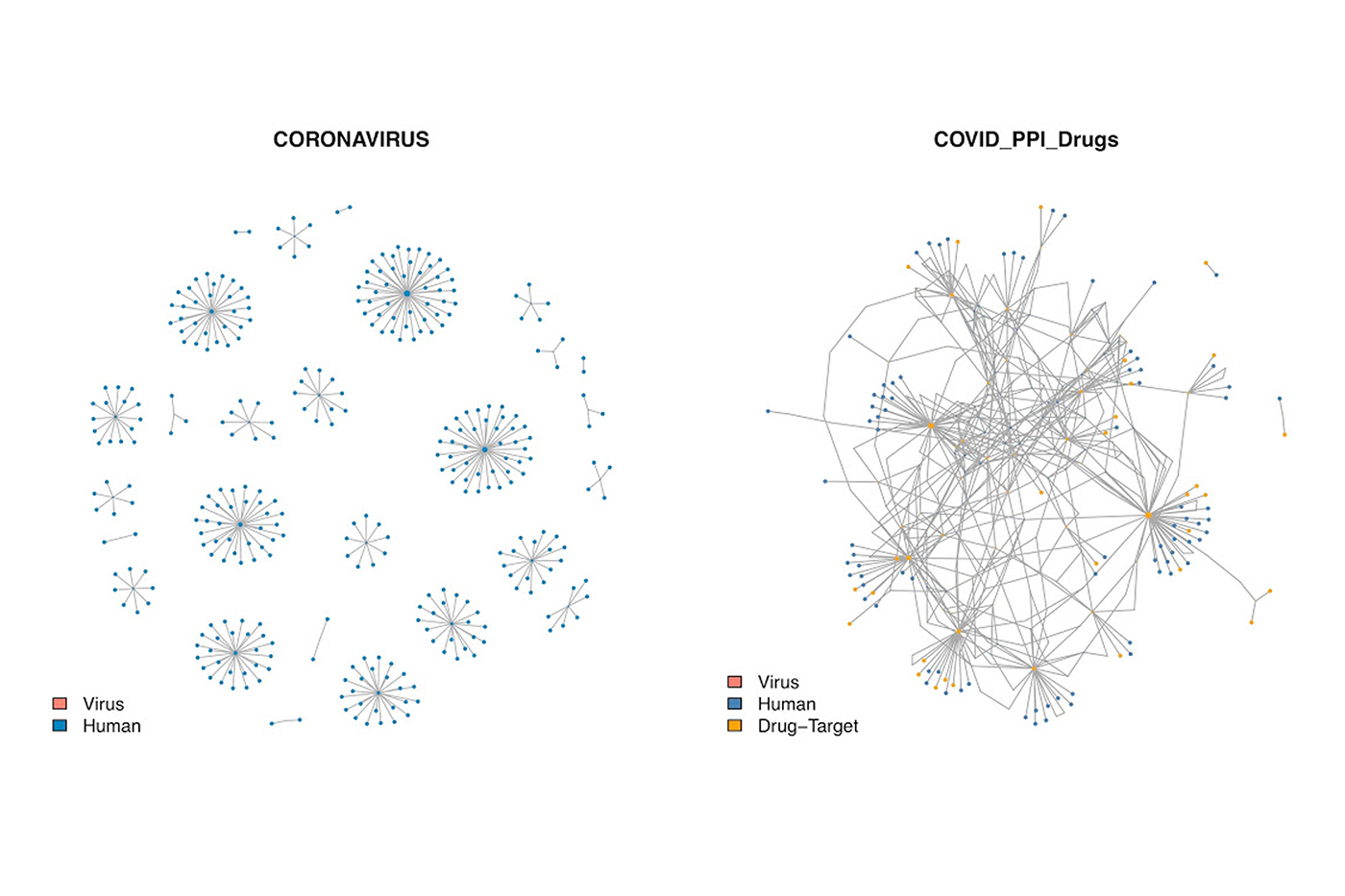
The findings, reported via Northeastern’s Center for Complex Network Science Research on Wednesday, come from a modeling tool for infection dynamics based on network science—complex math, physics, and computing.
The toolset mapped the way proteins within human cells behave after a cell is hijacked with SARS-CoV-2, the new coronavirus that causes the COVID-19 illness.
“We have prioritized many more drugs, but there are 40 that we are actually trying to move forward,” says Albert-László Barabási, Robert Gray Dodge Professor of Network Science and University Distinguished Professor of physics at Northeastern.
Barabási’s team is already in discussions with experimental biologists at Harvard to begin testing these drugs in human cell lines.
The interactions of different kinds of proteins within our cells play a key role in orchestrating the complex biochemical reactions that control our bodies. That’s why, Barabási says, the best way to understand how viruses spread is to identify the whole set of the molecular interactions within human cells, and the networks those interactions create as proteins interact with genetic material inside the cell.
Read more at Northeastern Global News
Data visualization by: Albert-László Barabási. BarabasiLab 2019