When patients face a serious bacterial infection, every minute counts. Before doctors can prescribe the right antibiotic, hospital labs must determine which medications will be effective. For a handful of drugs, this process can be slow and labor-intensive.
For third-year biochemistry major Matthew Uy, improving the speed and efficiency of this process became a research goal and a defining milestone of his undergraduate career.
During his co-op in Dr. James E. Kirby’s lab at the Beth Israel Deaconess Medical Center, supported by a generous donation, Uy helped develop a faster, on-demand method for testing antimicrobial resistance in clinical settings.
This work resulted in Uy becoming first author on a published scientific paper, a significant academic and professional accomplishment.
Rethinking a Gold Standard Test
Certain antibiotics can be tested only by agar dilution, a method considered the gold standard. In agar dilution, laboratory scientists mix, sterilize, and pour warm agar (a jelly-like substance from seaweed commonly used to grow bacteria) onto plates for testing. This process must be repeated for each test, which delays critical results.
Uy and fellow microbiologists explored an alternative.
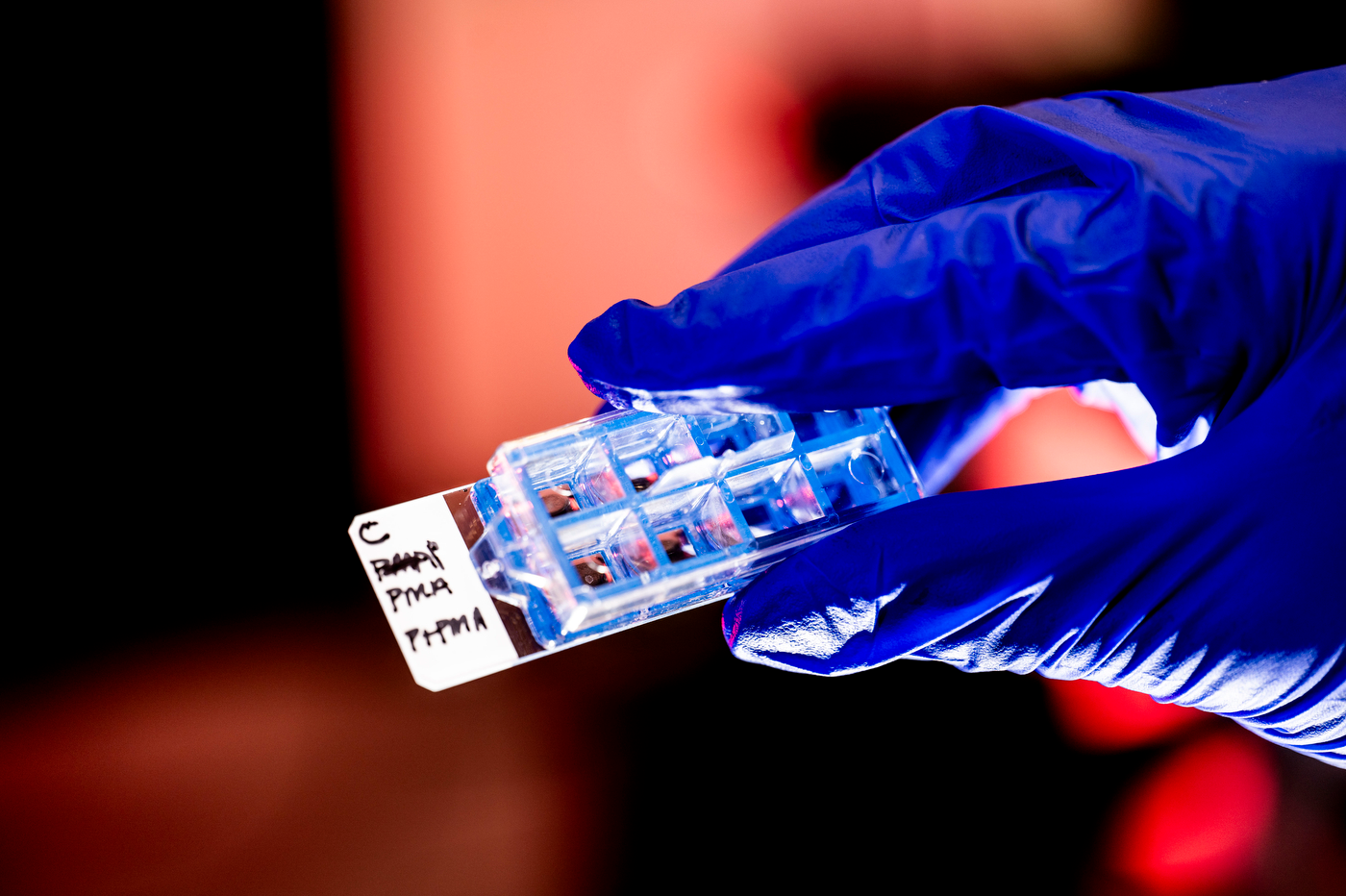
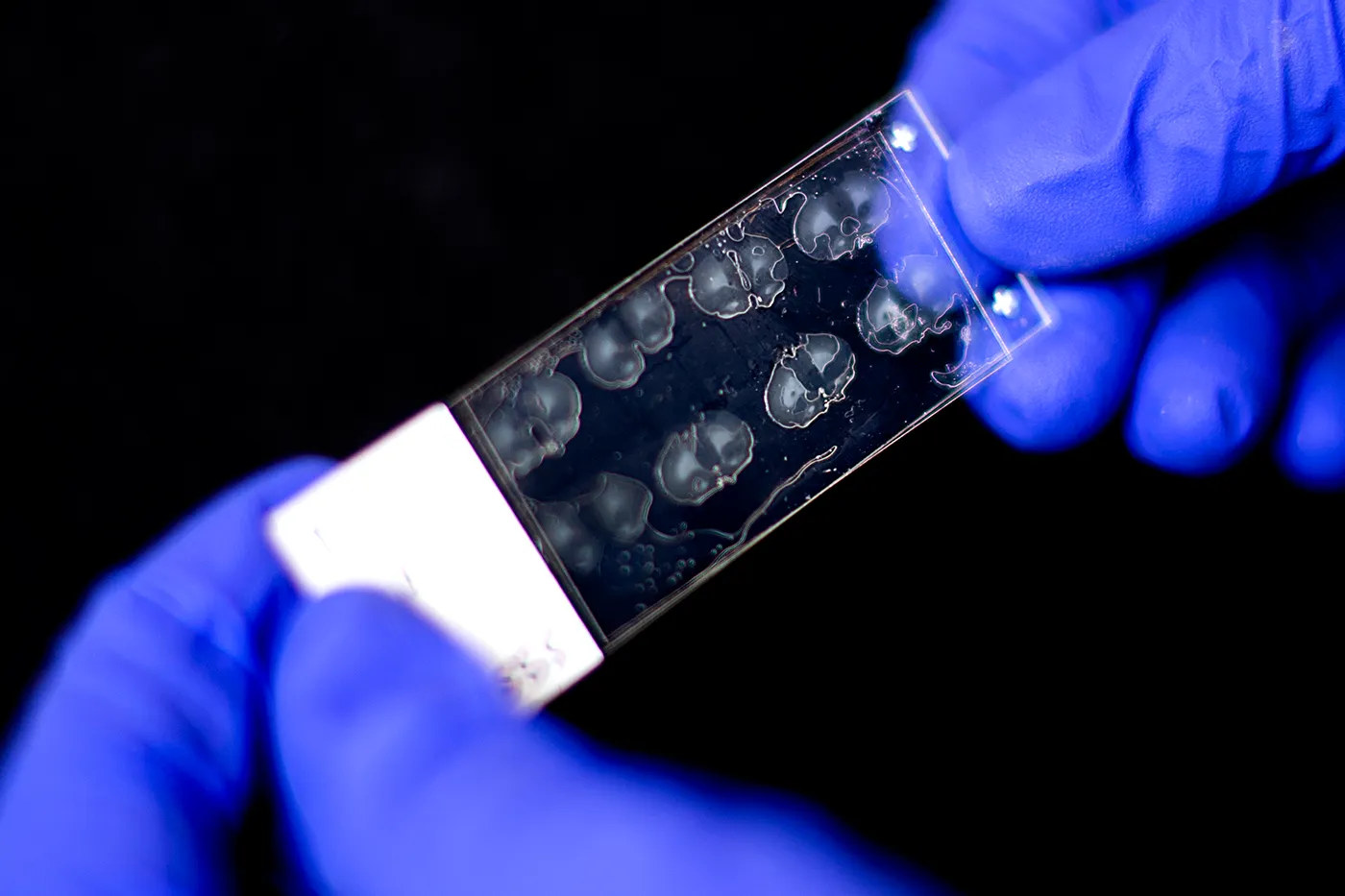
“We replaced agar with poloxamer,” he explains. Poloxamer is a synthetic compound that is liquid when cold but solidifies when warmed. “That allows a full test to be set up in mere minutes.”
To validate the method, the team tested nearly 80 clinical isolates, comparing poloxamer dilution side by side with traditional agar dilution. The results were strong. Poloxamer produced results essentially equivalent to those of agar and, in some cases, outperformed it.
“With our new method,” Uy says, “hospital labs could potentially bring much-needed answers at the site of patient care in a fraction of the time.”
Leading the Work
As first author, Uy took on a central role in the study. He conceptualized and ran experiments with the team, conducted the formal statistical analysis, and wrote the first draft of the manuscript.
“Becoming a scientific author had been a major goal throughout my undergraduate career,” he says. “It was extremely rewarding to step into an ownership role and to work on this project through to the end.”
Writing the paper came with a learning curve. Prior to this project, he had never written a manuscript for publication. Multiple revisions refined the findings into a clear, concise presentation.
Uy credits earlier coursework for preparing him to write the manuscript.
“Biology Project Lab gave me my first exposure to how to write scientifically, thoroughly analyze and present data, and put some clean figures together (thanks, Dr. Sweeney!),” he says.
One of the most memorable moments came when the team scaled up from initial proof-of-concept experiments to a full study of 78 clinical isolates.
“[We were] suspensefully awaiting for full results in a very ‘moment of truth’ type of way,” Uy recalls. “We learned a lot on that first day!”
When the paper was accepted, the achievement felt deeply meaningful.
“Simply put, I was thrilled and grateful,” he says. “My first instinct was to thank the people who made this possible, as well as share the news with my family and friends.”
He emphasizes that the experience was made possible through mentorship from Dr. Kirby, guidance from lab members, support from co-op advisors, and a philanthropic gift, all of which enabled him to pursue the opportunity.
“In short, one door of opportunity leads to the next, and your help in opening that first door can go a really long way.”
Looking Ahead
Next year, Uy plans to apply to medical school with the goal of becoming a physician scientist.
“This co-op confirmed that I really do enjoy the process of formulating ideas, designing experiments, and tackling unexpected outcomes along the way,” he says. “I’m always excited to be working on my projects every week just as much as I enjoy diving into my clinical activities and learning about medicine.”
Uy advises students interested in research not to be afraid to cast a wide net when applying for opportunities, especially at the beginning. He stresses that outcomes can be unpredictable.
“If you’re looking for an opportunity, don’t underestimate the abundant resources we have.”
Through dedicated mentorship and immersive laboratory experience, Matthew Uy contributed to antimicrobial resistance research while reaching a defining milestone of his undergraduate career: becoming a published scientific author.