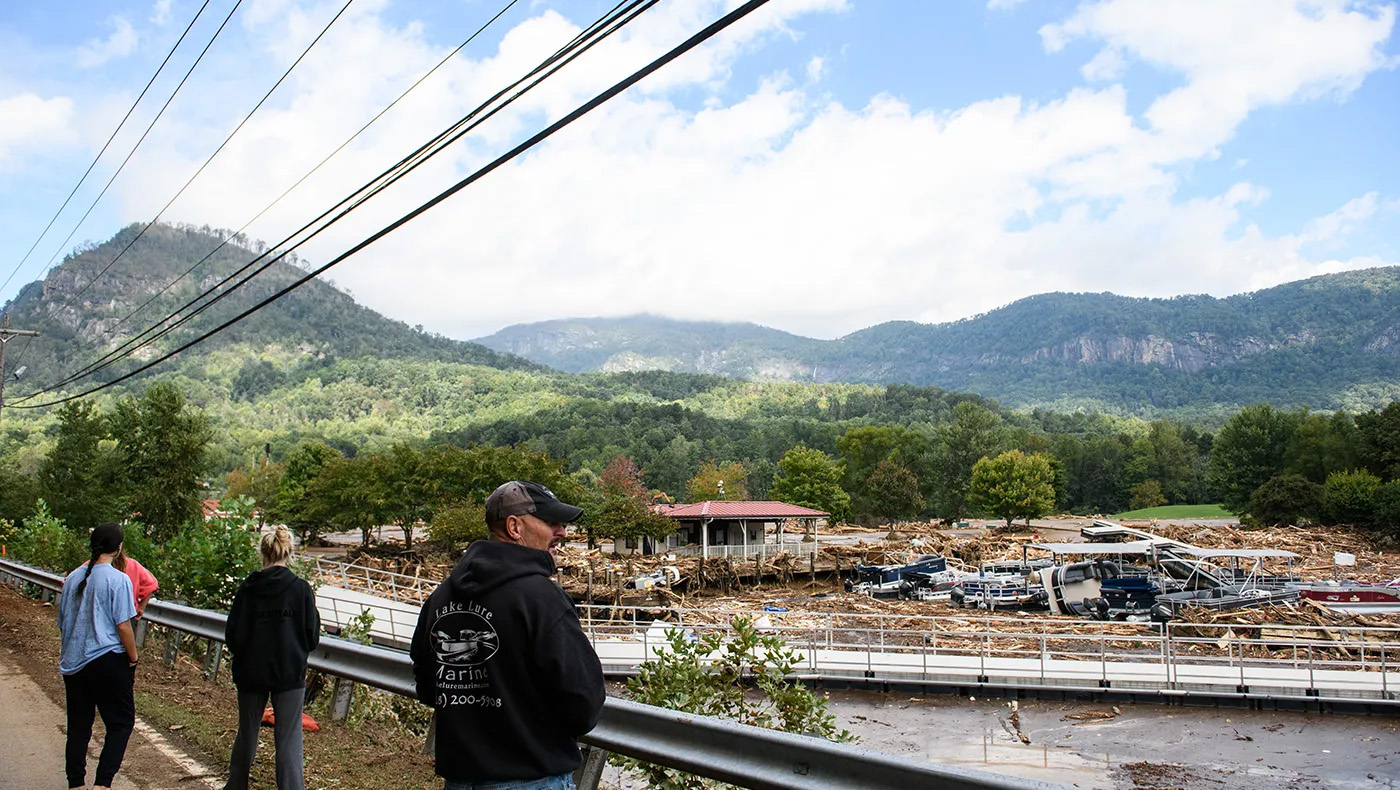
Before the aftermath of Hurricane Helene dumped more than 30 inches of rain on some parts of western North Carolina and led to historic flooding that has killed more than 30 people in the mountainous region, Asheville was known as a “climate haven.”
News reports say people were moving to the city that houses the historic Biltmore Estate to escape extreme heat in the summer, sea level rise and hurricanes.
The mudslides and floods that have swept away children and their grandparents and others in the foothills and mountains of North Carolina were a risk that few saw as imminent, say Northeastern University professors Auroop Ganguly and Samuel Munoz.
The catastrophe, says Ganguly, distinguished professor of civil and environmental engineering, is an example of a “gray swan” event.
Gray swans happen when “places not thought to be at risk may not be immune anymore to the ravages of weather extremes that are relatively ‘unprecedented’ in the region,” he says.
The path of Hurricane Helene from landfall as a Category 4 hurricane in the Big Bend region of Florida’s Gulf coastline to western North Carolina was “fairly unusual,” says Munoz, associate professor of marine and environmental sciences at Northeastern’s Marine Science Center.
Read more from Northeastern Global News
Photo by Melissa Sue Gerrits/Getty Images