/fea
-
Jan 30
-
Apr 3Physics
COS, COE & QMSI Special Joint Colloquium: “AI-Optimized Advanced Packaging for Next-Generation Computing”
April 3, 2026, 3:30 pm -
Apr 6Biochemistry
Biology Colloquium Series: Dr. Veronique Lefebvre, UPenn and CHOP Research Institute
April 6, 2026, 12:00 pm -
Apr 7
-
10/06/2025
Alessandro Vespignani
Sponsor: WHOEpidemiology & Analytics for Response – Agreement for Performance of Work
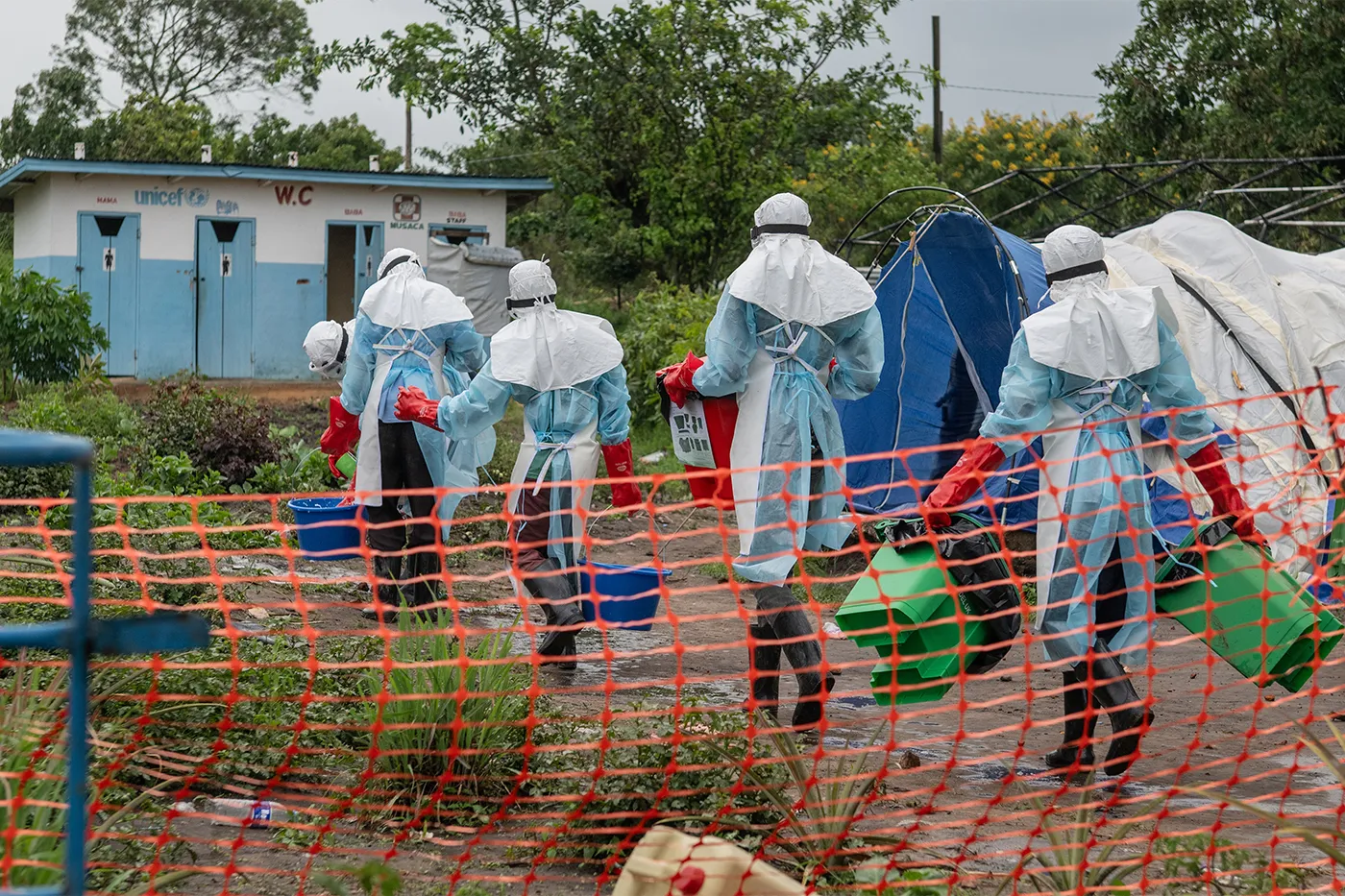
A dangerous new variant of monkeypox virus emerged in the Democratic Republic of Congo in late 2023 and quickly spread across borders, creating challenges for health officials trying to track and contain outbreaks in regions with limited surveillance capabilities. Researchers are developing sophisticated statistical models that combine case reports from countries with strong monitoring systems alongside commercial travel data to estimate the true size of outbreaks in affected areas where testing and reporting may be incomplete. This approach will help fill critical gaps in our understanding of how fast the virus is spreading and where resources are most urgently needed. By providing more accurate outbreak size estimates, this research aims to support better decision-making by public health authorities working to control the spread of this emerging infectious disease threat.
-
09/30/2025
Laurel Gabard-Durnam
Sponsor: Wellcome“Linking infant gut microbial resilience and redundancy with neurodevelopment” –
The microbiome plays a critical role in brain development, particularly during sensitive windows before and after birth. Early-life factors such as maternal diet, stress, delivery mode, and infant nutrition can disrupt both gut microbial communities and brain development, potentially contributing to conditions like autism spectrum disorder (ASD). By studying how gut microbes produce key signaling molecules like GABA and glutamate, this research will uncover new connections between environmental exposures, microbial communities, and neurodevelopmental outcomes, opening doors to potential interventions that could support healthy brain development from the start.
-
09/30/2025
Brian Helmuth and Jon Grabowski
Sponsor: NOAA-NERACOOSInitiating new monitoring activities to accelerate implementation of the regional OCA monitoring plan
The goal of this project is to identify thermal microhabitats within which shell-forming organisms like mussels and oysters that are vulnerable to ocean and coastal acidification might take refuge from low pH conditions, and to assess the potential buffering capacity of different habitat types to extreme heat and extreme cold events. We will deploy 10 microsensors within each of three sites within each of five National Estuarine Research Reserve (NERR) sites, characterizing the average and extreme temperatures within rocky and muddy substrates (marsh) sites. Because data can be downloaded from any cell phone, we will also work with each NERR education coordinator to establish citizen science protocols that complement ongoing work.
-
09/16/2025
Harm Derksen
Sponsor: Simons FoundationSimons Fellow in Mathematics
This fellowship provides support for a year-long sabbatical during which the PI will research Invariant Theory. The PI’s plans include a month at the Simons Institute in Berkeley and a month in Auckland, New Zealand, collaborating with international researchers.
-
09/02/2025
James Halverson
Sponsor: Simons FoundationSimons Collaboration on the Physics of Learning and Neural Computation
The new collaboration will serve as a concerted effort to discover the fundamental principles that make AI work by treating AI as a complex physical system. Collaboration researchers will draw on physics, computer science, neuroscience, mathematics and statistics to understand how the structure of data, learning dynamics and neural architectures interact to yield striking emergent computations, including reasoning and creativity.
-
09/02/2025
Aaron Seitz
Sponsor: NIHImproving Accessibility of Vision Research and Therapy using an Open-Source, Extended-Reality Platform
This project develops an open XR platform for vision science assessments and interventions for people with visual impairments. The R61 phase builds research-grade tools for macular degeneration and stroke-induced cortical blindness. The R33 phase conducts feasibility trials and expands to pediatric cortical visual impairment and amblyopia. Transdisciplinary teams ensure accessible solutions meeting stakeholder needs.
-
09/02/2025
Susanne Jaeggi and Aaron Seitz
Sponsor: NIHMediators and Moderators of Executive Function Training in Older Adults
This proposal improves executive function training research for 1,275 older adults at risk for dementia. Four aims examine: training ingredients that promote adherence and engagement, how these ingredients impact cognitive outcomes and quality of life, individual characteristics affecting training success, and open science data sharing. Goals include advancing scientific understanding and providing evidence-based tools to enhance cognitive resilience in older adults.
-
09/02/2025
Aaron Seitz and Susanne Jaeggi
Sponsor: NIHTHE NIH Precision Brain Health Network: Open and Inclusive Measurement of Neuropsychological Change for AD/ADRD Primary Prevention Trials
This grant develops rigorous cognitive assessment tools to measure brain health changes over time rather than just detecting impairment. Through a coordinated research network leveraging existing NIH investments, the project creates open-access digital tools for real-world settings, enabling earlier cognitive decline detection and more effective intervention strategies for Alzheimer’s disease and Alzheimer’s disease-related dementias while accelerating scientific discoveries.
-
07/30/2025
Abby Williams and Raj Jesudason
Sponsor: Mathematical Association of AmericaTensor Strengthening Underrepresented Minority Mathematics Achievement Grant
This project will support the addition of a Math and Culture elective in the 2025 summer program for high school students, with continued activities in Fall 2025, in which mathematical explorations/lessons start with a cultural context and lead to the development of several solid mathematics lesson plans at an algebra/precalculus level.
-
Learn MoreUncategorized
The Moore Bone Laboratory
The Moore Bone Lab utilizes novel investigative tools to understand how bones and teeth develop, grow, maintain, and repair. Our goal is to inspire treatments that form mineralized tissue when and where it is needed in patients of all ages. Our approaches involve characterizing cell-intrinsic behavior and tissue niche factors that influence stem/progenitor cell activity, with emphasis on mechanotransduction and cell signaling pathways.
-
Learn MorePsychology
Music, Imaging, and Neural Dynamics (MIND) Lab
Research at the MIND lab seeks to understand the networks of brain structure and function that enable musical processes: auditory and multisensory perception, learning and memory of sound structure, sound production, and the human aesthetic and emotional response to sensory stimuli. Tools for this research include human electrophysiology, structural and functional neuroimaging, noninvasive brain stimulation, and psychophysical and cognitive experiments.
-
Learn MoreNetwork Science
Social Urban Networks Lab
The Social Urban Networks (SUN) Lab research lies in the intersection of big data and computational social science, with special attention to human dynamics, collective intelligence, social networks and urban mobility in problems like viral marketing, natural disaster management, or economical segregation in cities.
-
Learn MoreNetwork Science
Machine Intelligence Group for the betterment of Health and the Environment
The Machine Intelligence Group for the betterment of Health and the Environment (MIGHTE) works on the the conception and implementation of machine learning analytics tools aimed at characterizing the dynamics of complex systems to anticipate and predict unobserved events in epidemiology, healthcare, and environmental sciences.
-
Learn MorePhysics
Complexity and Society Lab
Work at the Complexity & Society Lab, or the “And Lab”, is centered around theoretical and methodological advances in Complex Systems science, with focus areas in network dynamics, learning and inference, network generative models of AI architectures, and graph comparison.
-
Learn MorePsychology
Whitfield-Gabrieli Lab
Professor Whitfield-Gabrieli’s primary mission is to understand the brain basis of psychiatric disorders and to promote translation of this knowledge into clinical practice.
-
Learn MoreMarine and Environmental Sciences
Climate Dynamics Lab
The Climate Dynamics Lab investigates the causes and impacts of changes in oceanic and atmospheric circulation and climate variability, both past and future, with the goal to improve quantitative understanding of the physical processes driving climate dynamics across time scales. They take an interdisciplinary approach that integrates climate modeling, isotope-enabled simulations, statistical and machine learning methods, and observational and paleoclimate data.
-
Learn MoreMarine and Environmental Sciences
Water Resources Ecohydrology Lab
The Water Resources Ecohydrology Lab (WRElab) seeks to help better manage watersheds for the good of both people and nature in a shifting climate. To do so, we build new understanding of how watersheds function as systems, with interactions among meteorological forcing, geologic setting, and ecological process, and how these systems affect critical water resources.
-
Learn MoreBiology
Lei Wang Laboratory
The Wang Lab develops mammalian synthetic biology tools to advance anti-cancer cellular therapy, regenerative medicine, and microfluidic human organ models.
-
-
-
Angela Catalano
My current project is focused on identifying sociopolitical factors that, in conjunction with hydrologic, ecological, and economic data, signal community readiness to nature-based solutions for flood-risk mitigation. I conduct research that centers community-led adaptation and hazard mitigation to better understand how people assess risk and adapt to disasters. I received my Ph.D. from Northeastern University… -
-
-
-
-
-
-
Research
Quantum computing research earns professor prestigious Cottrell Scholar Award
Yizhi You, an assistant physics professor, was named a Cottrell Scholar, which is bestowed on promising early-career academics studying chemistry, physics or astronomy. -
Student Spotlight
Emiko Tonachel ’29, Biology
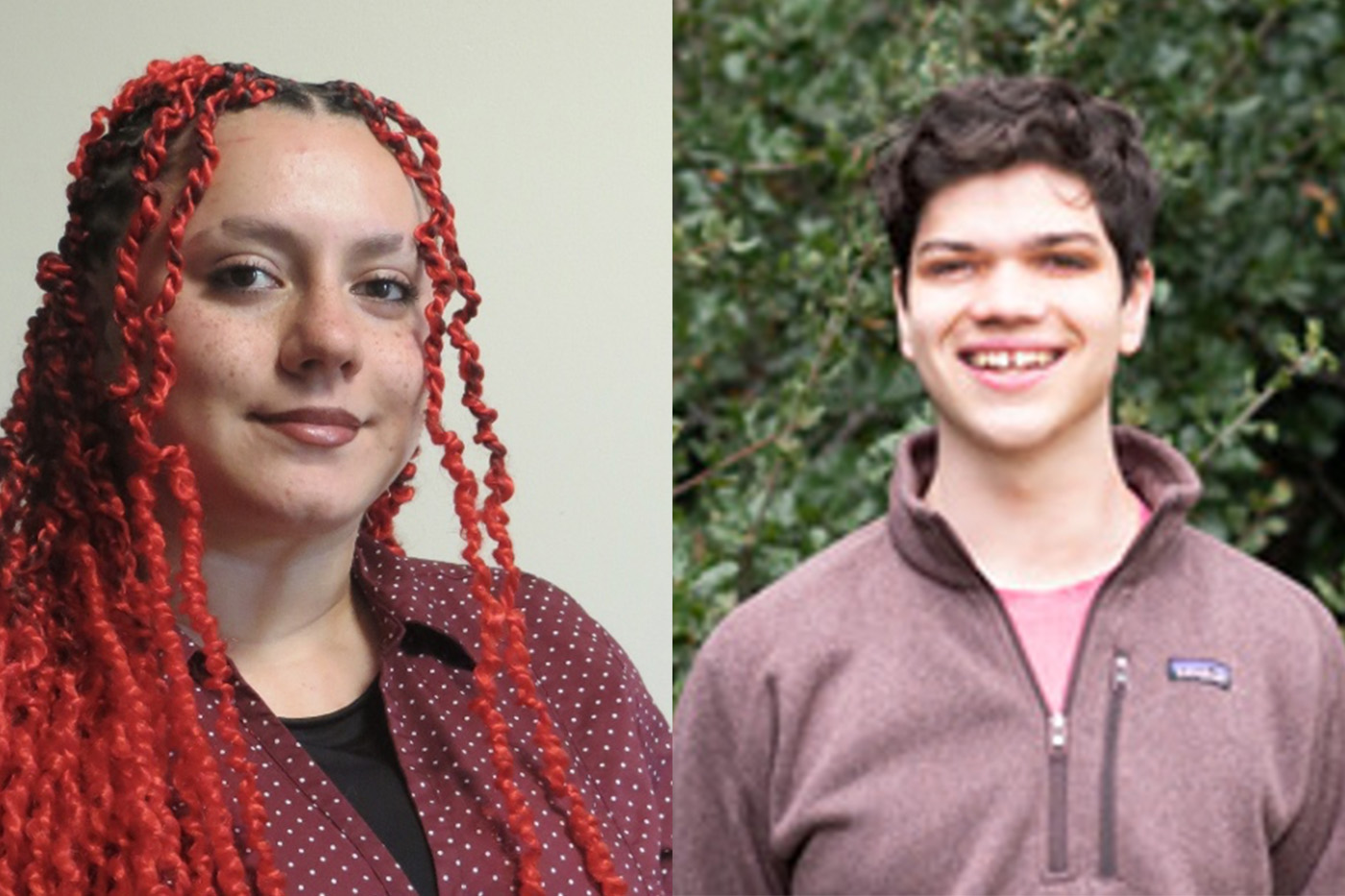
Emiko Tonachel, a biology major with philosophy minor, placed second in the 2026 COS Pitch Competition for Mucoadhesive hydrogel system for localized drug delivery in inflammatory bowel disease (IBD) patients. Learn more about the inspiration behind the research. -
Student Spotlight
Soumya Raguraman ’27, Behavioral Neuroscience
Soumya Raguraman, a behavioral neuroscience major with minors in business administration and public health, placed third in the 2026 COS Pitch Competition for LabMatch: The Undergraduate Research Matching Platform. Learn more about how this idea came about. -
Student Spotlight
Andre Bancu ’29, Cell and Molecular Biology
Andre Bancu won first place in the 2026 COS Pitch Competition for The Role of Transient Bioelectric Disruption in Heritable Chromatin State Changes in Dugesia japonica. Learn more about his research idea and the impact he hopes to make. -
News
Artemis II space launch ‘politically important’ in new era of space competition, expert says
Northeastern astrophysicist Jonathan Blazek notes that Artemis II “is still essentially an experimental vehicle.” -
Research
Where are the women? Researchers are on a quest for more representation in medical research
Despite constituting half the population, female subjects are still underrepresented in medical trials. At Northeastern University, a cohort of researchers including Professor Rebecca Shansky is trying to close that gender gap. -
News
Science in the Capital: Northeastern Undergrads at ASBMB 2026
Northeastern University students traveled to Washington, D.C. to attend the American Society for Biochemistry and Molecular Biology’s (ASBMB) annual meeting. -
Research
Nature report links wildlife trends to human well-being
Professor Brian Helmuth and Professor John Coley lead research chapter on the human connection to nature and its importance for the future of the planet. -
News
What ‘Project Hail Mary’ gets right – and wrong – about astrophysics, according to an astrophysicist
The Ryan Gosling-led science fiction movie puts science at the center of the frame. Assistant Professor Jacqueline McCleary breaks down whether this space-faring adventure holds up under the microscope.