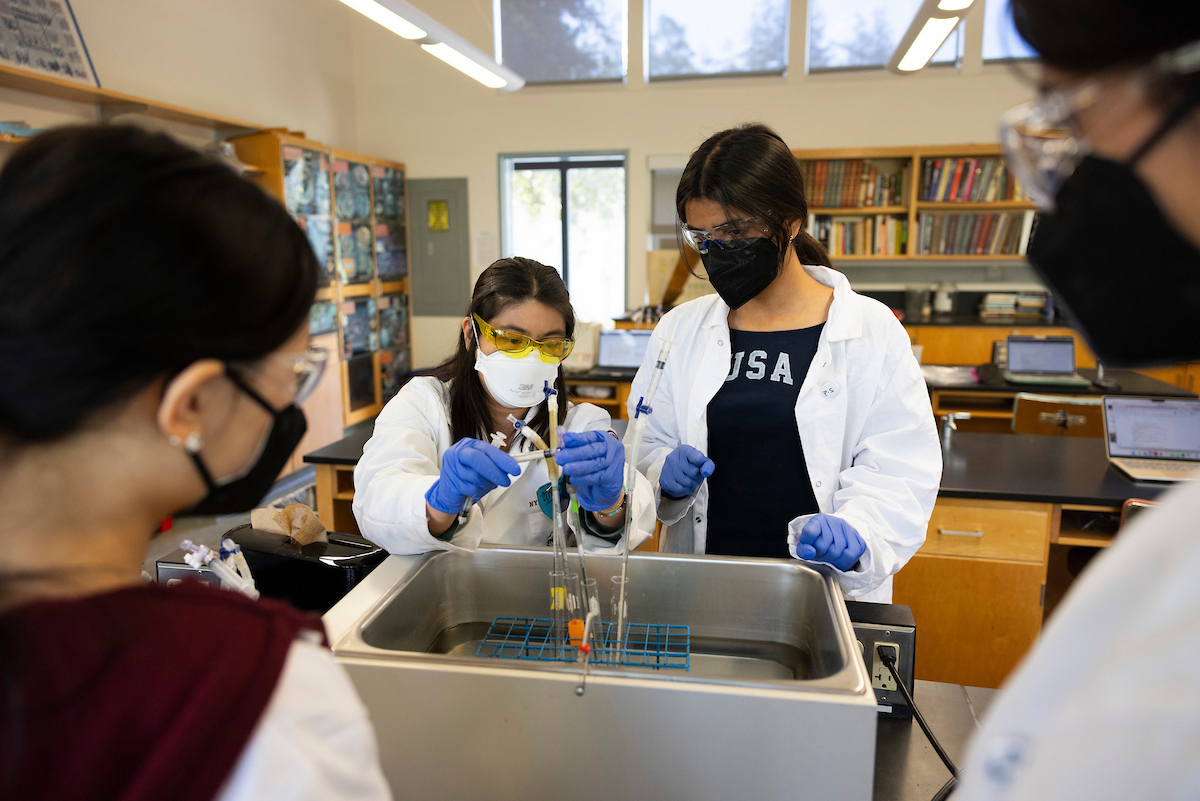
Most college freshmen spend their first year adjusting to campus life, finding their footing academically, and maybe exploring a few extracurriculars. Research opportunities? Those typically come later, reserved for upperclassmen who’ve proven themselves. The College of Science’s Dean’s Research Scholars program is opening doors for freshmen, bringing them into meaningful research from the moment they arrive on campus.
Building from the ground up
Students are invited to apply during the summer before their freshman year, joining a structured program that runs throughout their first year.
What makes the program work is its comprehensive support structure. Students aren’t simply assigned to a lab and expected to figure things out independently. Instead, they’re supported through multiple channels: group mentoring sessions where cohorts share experiences, seminars bringing everyone together, team meetings within their specific research groups, and individual guidance from department faculty. Upper-class undergraduates who’ve navigated similar paths also serve as mentors, creating layers of support that address different needs.
Thoughtful growth and matching
The program has demonstrated steady growth in both scope and impact. Starting with 19 first-year students in Fall 2023, it grew to 21 students in Fall 2024 and welcomed 20 students in Fall 2025. This measured growth reflects a commitment to maintaining quality over rushing to scale up.
The matching process prioritizes genuine fit over convenience. Students describe their research interests and experiences in their applications, and department leadership works to connect them with faculty whose research aligns with those interests. This approach creates authentic partnerships rather than arbitrary assignments, increasing the likelihood that students will find real engagement with their projects.
It was the quality and engagement of the students, as well as the support offered by the College to make it possible for such strong students to engage with undergraduate research in peer teams [that made this a valuable experience for me].
COS Faculty Member
Developing researchers and communicators
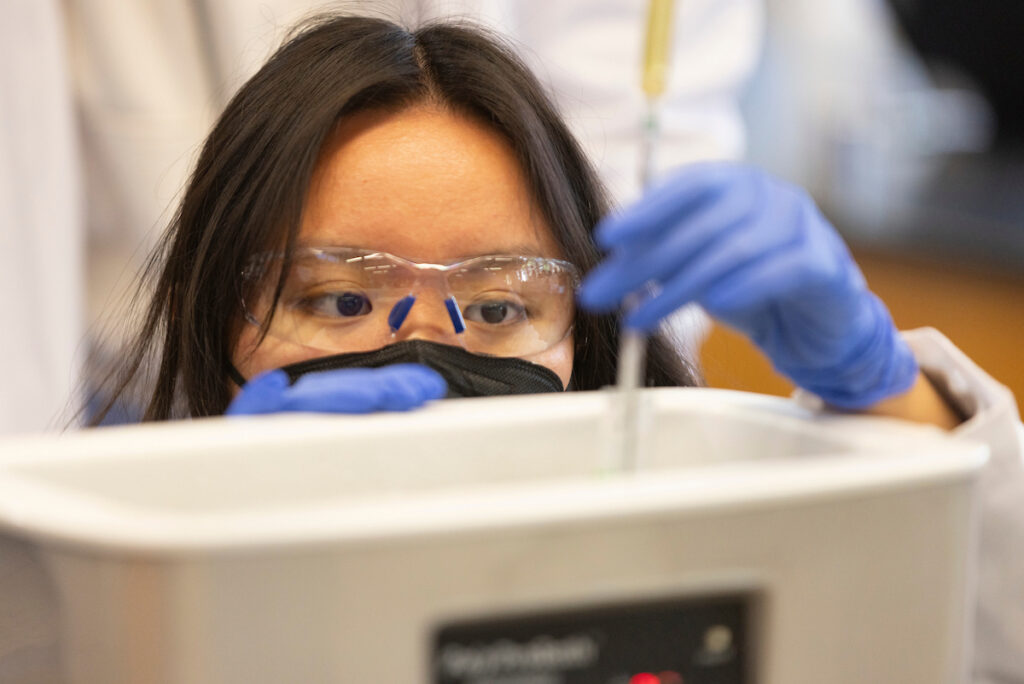
The program recognizes that successful researchers need more than technical skills. Students are coached on presenting their work, contributing meaningfully to research teams, and engaging with the broader scientific community. They present at Northeastern’s Research, Innovation, Scholarship, and Entrepreneurship (RISE) conference, participate in Directed Research courses for credit during spring semester, and learn to articulate why their work matters.
This dual focus on conducting research and communicating findings prepares students for the realities of scientific careers. By their junior and senior years, program alumni aren’t just experienced in lab techniques—they’re confident researchers who can discuss their work with both scientists and general audiences. This foundation proves particularly valuable for students pursuing research co-ops, where they’re expected to integrate into professional research environments and contribute from day one. Having already navigated lab dynamics, developed independent research skills, and learned to communicate their findings, these students enter co-op positions with a significant advantage over peers who are encountering research for the first time.
[My favorite part was] connecting with a research professor in a way that isn’t usually possible for a freshman was an indispensable opportunity. Hearing from our mentors about their research journeys helped me picture my next steps in research, as I had no other knowledge about research before this program.
COS Student

Creating a sustainable cycle
Upper-class undergraduates who benefited from the program return to mentor incoming cohorts. This creates several advantages: current freshmen receive guidance from people who recently faced similar challenges, advanced students gain valuable mentoring experience, and the program maintains continuity without overloading faculty.
The multi-tiered mentoring structure also acknowledges that students need different types of support. Faculty advisors provide scientific expertise and career guidance. Peer mentors offer practical advice and empathy. Cohort meetings create community and normalize the struggles that come with research. Together, these elements help empower students to navigate and pursue their desired paths.