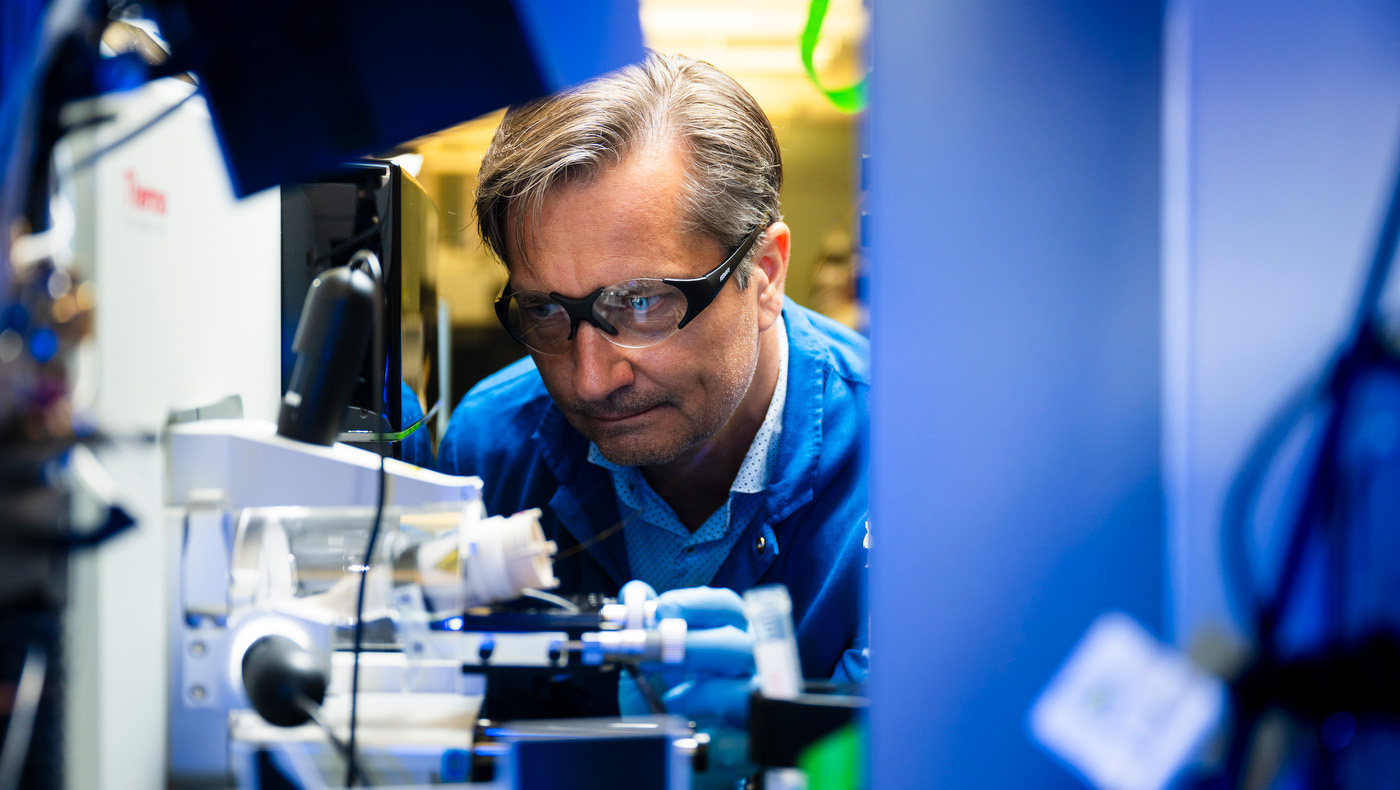
The Ivanov Lab at Northeastern University is paving the way to a whole variety of diagnostic tests that are possible off of a single blood draw, including — someday — cancer.
Every cell in your body has a thin covering of carbohydrates called glycoconjugates — ”conjugates” as they’re formed when the carbohydrates are chemically connected to proteins, lipids and other cell surface molecules.
These carbohydrates — also called glycans — play a significant role in both cell communication and the cell’s ability to respond to disease.
For instance, says associate professor of chemistry and chemical biology Alexander Ivanov, common blood type tests “are based on glycan analysis.”
But that’s far from the only thing glycans can show us. “We see that the glycans reflect cell types and cell states,” he continues, which are “potentially diagnostic of different diseases.”
“Cancer is definitely among those.”
Abnormalities in the presentation of glycans on the cell surface, their types and composition, their chemical linkages and their quantities, all provide potentially useful information to the researcher or diagnostician, including biomarkers for a variety of diseases.
Now, a team of researchers led by Ivanov has developed a method by which they can analyze the surface glycans of an individual, still-living human cell, as well as those found in minuscule volumes of plasma and other blood isolates.
Read more from Northeastern Global News
Photo by Alyssa Stone/Northeastern University.