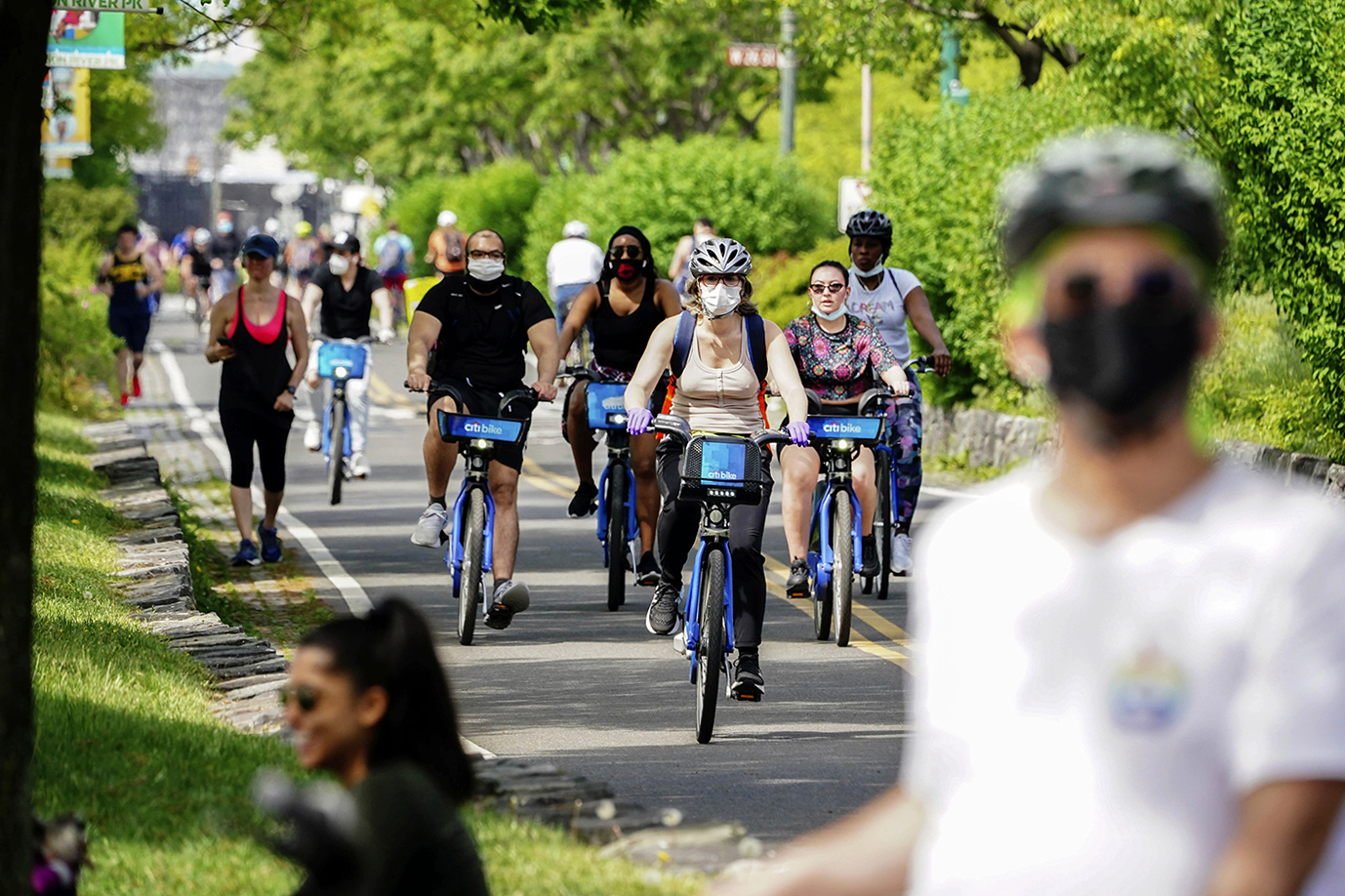
Every state in the U.S. is starting to relax stay-at-home guidelines and allow businesses to reopen. But even before the vast majority of states were loosening the measures intended to keep people physically distant and slow the spread of the coronavirus, people were starting to travel further and see each other more, according to research from Northeastern’s Network Science Institute.
“You start to see a gradual incline in early May, sort of following when the federal physical distancing guidelines were not renewed,” says Brennan Klein, a fifth-year doctoral student who helped analyze location data from millions of mobile devices.
As of late April, the average person in the United States had reduced their daily mobility between 45 and 55 percent, the researchers found, and the number of people who were in contact with at least one other person outside their home had decreased by between 65 and 75 percent. The recent uptick is small, nowhere near pre-pandemic levels, but the group is continuing to update the data on a public dashboard to help people visualize what is going on in their own states.
“The point is to understand whether this curve will keep increasing,” says Matteo Chinazzi, an associate research scientist in the Network Science Institute. “To see if these behaviors will actually go back to normal, or if it just means there is a bit more activity compared to what we had with the stay-at-home policies, but still very far from what would be typical.”
Read more at News@Northeastern
AP photo by John Nacion/STAR MAX/IPx