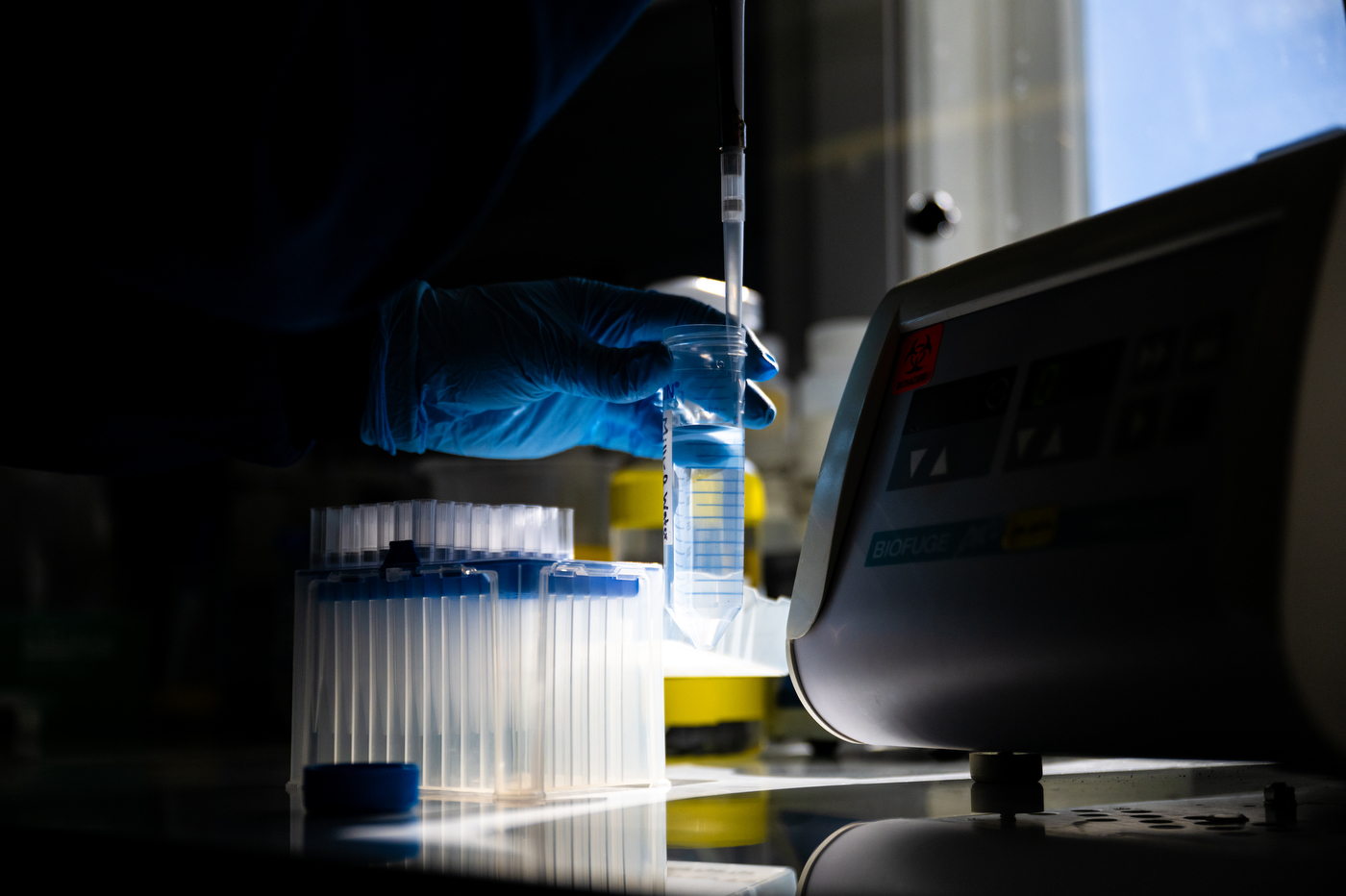
Preserving DNA in biological samples has long posed a challenge for researchers, but the process may be about to get a lot easier.
Researchers and students at Northeastern’s Ocean Genome Legacy Center (OGL) have developed what they claim is a breakthrough in DNA recovery from frozen tissues. And they shared the discovery in a recent publication.
The Northeastern team found that using a common food additive called EDTA did a better job of preserving the DNA of biological specimens than traditional methods such as immersion in ethanol.
“We discovered that EDTA is very effective at preserving DNA in tissue samples, which was something that no one had actually demonstrated before,” says Dan Distel, the project’s principal investigator and director of OGL.
“EDTA is safer and more effective than ethanol, and much more convenient than working with frozen tissues,” Distel says.
The team recently received patent approval to protect their discovery.
Read more at Northeastern Global News
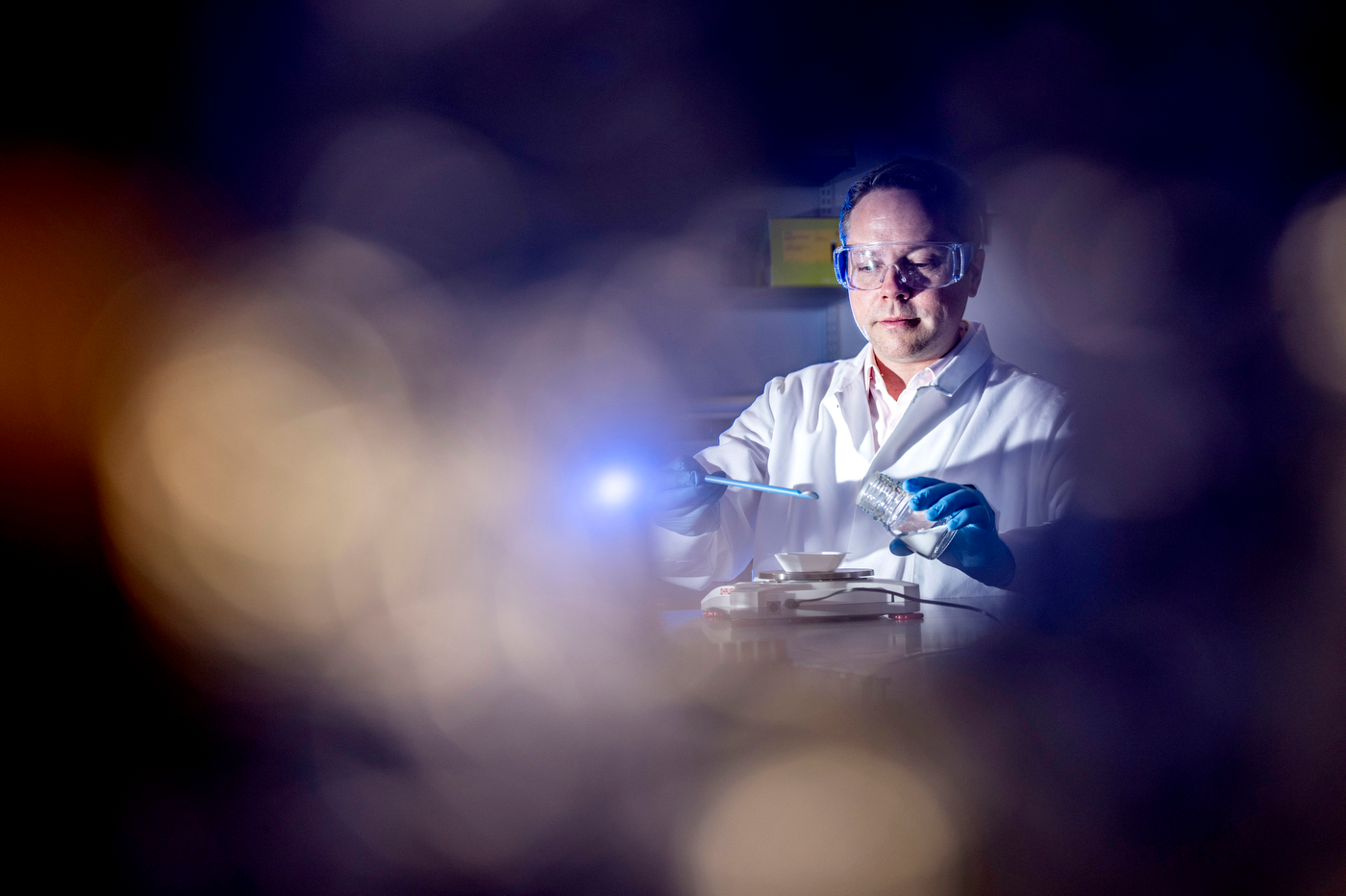
Photo by Alyssa Stone/Northeastern University