Dynamic biogeochemical consequences of host-virus interactions in marine diatoms
Meeting ID: 291 687 163 590 13
Passcode: si9JY2ZN
Ainslie Forbes recalls sitting in company-wide meetings during her co-op at the Ontario Institute for Cancer Research (OICR) and hearing patients’ stories. Much of her role was spent behind a computer, supporting the data that underpin cancer research in the province. But those meetings brought the human impact of her contributions into focus.
The co-op proved eye-opening for the Master of Science in Bioinformatics student. It not only exposed her to the realities of cancer research but also helped her determine her own professional goals.
“I wasn’t sure whether I wanted to continue to a PhD or go straight into the workforce after my master’s,” says Forbes, who is the first Northeastern University student in Toronto to complete a co-op at the OICR. “This co-op helped me see the kinds of roles available and decide that I want to enter the field now. It also showed me that you can do meaningful research with a master’s degree and still grow professionally.”
Read more at Northeastern Global News
Courtesy photo
Andrey Ptitsyn, Ph.D., has over three decades of academic and industry experience in building the infrastructure, services, and research programs in Computational Biosciences. Andrey Ptitsyn is a computational generalist with a special interest in Algorithms, Big Data Analytics, HPC, AI, ML and applications in interdisciplinary research. He graduated from the Novosibirsk State University in Russia with a Master of Science degree in Mathematical Biology and the University of Western Cape in South Africa with Ph.D. in Bioinformatics in 2001. Andrey Ptitsyn has published over 50 peer-reviewed research papers with over 4000 total citations. His current research interests include the development of novel approaches in AI to infer functional patterns in large-scale heterogeneous data, including personal genomes, multi-omics, insurance claims and electronic health records.
Andrej Savol, PhD is a computational biologist specializing in precision oncology and next generation sequencing data analysis. In industrial contexts his focus has been development of novel biomarkers and diagnostic methods that aid clinicians in treatment selection. He is currently a strategic team leader at Foundation Medicine, Inc., a precision diagnostics and informatics company.
He completed his PhD in Computational Biology at the University of Pittsburgh and worked for several years at Massachusetts General Hospital in their Molecular Biology Department. His research interests span the multiomics space and have drawn on close collaborations with researchers leveraging RNA-seq, DNA-seq, ChIP-seq, and ATAC-seq data in search of better diagnostic solutions and richer understanding of cellular behavior.
Nima Nouri, PhD, is a data scientist specializing in bioinformatics and computational immunology. He earned his PhD in Physics from the Department of Physics and Astronomy at the University of Kentucky and completed a postdoctoral fellowship in Computational Immunology at the Yale School of Medicine.
Dr. Nouri develops computational workflows and algorithms for the analysis of high-dimensional datasets generated by next-generation sequencing technologies, including bulk and single-cell–resolution data. His expertise spans machine learning and artificial intelligence, with applications across therapeutic areas such as target credentialing and prioritization, as well as biomarker discovery.
What inspired you to pursue your current field of study/research?
After high school, I pursued a degree in biology, driven by my passion for the life sciences. However, my curiosity for technology, particularly software and computational tools, led me to explore the intersection of biology and data science.
Bioinformatics perfectly blends these fields, allowing me to bridge my biological background with computational techniques. Pursuing an MS in Bioinformatics has been the ideal way to satisfy my curiosity and deepen my understanding of this evolving discipline.
Have you participated in any co-op or study-abroad programs? How was that experience?
I am currently seeking a co-op position for Summer 2025 and actively applying to various opportunities. In Summer 2024, I completed a pre-co-op course that equipped us with essential skills for the co-op application process, including resumé/CV reviews, cover letter writing, and interview preparation. I found this course invaluable in understanding the significance of every keyword in a resume or cover letter, ensuring a more strategic and effective approach to job applications.
What kind of extracurricular activities are you involved in?
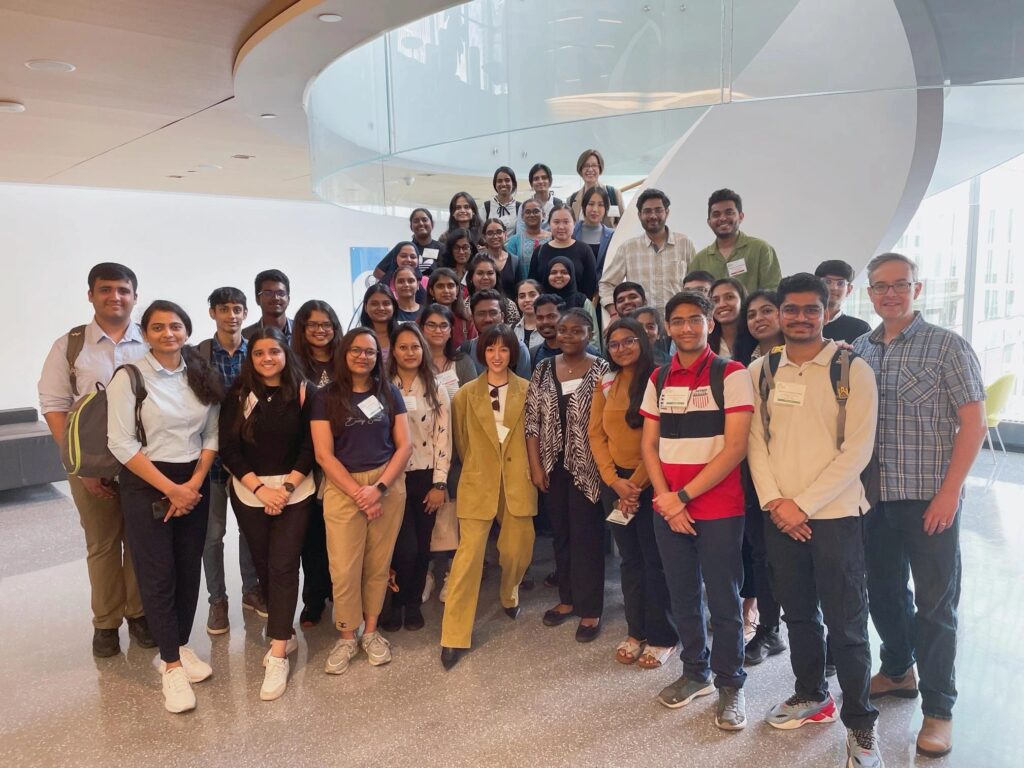
I currently serve as a student representative for the Bioinformatics program in the Program Advisory Committee (PAC). Additionally, I represented the College of Science (COS) as a student representative at Northeastern University’s Open House event. These roles have allowed me to actively contribute to the program and engage with prospective students, providing insights into the curriculum and student experience.
What has been the highlight of your experience in COS so far?
My journey in COS has been incredibly rewarding. Although our campus is small with limited infrastructure, the faculty and staff have been exceptionally supportive. They are quick to find solutions and always guide us in a clear, positive direction. Additionally, the on-campus activities organized by COS have been invaluable in helping students like me build connections and expand our network within the campus community.
Have you had any professors or mentors who really made an impact on you?
From my first semester in Bioinformatics, Professor Oyeronke has had a significant impact on me, shaping my thought process and encouraging me to think outside the box. She takes the time to understand our challenges, provides clear solutions, and pushes us to go beyond our limits.
At the beginning of the semester, Professor Oyeronke told us that she wouldn’t spoon-feed us; in a master’s program, we needed to change our way of thinking. This advice has been incredibly valuable in all my subsequent learning.
Yash Maheshbhai Patel ’25, MS Bioinformatics

Additionally, Professor Oyeronke has always been accessible, allowing us to reach out to her on Teams whenever we face issues. She responds promptly, offering the guidance we need. Her approach is truly inspiring, as she focuses on fostering genuine learning rather than just completing assignments for the sake of the curriculum.
Where do you see your field of study/research taking you?
Over the past year and a half, I have experienced significant growth. Starting as a novice in bioinformatics, I have developed a strong understanding of programming in Python and R, and gained hands-on experience working with real-world genomic data. After graduation, I look forward to pursuing a career as a computational biologist or junior bioinformatics scientist, as part of my first professional role.
What kind of impact do you hope to make after you leave Northeastern?
After graduating from Northeastern, I will continue serving as a PAC member until 2027. During this time, I aim to make a positive impact on the curriculum, enhancing its learning criteria to benefit future students. As for my personal aspirations, it would be a dream come true to work in the bioinformatics field, particularly in rare disease research and cancer studies. I hope to contribute to research efforts that can make a meaningful difference and help people in the future.
What advice would you give students interested in pursuing a degree in science?
I’ll be honest with you: pursuing a science degree is not just an opportunity, it’s a privilege. You’ve worked hard to get to this point and earn your place in the world of science, but the journey ahead will be challenging, perhaps even more than you expect. However, believe me, all the hard work and struggles will be worth it in the end. You won’t just gain knowledge, but you’ll develop new ways of thinking and approaching problems. You’ll level up your skills in ways you can’t even imagine right now.
Think of yourself as raw gold subjected to heat and pressure in the furnace of this journey. Though the process may be tough, just like gold, your value will only increase, and you’ll emerge stronger and more refined. Keep going, it’s all part of the transformation.
Is there anything you’d like to add?
I would like to give a special shout-out to the tours organized by the university. One that stands out to me was the visit to the Ontario Institute for Cancer Research (OICR), which was truly inspiring. It provided an incredible opportunity to witness cutting-edge biotech and bioinformatics research in a real laboratory setting. Additionally, the university also arranges recreational tours, such as trips to the Ripley Aquarium and Niagara Falls. These tours are a great way to bond with peers and enjoy some time together outside of the academic setting.
Dr. Oyeronke Ayansola earned a PhD in Bioinformatics and Experimental Evolution from Nottingham Trent University in the United Kingdom. She has worked as a senior bioinformatics analyst responsible for analyzing omics data, including single-cell and integrative multi-omics approaches of hospital patients. Her research has included microorganisms, genomics, genetics, evolution, cancer biology, and bioinformatics. She has taught at the undergraduate and graduate level, developed curriculum, and extensively mentored students.
During these three days, you’ll get a firsthand look into the Northeastern community and see if our top-ranked, experience-driven education is right for you and your goals.
Day 1: Connect with the faculty, admissions department, and current students from your program of choice, and learn about our powerful co-op programs.
Day 2: Meet Northeastern’s dedicated and helpful support staff from Global Student Success, housing services, financial services, career design, and many more.
Day 3: Get all your questions about the application and enrollment process answered by our enrollment counselors. These include one-on-one drop-in sessions with a dedicated enrollment counselor you can join throughout the day.
Our bioinformatics faculty will walk you through how our program merges biology and quantitative science to provide you with the experience you need to transform the way you think about data and biological models.
In October of 2023, the Northeastern Chapter of the Society of Asian Scientists and Engineers (SASE) attended the 2023 SASE National Conference in Atlanta, Georgia. The conference consisted of various workshops and panels led by industry leaders, networking opportunities, a hackathon, and a STEM career fair.
Companies like the CIA, Proctor and Gamble, Boeing, and the U.S. Department of State were present at the conference and held workshops teaching skills like financial literacy, navigating conflict in the workplace, and creating a professional support network. Other SASE chapters from around the country, like the chapters from the University of Central Florida, Georgia Tech, and Ohio State University, also attended the conference. The members of SASE who attended the conference thought it gave them valuable insights on how to improve both their professional and interpersonal skills.
One part of the conference that stood out to the attendees from the Northeastern SASE chapter was a workshop conducted by the CIA on how to craft an effective elevator pitch. During this panel, students created an elevator pitch about themselves and practiced delivering it by giving their pitch to five strangers. This workshop helped its participants improve their communication skills by teaching them how charisma can be used to produce an engaging interaction.
Hear about the conference from a few members of the Northeastern Chapter of SASE below!
Emilina Tran, third-year mechanical engineering major
My first day at the conference consisted mainly of workshops and networking opportunities. The first workshop I attended was hosted by the CIA and revolved around elevator pitches. We were tasked with creating a 30- second overview of ourselves, describing our goals, hobbies, interests, etc. , then finding 5 people from other SASE chapters to practice with. This alleviated my initial fear of putting myself out there and allowed me to learn a lot about other members, as well as myself. Later on in the conference, I would use the same tips from the workshop to introduce myself to new people, and I found myself getting more confident after each interaction.
Thanks to these newfound skills, I was able to connect with multiple other SASE chapters, such as Princeton, UT Austin, Colorado School of Mines, Georgia Tech, Louisiana State University, Arizona State University, and the University of Alabama. I was also able to interview with Procter and Gamble, a company that I’d had at the top of my list for co-op locations.
Khushi Khan, second-year computer science major and SASE Programs Chair
Not only was our professional development supported, but our cultures were celebrated as well. The good, events, and freebies were all related to Asian cultures in some way, showing us the ways in which our professional development can be uplifted alongside our cultural heritage.
The conference not only broadened my understanding of what the professional world has to offer, but also encouraged me to take pride in my culture after seeing people who looked like me working at my dream companies.
Esther Ho, second-year computer science and business major and SASE Pan Asian American Council Representative
One of the most rewarding aspects of my experience at the National Conference was the chance to bond with my fellow members from our university’s chapter. Our teamwork and shared commitment to personal and professional growth created a strong sense of empowerment.
We approached professionals, recruiters, and other SASE chapters, using our collective knowledge and support to make the most of the networking opportunities. We would go up to booths and representatives together to take out some of the initial fears of approaching a professional. This collaborative effort not only expanded our individual networks but also highlighted the strength and unity of our chapter. The connections and shared experiences we shared will definitely serve as a solid foundation for our future endeavors, both individually and as a chapter in the SASE and Northeastern community. I’m incredibly grateful for the opportunity to be part of such a supportive and driven group, and I’m excited to see how we continue to grow and make a mark in the years to come.
Alina Gonzalez, second-year data science major
I was able to network with many other Filipino professionals who shared their experiences and offered me resume critiques which built my confidence as a Filipino myself. I think sharing experiences is critical at this time of my life as I don’t really know what to expect. There is only so much you can learn from in classes, so I strongly believe that being able to connect with these professionals aided me greatly in terms of strengthening my professional development. From interacting with so many different people, I was able to strengthen my elevator pitch and introductions. I also got to see a wide range of resumes, and I now know what projects or courses I should align myself with to better prepare myself for job searching or co-op searching.
I-Ting Lo, fourth-year behavioral neuroscience major
The workshops and panels I attended at the National Conference significantly contributed to my personal growth and development. These sessions offered invaluable insights and practical skills that have enhanced my understanding of various aspects of personal and professional life. For instance, the elevator pitch workshop, presented by the CIA, redefined my perception of effective communication by emphasizing the importance of charisma and character in making memorable impressions. This lesson goes beyond presenting facts and highlights the significance of creating genuine connections in brief interactions. Additionally, the CIA resume review session was instrumental in improving my professional qualifications. Feedback from recruiters and their guidance on strengthening my resume not only improved my resume but also led me to seek more personal experience to further boost my credentials.
Furthermore, the panels on win-win negotiations and Mastering Financial Literacy provided concrete strategies for conflict resolution and responsible financial planning. The win-win negotiations panel equipped me with practical negotiation skills, including step-by-step approaches and email communication strategies for workplace conflicts. The insights gained from the Mastering Financial Literacy panel, particularly regarding responsible tax payment and the FIRE Movement, have reshaped my financial planning and underscored the importance of hard work in achieving realistic financial goals. The workshop on making a company work for you instilled in me the significance of resource utilization. It taught me to proactively seek support and resources within a company, fostering professional honesty and an emphasis on problem-solving.
Overall, the workshops and panels have played a pivotal role in my personal growth by providing practical skills and a fresh perspective on effective communication, career development, financial literacy, and resource utilization, which have undoubtedly left a lasting impact on my personal and professional journey.
Alexander Wang, first-year biology and data science major
The CIA and FBI both had the slogan “we’re hiring just about anything you could think of”, which, upon inquiry, I learned that the CIA had ongoing biology-related research aligned with my intersection of that and data science – intended for furthering reconnaissance and intelligence analysis. The FBI also had similar opportunities – it is truly intriguing to see governmental agencies, which supposedly only focus on forensics/crime scene investigations, are offering activities such as these. Having attended resume review sessions hosted by prominent companies that were also present at the career fair, attending this conference has allowed me to capitalize on my current strengths and strategically mend my weaknesses.
Overall, members of SASE considered this conference to be a success! The Northeastern chapter of SASE wants to extend their gratitude to the Northeastern College of Science for their ongoing commitment to the student organization.
Next year, the SASE National Conference is going to be held in Boston, and Northeastern SASE is looking forward to participating in the event.
Quan Wan is a bioinformatics specialist and cloud computing innovator dedicated to advancing scientific discovery through technology. With a Master’s degree in Bioinformatics from The George Washington University, Quan has made remarkable contributions to both research and education.
Starting as a Research Associate, Quan’s journey led him to become a Software Engineer, where he developed a pivotal data portal for the National Institutes of Health (NIH), enhancing accessibility to critical scientific data.
Transitioning to Sanofi Digital R&D, Quan provided invaluable support to bioinformatics scientists, fostering advancements in drug discovery. His expertise is underscored by seven publications illuminating key facets of bioinformatics and scientific computing.
In addition to their career, Quan Wan is a passionate educator. Since 2021, he has been teaching Bioinformatics Methods, Database Management Systems, Data Warehousing Technologies, Big Data and Web Mining, and Data Structures & Algorithms at Northeastern University. This dedication to knowledge sharing exemplifies Quan’s commitment to the convergence of science and technology.
As a pivotal member of a team building a robust cloud computing platform for Sanofi, Quan Wan continues to drive innovation at the intersection of technology and the life sciences, shaping the future of pharmaceutical research and development.