COS News
Research

“The basic premise is that AI can help us do better physics, and something that is less expected is that physics can also help us understand AI better,” said Northeastern professor James Halverson.
AI and physics have more in common than you might think.
News
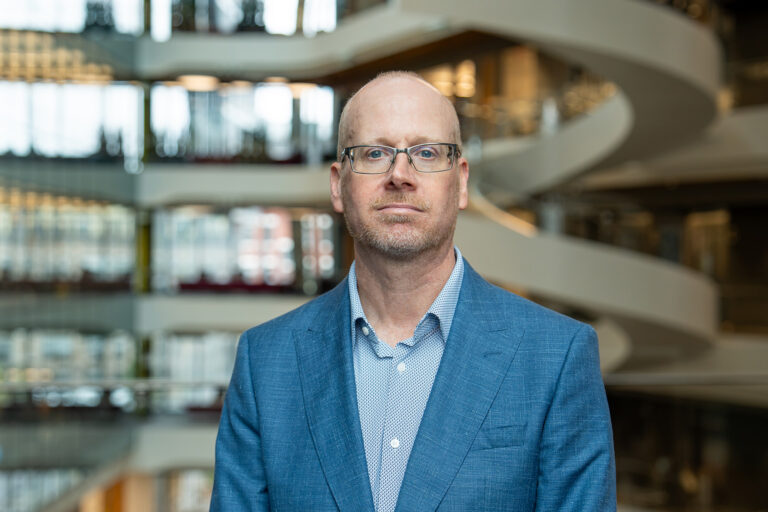
Mark Williams, Professor and Chair of the Department of Physics, will assume the role of Dean of the College of Science, effective July 1, 2026.
Mark C. Williams named Dean of the College of Science
Showing 669 results in General
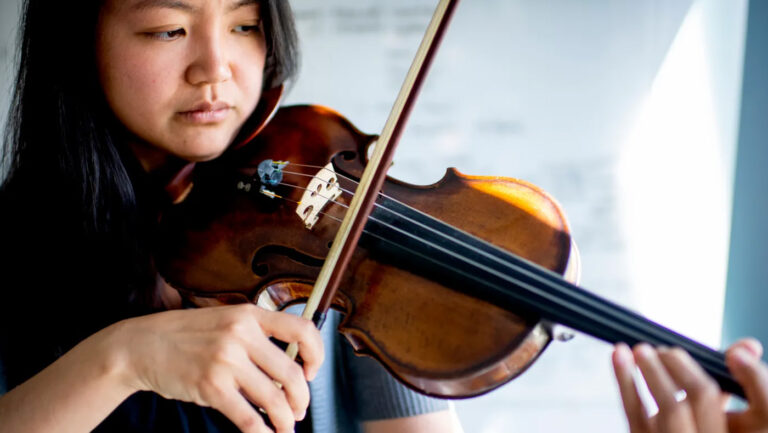
How do songs and speech compare around the world? Northeastern music scientist contributes to groundbreaking study
Assistant Professor Psyche Loui contributed a Cantonese folk tune to a groundbreaking study comparing speech and music across 55 world cultures.

Fiona Howard’s body was collapsing. Now she’s a world-ranked para dressage rider aiming for the Paris Olympics
Perched at the entrance of a stadium in Ocala, Florida, in mid-March, Fiona Howard takes a breath and coaxes a large, dark bay gelding with a gash of white down his face into a smooth trot. She and the horse, an 11-year-old Hanoverian called Diamond Dunes, have only known each other a week. But their...
Using a Novel Balloon-Borne Technology to Probe Deeper into our Dark Universe
NASA has awarded Northeastern and partners a prestigious grant to launch a particle detector into earth’s upper atmosphere. How can we better understand vital questions about the unseeable dark matter that seems to constitute much of the vast universe around us? And how can we capture the faintest yet most information-rich signals from distant astrophysical...
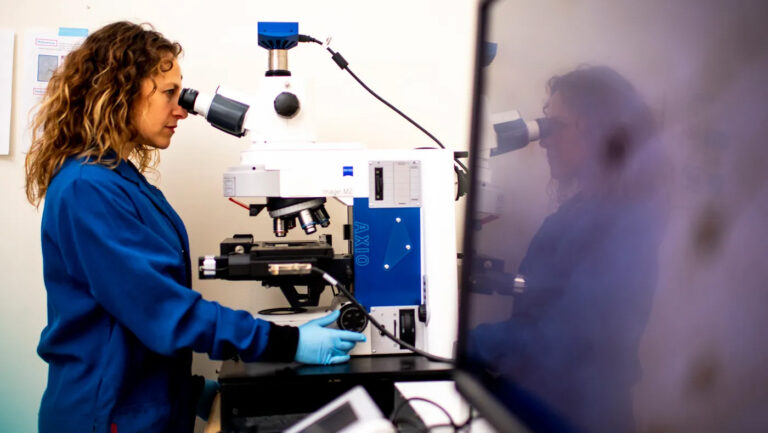
A biological trigger of early puberty is uncovered by Northeastern scientists
The onset of puberty has been creeping downward for decades. In the United States, the average age of girls reaching puberty ranges from 8.8 to 10.3 years old. The early start of puberty, which is associated with many health risks, can be triggered by chronic stress in children. New research by Northeastern scientists has identified...
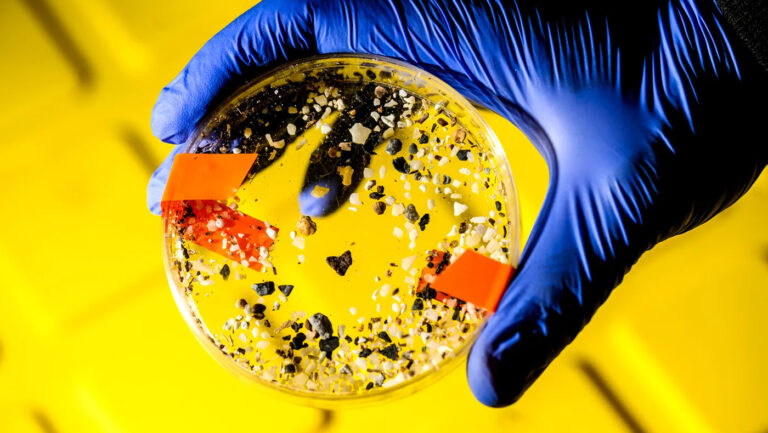
What is ‘marine snow’? And how do microplastics slow the rate at which carbon is pulled from the sea surface to the depths?
It turns out plastics in the ocean do more than suffocate turtles, fish and other marine life. A new study co-authored by Northeastern researcher Aron Stubbins shows that microplastics may reduce the ability of the ocean to help offset the climate crisis by slowing down the rate at which carbon is taken from the sea...
What’s in a name? A linguistics expert explains why some baby names dominate the charts year after year
What do names like Noah, James, Mateo, Mia, Evelyn and Luna all have in common? They’re not only some of the top baby names in the United States, but they also seem to flow off the tongue. And that’s exactly why parents love them. On May 10, the Social Security Administration released a list of...

Barnett Institute 50th Anniversary and Karger Medal Celebration
Program 50th Anniversary Hazel Sive, PhDDean, College of Science, Northeastern University Welcome Remarks Rhoda BernsteinDaughter of Dr. Louis and Madlyn Barnett Reflections from the Barnett Family Barry L. Karger, PhDFounding Director Emeritus,Barnett Institute of Chemical & Biological Analysis, Northeastern University The Barnett Institute: 50 Years In September 1973, the Institute of Chemical Analysis, Applications and...

Our brains trick us into thinking consciousness can reside outside the body, new Northeastern research says
The origins of consciousness have been debated by philosophers for centuries. Each conscious person has a sense of “being me,” which invariably gives rise to the question of where that sense originated — from within or outside the body, says Northeastern University psychology professor Iris Berent. “How do human brains give rise to this experience?...
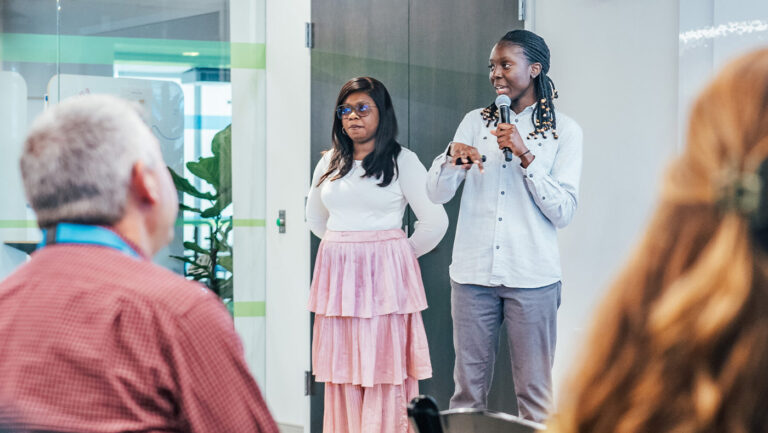
Roux graduate students put real-world skills on display at Student Showcase
Can machine learning accurately predict goal scoring in soccer? Will augmented reality and 3D modeling revolutionize science and math education in Maine? What lessons can we glean about programming in 2024 from a video game created in 1985? These questions and more found answers at the annual Student Showcase held on April 25th at Northeastern...
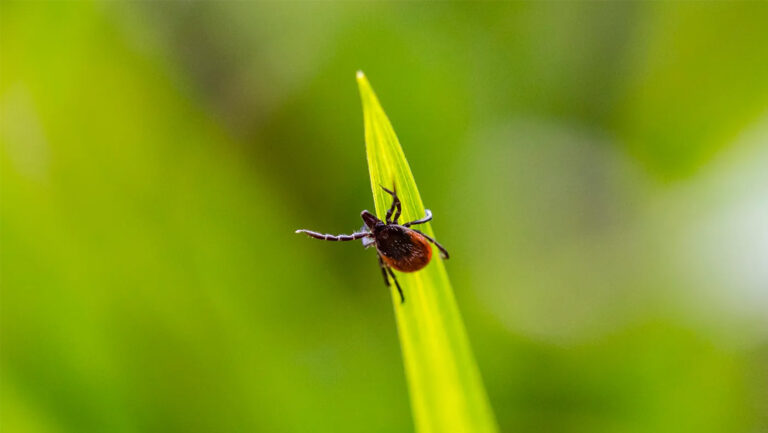
Ticks carry more than Lyme disease. Here’s what you need to know about babesiosis and Powassan
Beware, the tiny deer ticks emerging with warmer spring weather carry a lot more than Lyme disease. They also transmit a malarial-like potentially serious disease called babesiosis that has seen significant spread across the Northeast and Midwest, according to the U.S. Centers for Disease Control and Prevention. For example, cases of babesiosis increased by 1,602%...

Do parasites actually ‘eat’ human tissue? And how do they end up in the brain?
Robert F. Kennedy Jr.’s campaign says a parasitic worm the presidential candidate contracted years ago while traveling outside of the United States ate a portion of his brain, then died. How do parasites, such as tapeworms, get into the brain in the first place? Scientists say they can — but that they “eat” human tissue...
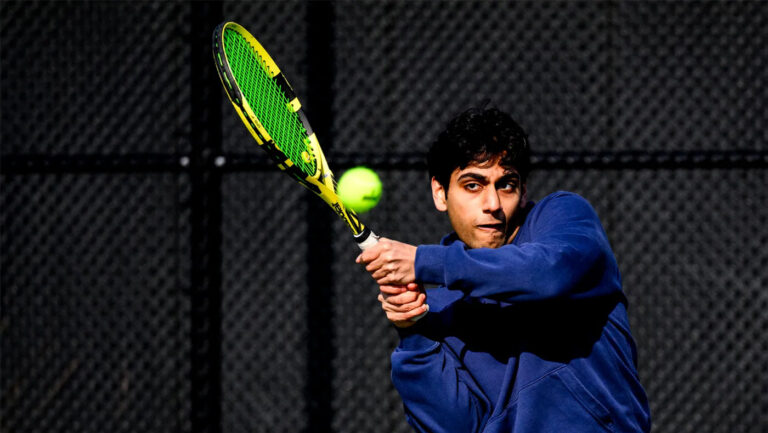
Can pickleball, tennis and other racquet sports really help you live longer?
Racquet sports are clearly having a moment. The pickleball revolution is continuing apace, with partnerships, leagues and playing courts springing up seemingly by the day. And in a world without Roger Federer and Serena Williams, tennis has maintained its popularity among most age groups, new polling suggests. What’s more, research suggests that picking up a racquet might...