QMSI Seminar: Prof. Qiang Li

Chiral fermions and chiral magnetism
Chirality, or handedness, is a geometrical property given to a figure if its mirror image cannot be brought to coincide with itself. The concept of chirality plays a role in biology, chemistry and physics from the homochirality of the molecular basis of life to the new states of matter. In the first part of this presentation, I will highlight case studies involving chiral fermions in condensed matter systems, such as Dirac and Weyl semimetals. The chiral anomaly sourced by parallel electric and magnetic fields produces an imbalance between the densities of right- and left-handed fermions, leading to generation of electric current. This is the chiral magnetic effect first observed in Dirac semimetal ZrTe5. Coupling of circular polarized light to chiral fermions breaks the chiral symmetry, leading to the generation of chirality-dependent photocurrent and THz emission —processes with potential applications in quantum information technologies. In the second part of this presentation, I will discuss our most recent results on emergent magnetic states, particularly chiral altermagnetism. This state arises from the interaction between chiral fermions and local magnetic moments in magnetic topological semimetals such as EuAuSb, opening new directions for exploring the interplay between topology and magnetism.
Speakers
-
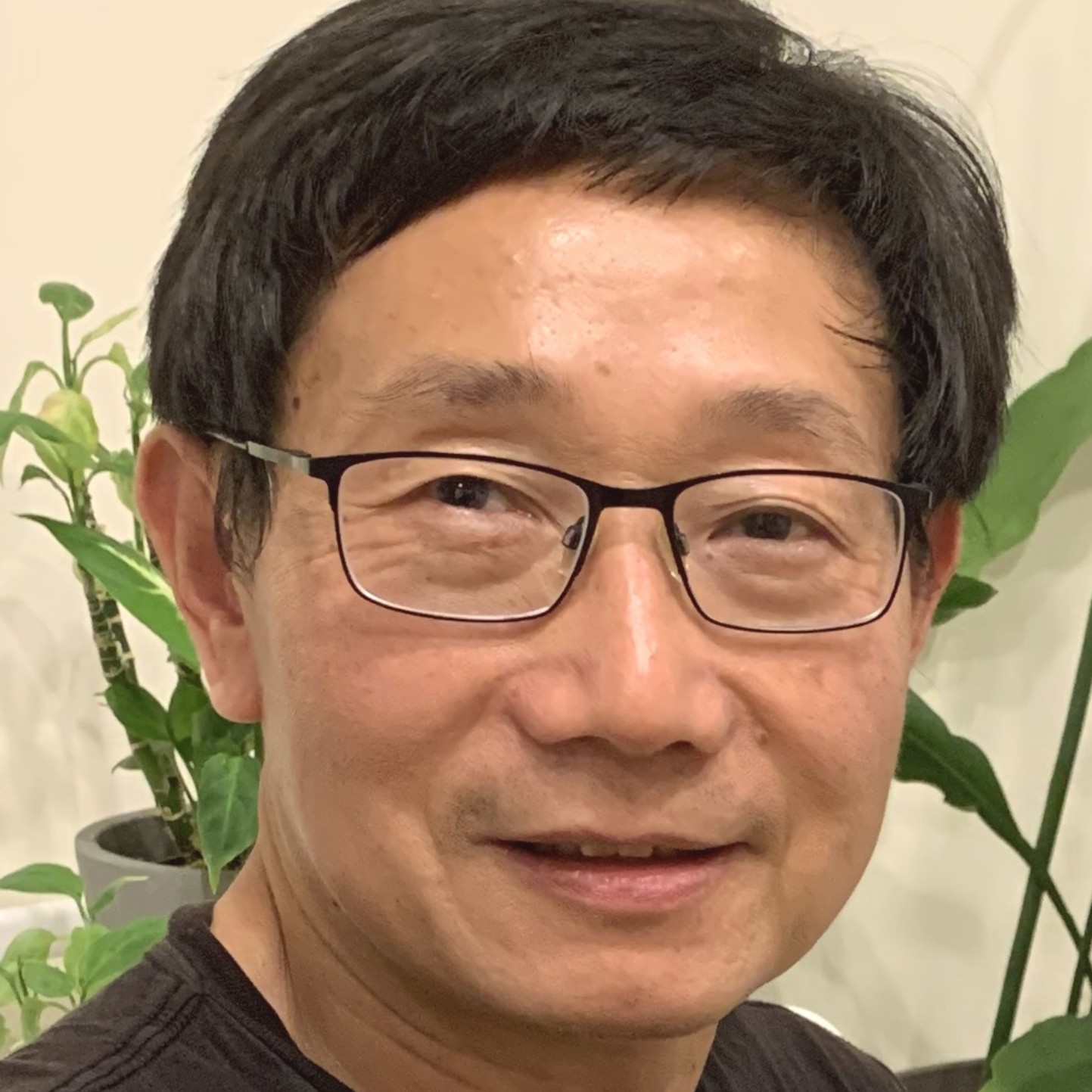
SUNY Empire Innovation Professor
Stony Brook UniversityQiang Li is a SUNY Empire Innovation Professor in the Department of Physics and Astronomy at Stony Brook University, with a joint appointment at Brookhaven National Laboratory leading the Advanced Energy Materials Group, where he has been the principal investigator of superconducting and topological quantum materials programs for two decades. His research aims to discover novel quantum materials and quantum phenomena through an integrated effort from theory/AI/ML driven design and synthesis to quantum transport and spectroscopic characterizations. He has led the development of high temperature superconductors for grid-scale energy storage, wind power generation, and next-generationelectrical machines, as well as vehicle waste heat recovery using thermoelectrics.